


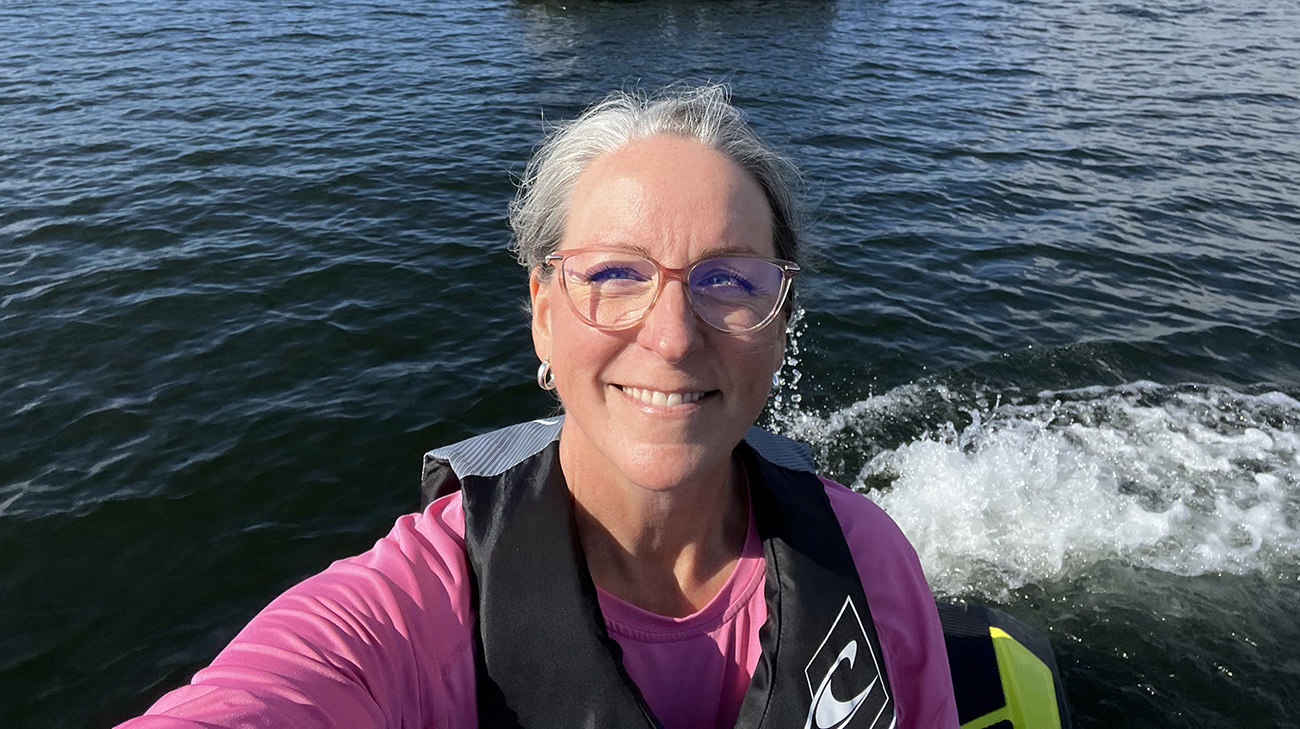
A few years ago, Amy Lewis began noticing changes in her body, including unexpected weight gain and a general sense she didn’t feel like herself as she moved through perimenopause. Staying active had always been part of Amy’s life. Summers were spent kayaking and riding wave runners at her family’s lake home in Chautauqua, New York. But as her body began to feel different, she decided to take a more deliberate approach to her health. She increased her protein intake, worked to improve her sleep, and began training with a coach, adding heavy strength training to build muscle and regain a sense of control.
Over time, Amy lost about 50 pounds and found herself in the best physical shape of her life. But as she continued to push herself in the gym, she developed pain in her elbow while performing an exercise known as hammer curls. The discomfort gradually worsened, and she was eventually diagnosed with lateral epicondylitis, a form of tendonitis commonly known as tennis elbow.
The pain in her left arm began to interfere with everyday activities, particularly those that required grip or fine motor movement. “I couldn’t lift my water bottle or pick up my phone off the table,” recalls Amy, now 54. “I didn’t trust myself doing the dishes because the pain was so sharp. Anything that involved pinching, like pulling up my pants or crumpling a tissue, became difficult.”
As the pain lingered, it began to limit things she had previously done without issue. Unable to grip a kayak paddle or operate the controls on a wave runner, Amy sat out those activities for three summers.
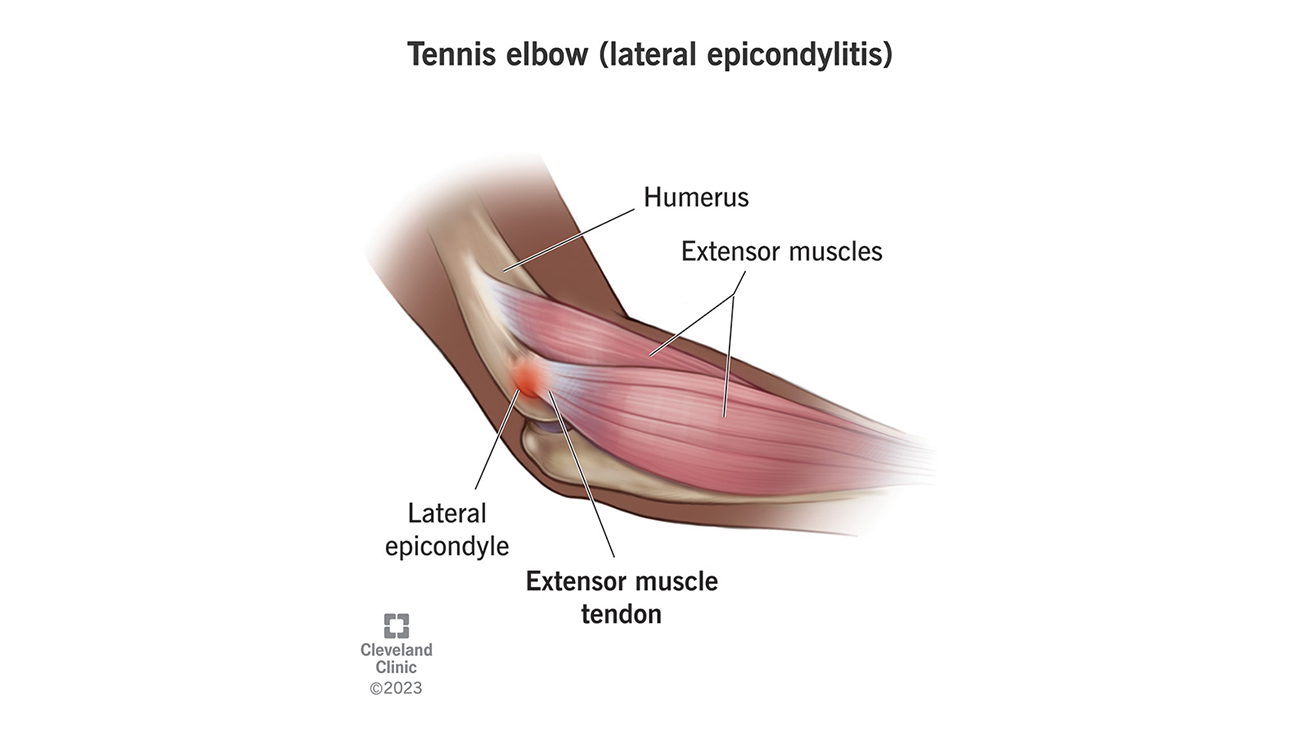
Tennis elbow gets its name from being a common racket sports injury. But anyone who overuses their elbows can develop it. (Courtesy: Cleveland Clinic)
Amy, who lives in Warren, Ohio, sought care from an orthopaedic surgeon and tried multiple treatment options, including three rounds of physical therapy and steroid injections. However, she struggled to find long-term relief.
“One steroid shot helped for about nine months, but then the pain returned,” Amy says. “The next one only helped for about two weeks.”
Repeated injections also led to a loss of the protective fat layer around her elbow, making the area increasingly sensitive. Even light pressure, such as a sleeve brushing against her arm, became uncomfortable.
“You could see the outline of my bone,” Amy recalls.
As the pain continued, Amy began considering surgery to remove scar tissue and address the affected area of her elbow. But a conversation with another patient she met during physical therapy gave her pause, and Amy decided to explore other options.
Not long after, Amy came across a podcast discussing low-dose radiation therapy. The treatment involves six targeted, noninvasive sessions delivered over two weeks and can be highly effective for certain patients, though it remains underused because many people are unfamiliar with it.

Amy was used to being active. At one point after her injury, she couldn't lift her phone. (Courtesy: Amy Lewis)
Rahul Tendulkar, MD, a radiation oncologist at Cleveland Clinic, explains low-dose radiation therapy targets cells that drive chronic tendon inflammation. By addressing the underlying source of pain rather than temporarily easing symptoms, as steroid injections often do, the treatment offers a different approach. While it has been used for decades in Europe, it is still relatively unfamiliar in the United States.
“We’ve known for more than a century that low-dose radiation therapy has anti-inflammatory effects,” says Dr. Tendulkar. “Soon after radiation was discovered in the late 1800s, it was used to treat a range of conditions. While today it’s used primarily in cancer care, interest in its role for noncancerous conditions, including osteoarthritis, or tendinopathies, has grown again in recent years.”
For patients like Amy, Dr. Tendulkar says, low-dose radiation therapy can be a useful option when anti-inflammatory medications or steroid injections no longer provide sufficient relief, but joint replacement surgery is not yet appropriate.
After a virtual consultation confirmed she was a strong candidate for the treatment, Amy traveled to Cleveland Clinic main campus, in Cleveland, Ohio, for a positioning appointment. During the visit, care team members placed two small freckle-sized tattoos on her arm to ensure precise alignment for each treatment session.
After that, the treatment itself was straightforward. “My six appointments were seamless and took less than 15 minutes from pulling into Cleveland Clinic until I was back in my car,” Amy says. “It was the easiest part of the entire process.”
By her second session, her pain had resolved.
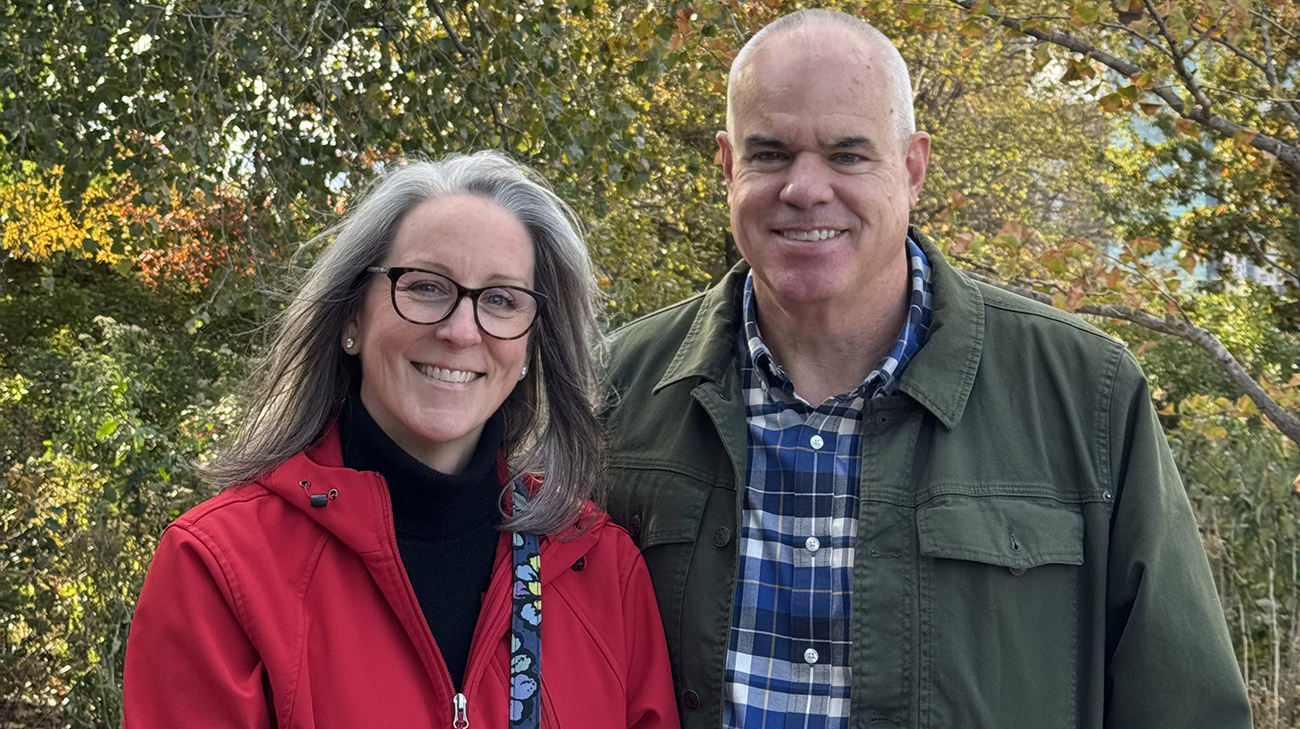
Amy with her husband. (Courtesy: Amy Lewis)
“I was surprised,” she says. “I was still weak because I hadn’t lifted or pinched anything for about 18 months, so my grip strength was limited. But I was finally out of pain.”
Dr. Tendulkar says Amy’s experience is a great example of what many patients encounter. About two-thirds report at least some relief, though not usually as quickly. If the first round of six treatments does not provide sufficient improvement after a few months, the therapy can be safely repeated. The radiation dose is low—about 5% of what is used in cancer treatment—and he notes, almost never results in side effects. The pain relief can last from months to years.
After completing treatment, Amy asked Dr. Tendulkar for a referral to occupational therapy so she could rebuild strength gradually and avoid reinjury as she returned to exercise.
“I eased back into it, and by the end of therapy, I had full grip strength, full pinch strength and no pain,” she says.
She encourages others struggling with tennis elbow or other forms of joint pain to explore low-dose radiation therapy, as she wishes she had known about its potential sooner.
For now, Amy has returned to kayaking, riding wave runners, and working on art projects such as painting, card making and mixed media, many of which she gives to friends and family.
She’s also back in the gym, rebuilding strength and confidence. She can now almost deadlift 180 pounds, a contrast she doesn’t take lightly after a time when even lifting her phone was difficult.
More than the physical gains, Amy says the treatment allowed her to reclaim a life that pain had gradually taken away.
Related Institutes: Imaging Institute, Orthopaedic & Rheumatologic InstitutePatient Stories

After Devastating Knee Injury, Mental Health Support Fuels Soccer Comeback
Aug 20, 2026
A Second Chance at Life: Luis Peñate’s Heart Transplant Journey
Aug 20, 2026

