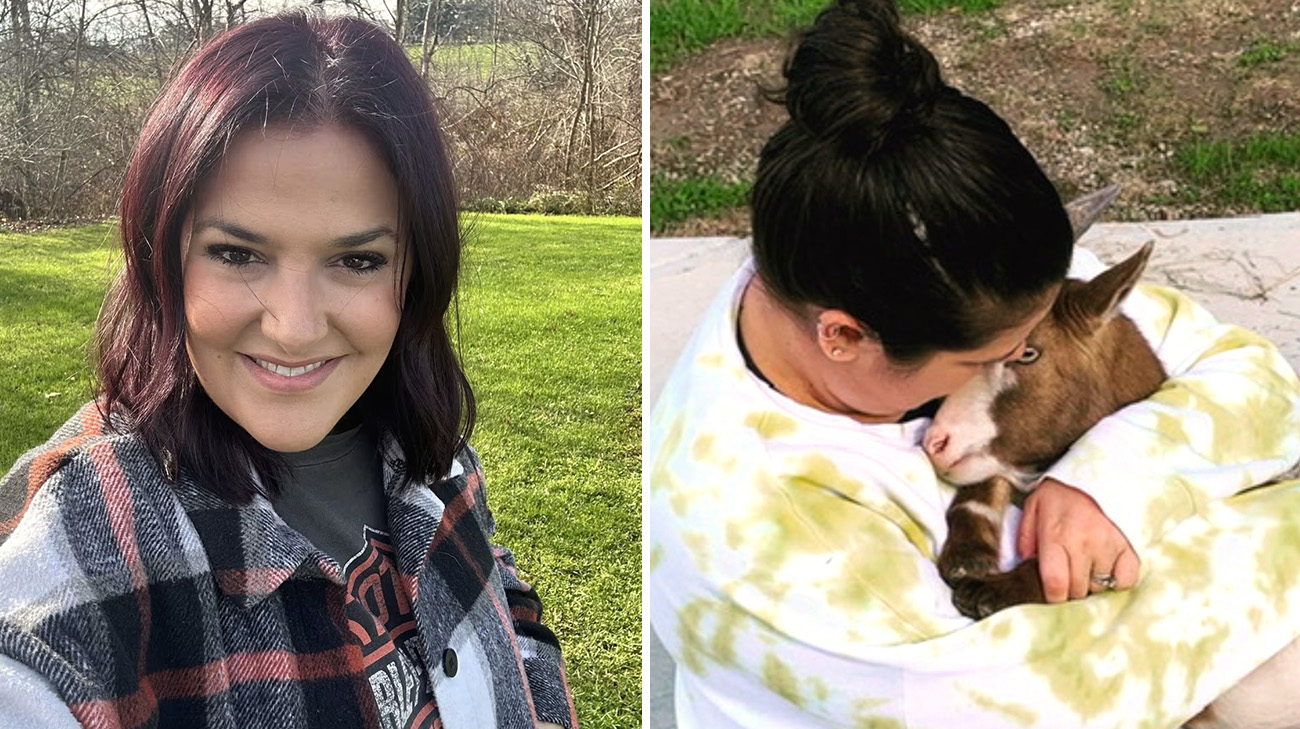
Upon arriving at Cleveland Clinic for one of the dozens of treatments and scans she underwent over more than a decade, Hayley Dietz was often greeted in an unexpected way by the nurses and staff who came to feel like family: “How are your goats?”
Those goats—specifically a growing herd of Nigerian dwarf goats raised in barns on her family’s six-acre property in rural Middlefield, Ohio—were a fascination for Hayley’s caregivers. More importantly, they became a powerful source of comfort for Hayley during her journey with cervical cancer and, later, metastatic cancers affecting her lymph nodes, chest, neck and armpit.
“We don’t farm. We just collect farm animals,” says the 42-year-old mother of two with a laugh. “The goats have given me so much emotional support. They really need me and, during the toughest times, gave me an additional purpose for my life.”
Cervical cancer, while relatively rare in the United States, most often affects women in their thirties and forties and can be one of the most devastating forms of cancer, says Robert DeBernardo, MD. As section head of the Department of Gynecologic Oncology at Cleveland Clinic, Dr. DeBernardo has treated Hayley since her diagnosis in 2015. Familiar with the physical and emotional toll of prolonged cancer treatment, he admits he was surprised when Hayley shared she had taken on a new role: goat-raiser.
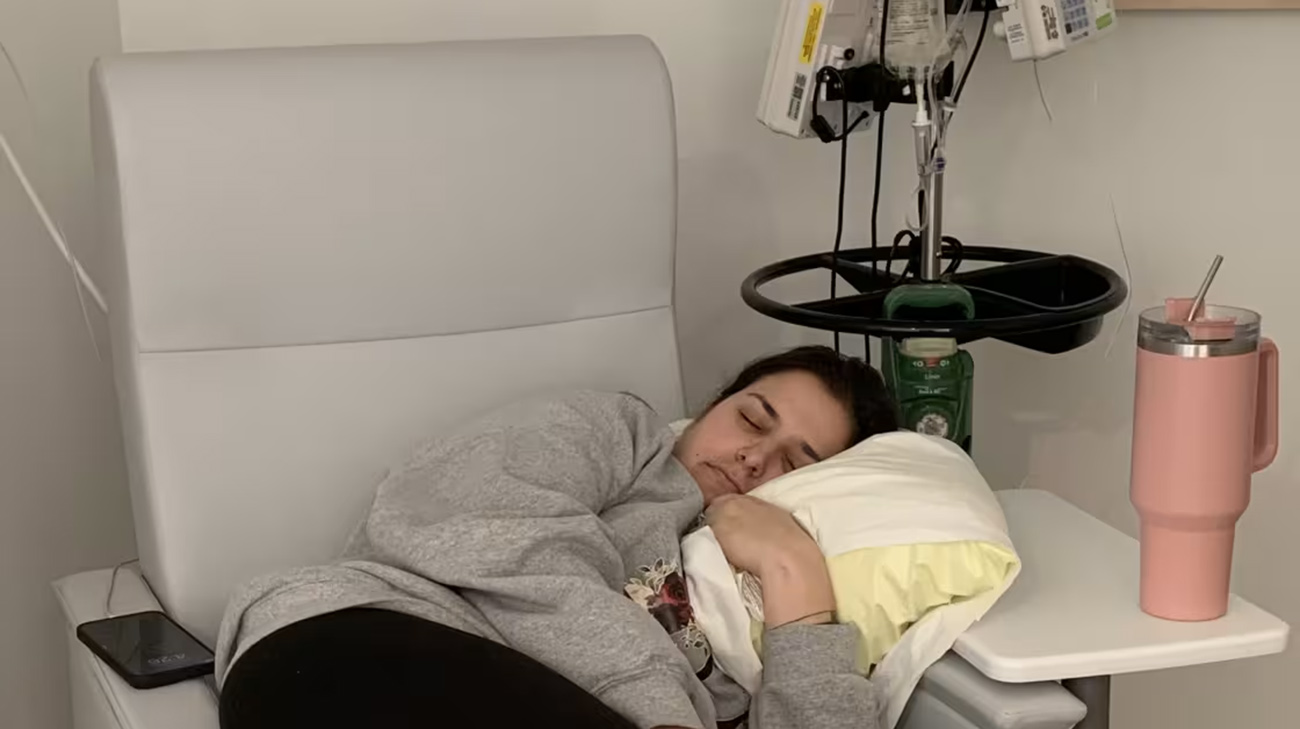
Hayley during treatment at Cleveland Clinic. (Courtesy: Hayley Dietz)
“She did absolutely the right thing. Hayley felt because of the cancer she was losing control of her life. And she needed something, just for her, to give her life additional meaning,” Dr. DeBernardo recalls.
Hayley’s cancer journey has been long and challenging, marked by moments of fear and resilience. About five years after the birth of her youngest child, she sought care from a local OB/GYN after experiencing intense pain and heavy vaginal bleeding. Tests revealed cervical cancer, and she was referred to Dr. DeBernardo, who quickly developed an aggressive treatment plan for her stage IIIB disease. It included chemotherapy, immunotherapy and radiation, the latter preceded by a surgical procedure to reposition her ovaries into her upper abdomen to protect them from permanent radiation damage.
The treatment was effective. In less than a year, Hayley showed no evidence of cancer. She remained in remission for nearly three years before feeling a thick lump in a lymph node near her throat. Further testing showed the cancer had returned and spread to several new locations, dealing a heavy emotional blow just as she had begun to reclaim a sense of normalcy.
“It was devastating. I kept thinking: ‘Do I really have to go through this again? And what am I going to tell my family,’” states Hayley.
Over the next five years, Hayley’s journey continued to unfold in cycles. She underwent another round of chemotherapy and once again achieved remission—this time for about a year. Then the cancer returned. Dr. DeBernardo prescribed an experimental drug that initially shrank her tumors and held the disease at bay, offering a temporary reprieve. Eventually, however, the tumors began to grow again.
Throughout this period, Hayley leaned heavily on a devoted circle of support: her husband, AJ; her mother, Karen, who retired early to help care for her grandchildren—Ana, now 19, and Brayden, now 15; a trusted mental health counselor; and Dr. DeBernardo, whose unwavering positivity, along with the experience and empathy of his care team, helped guide her through each uncertain step.

Hayley with her husband and kids. (Courtesy: Photography by Bryce)
“I don’t know what I would have done without my support system,” she explains. “But my kids were becoming teenagers, and needing me a lot more, and I wasn’t always able to be there for them. I would be exhausted all the time, not feeling well and sometimes would have to stay at home when my husband would take them somewhere. I felt like I was missing out on a lot of life.”
It was during this particularly difficult period that Hayley began talking about getting a goat. One day, her husband, AJ, surprised her with two baby Nigerian dwarf goats. Over time, the small hobby grew into a herd of eight.
“There were times when I would be upset, and my husband would say: ‘Go spend time with the goats.’ They would crawl all over me, give me kisses, let me pet them. It was so peaceful. Nothing would cloud my mind when it was just the goats and me.”
Meanwhile, guided by Dr. DeBernardo, Hayley continued trying different chemotherapy regimens. Then, in April 2023, she received the news she had been hoping for: she was once again in complete remission. Hayley has remained cancer‑free ever since.
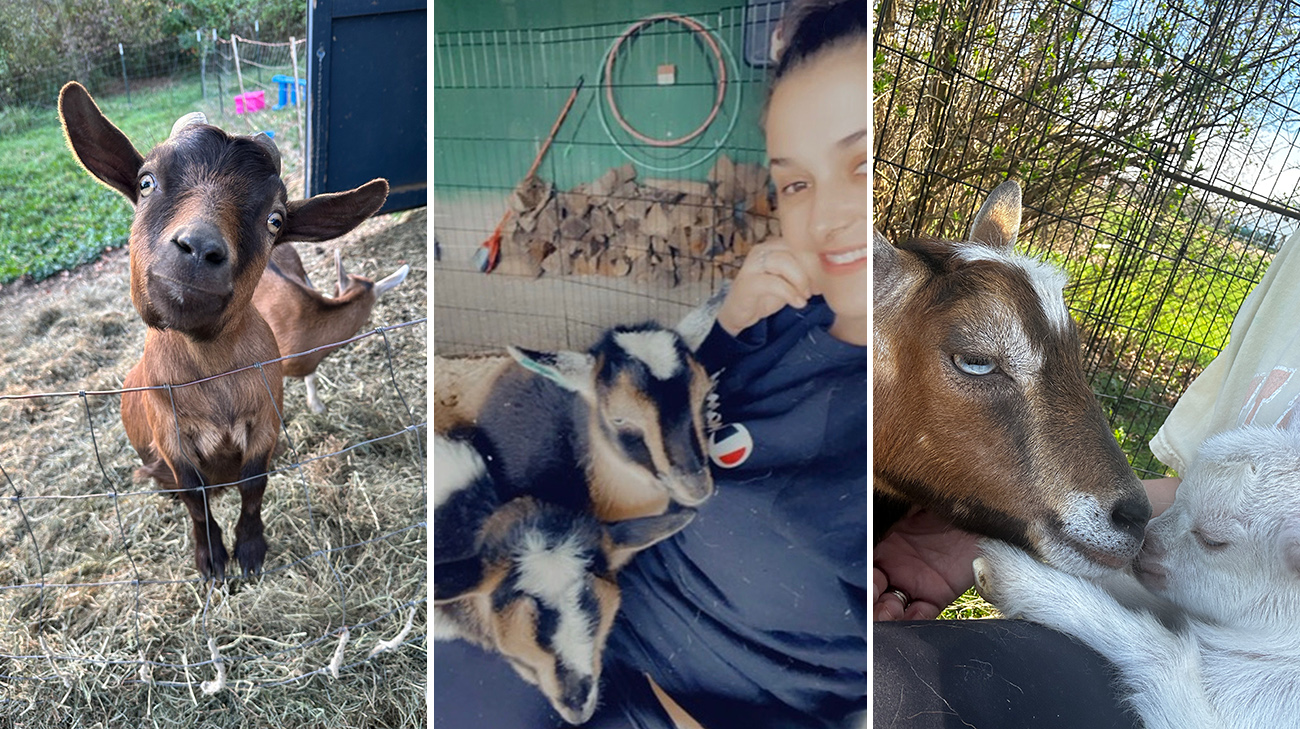
Hayley with her beloved goats. (Courtesy: Hayley Dietz)
Dr. DeBernardo remembers that day clearly. “When I saw that imaging test, it was beautiful – she didn’t have cancer! It’s those moments that make this job so special for me and our team, most of whom have been with Hayley through her entire journey,” says Dr. DeBernardo.
While Hayley’s restored health has brought welcome relief, it hasn’t changed her relationship with the goats. They remain an integral part of the Dietz family and a constant in Hayley’s daily routine. When she thinks about others facing traumatic cancer diagnoses and treatment, she hopes every patient finds the kind of support, human and perhaps animal, too, that gave her the strength to keep fighting.
Related Institutes: Ob/Gyn & Women's Health Institute, Cleveland Clinic Cancer CenterPatient Stories
Cleveland Clinic Team Helps Florida Patient Breathe Easier After Complex Lung Surgery
Oct 21, 2026

Teen Athlete Returns to Sports After Two Head Injuries Trigger Yearlong Headache
Oct 19, 2026