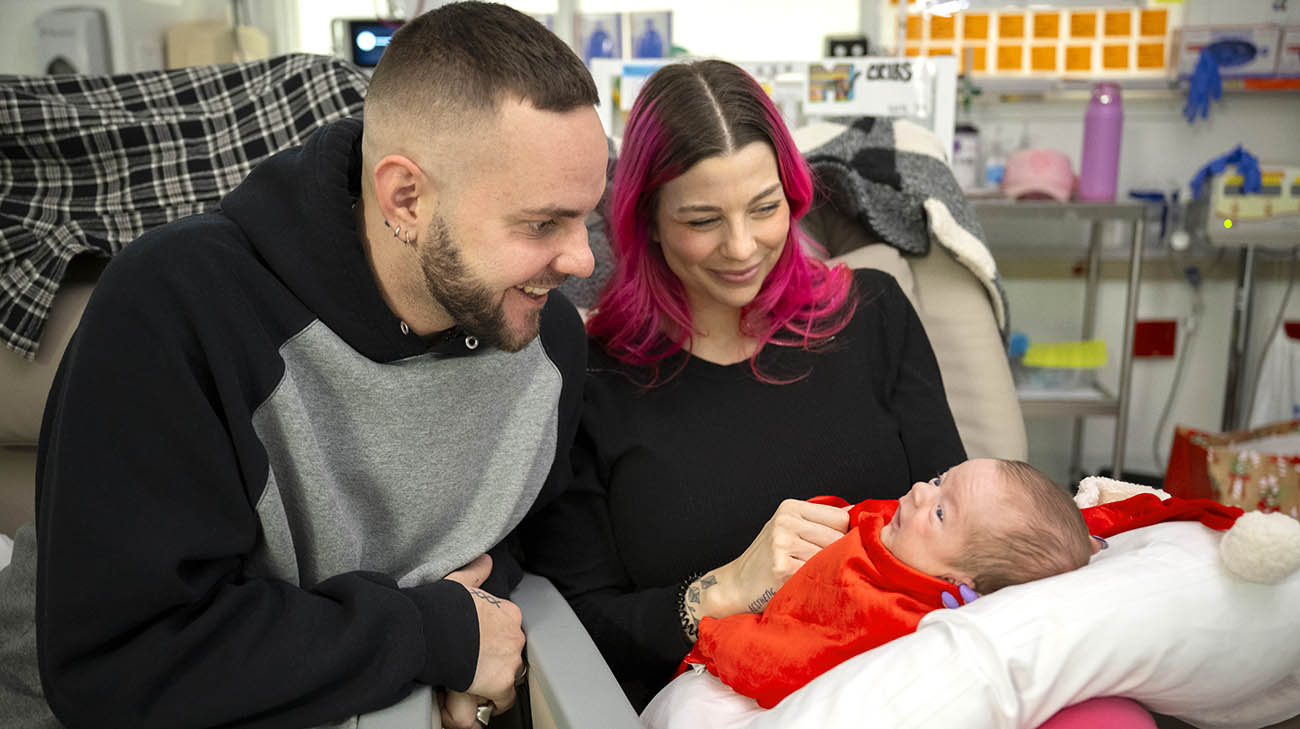
The baby shower planned for Dylan Carter and Drew Kline on a Sunday afternoon in October was no surprise to the couple. What stunned the 60 guests, however, was their announcement: baby Sixx Carter Kline had already arrived just after midnight at Cleveland Clinic Akron General. And he came early. Really early, about 11 weeks before his due date.
“When we walked in and I didn’t look very pregnant anymore, we said, ‘Surprise. He’s already here!’” recalls Dylan, age 33, a licensed esthetician who lives with boyfriend Drew in Bowling Green, Kentucky.
Weighing just 3 pounds, 2.6 ounces, Sixx—named after Mötley Crüe bassist Nikki Sixx—was quickly taken to the neonatal intensive care unit (NICU). For 63 days, a dedicated team of nurses, specialists and neonatologists provided round-the-clock care.
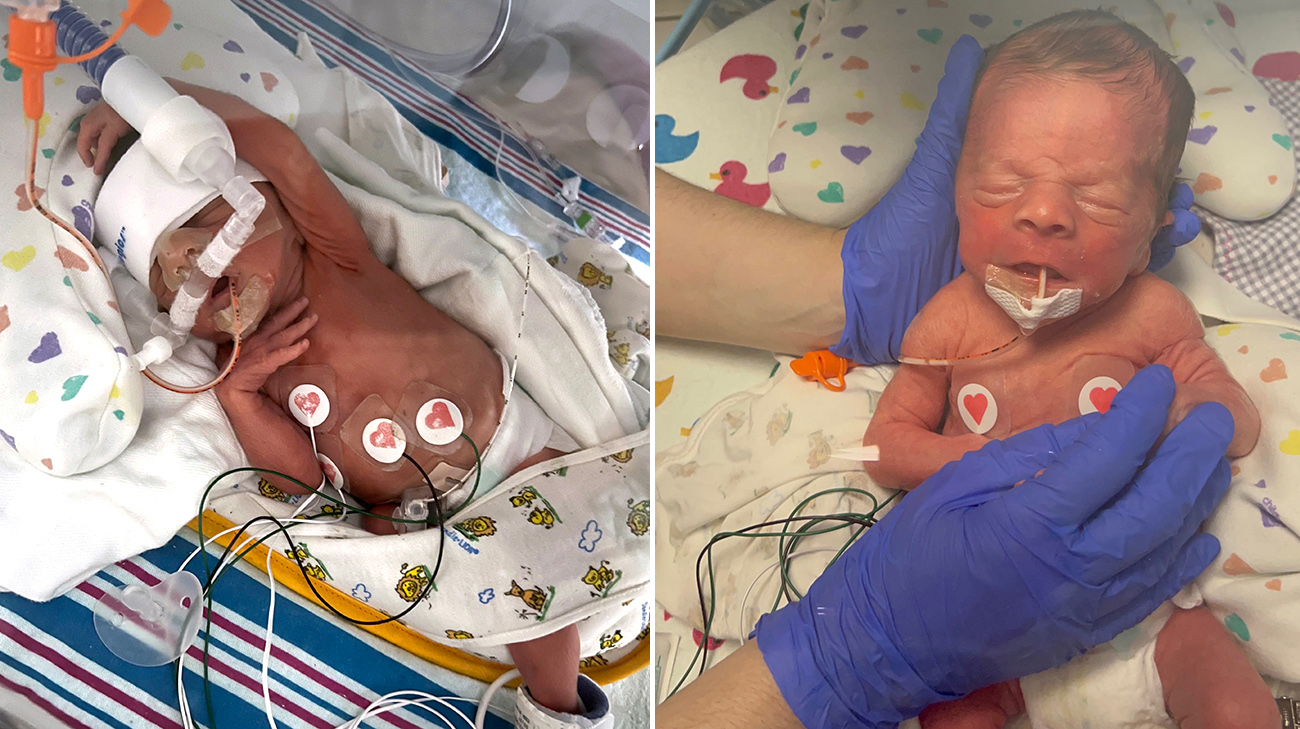
Sixx was born 11 weeks premature. (Courtesy: Dylan Carter)
“The nice thing about neonatology is I’m not just treating one disease or condition, I’m caring for everything that can affect a premature infant,” says Jalal Abu-Shaweesh, MD, one of the Cleveland Clinic Children's neonatologists who cared for Sixx. “Being part of a comprehensive children’s hospital means we have access to every specialty we might need—from cardiothoracic surgeons to hematologists—all under one roof.” including,
Dylan and Drew made the seven-hour drive from their home in Kentucky to Akron, Ohio, for what they thought would be a quick weekend trip to celebrate their baby shower. They never imagined it would turn into a two-month stay.
Dylan assumed the intermittent pain she’d been feeling for weeks was Braxton Hicks contractions or “false labor.” With a high pain tolerance and reassurance from her Kentucky obstetrician that changing positions would ease the discomfort she tried to push through. But the long car ride was miserable, and even after arriving at Drew’s mother’s house, the pain persisted.
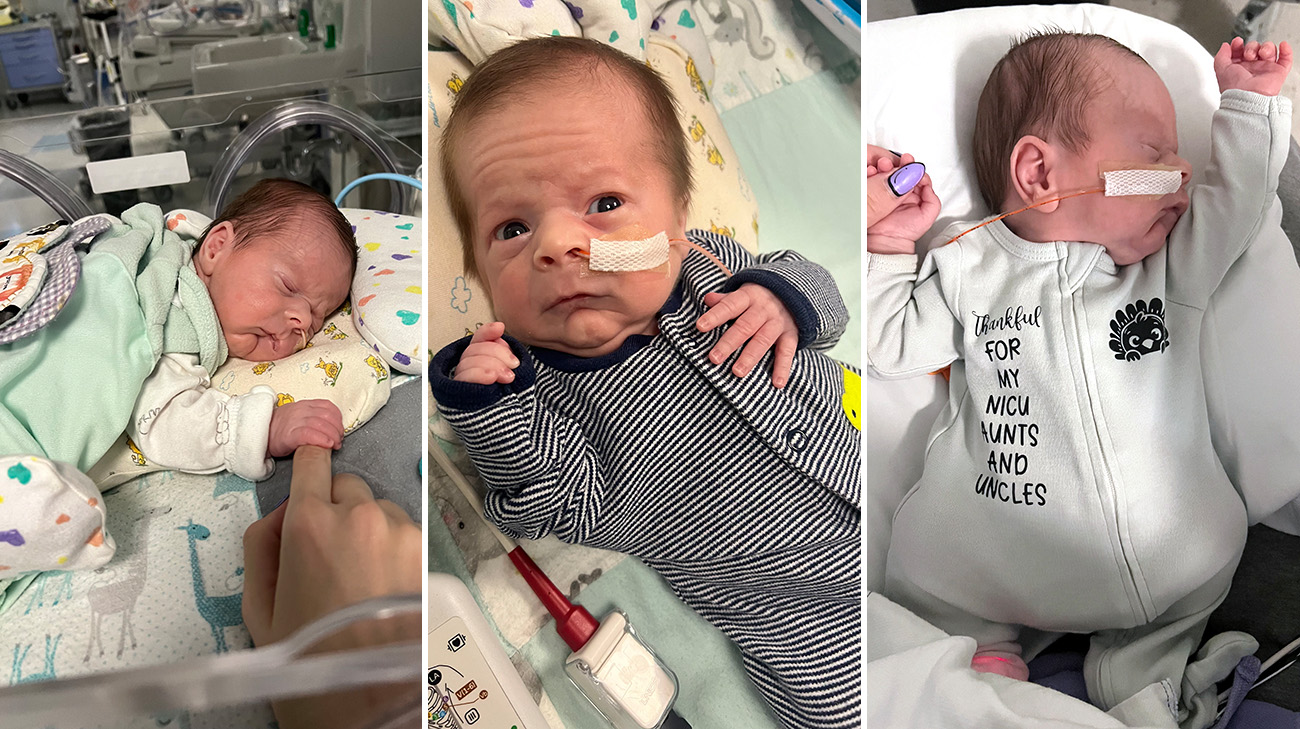
Sixx spent 63 days in the NICU. (Courtesy: Dylan Carter)
Hoping to distract herself, Dylan joined Drew and his family for trivia night at a local restaurant. Instead, she quickly realized her contractions were becoming stronger, faster, and far more regular.
“I looked at Drew’s mom and said, ‘Something is wrong. We need to go somewhere,’” Dylan explains. “I didn’t realize I had been in active labor all day.”
The family headed to Cleveland Clinic Akron General, and three hours later, Dylan gave birth to Sixx. While his early arrival was a shock, Dylan and Drew knew a premature birth was possible because Dylan was born with two uteruses. This rare congenital condition, called uterus didelphys, often leads to preterm births since fetal development occurs in one of the two uteruses, each about half the size of a typical uterus.
“I knew he might come early, but not two months early,” states Dylan, who was comforted by the fact the obstetrician who delivered Sixx was also pregnant at the time. “I was scared because I was afraid his body wasn’t ready yet.”
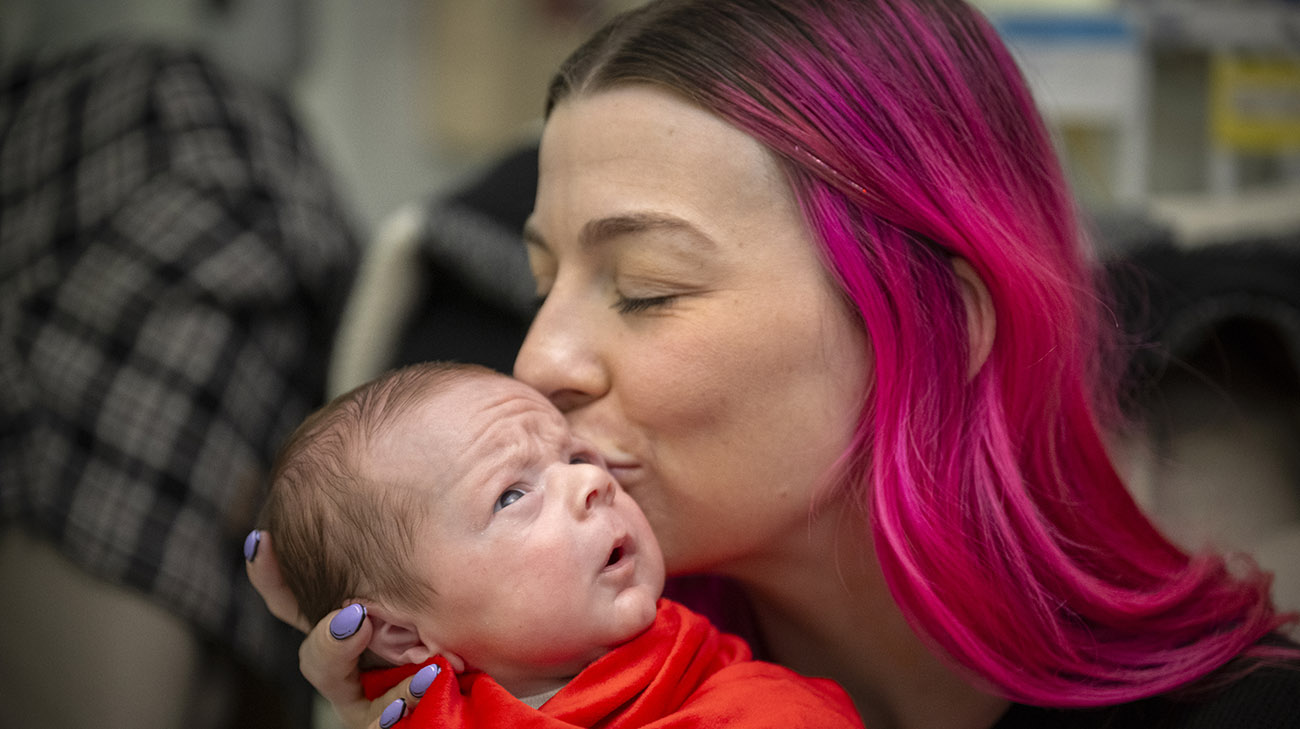
Dylan and Sixx prior to being discharged from the hospital to go home. (Courtesy: Cleveland Clinic)
Adds Drew, “When we first got to the hospital, they were going to try and slow down the contractions. But then, after Dylan’s placenta separated from the baby, they said the baby had to come quickly. I was just praying that everything would be OK with Dylan and Sixx.”
Dr. Abu-Shaweesh explains one of the biggest challenges in caring for premature babies is their underdeveloped lungs, which often lead to breathing difficulties. That was the case for Sixx, who was placed on a continuous positive airway pressure (CPAP) machine to help push air into his lungs. When his breathing worsened, due to a shortage of a naturally produced lipid that makes breathing easier, he was temporarily placed on a ventilator before returning to CPAP support.
Doctors also discovered Sixx had a rare heart arrhythmia known as Wolff-Parkinson-White (WPW) syndrome, which at times caused his heart rate to spike to more than 200 beats per minute. Fortunately, it was stabilized with an antiarrhythmic medication, a treatment Sixx may need throughout his life.
“In consultation with cardiology, we prescribed a medicine to control the heart rhythm. Sixx hasn’t had the high heart rate again,” explains Dr. Abu-Shaweesh. “He did really well with the treatment.”
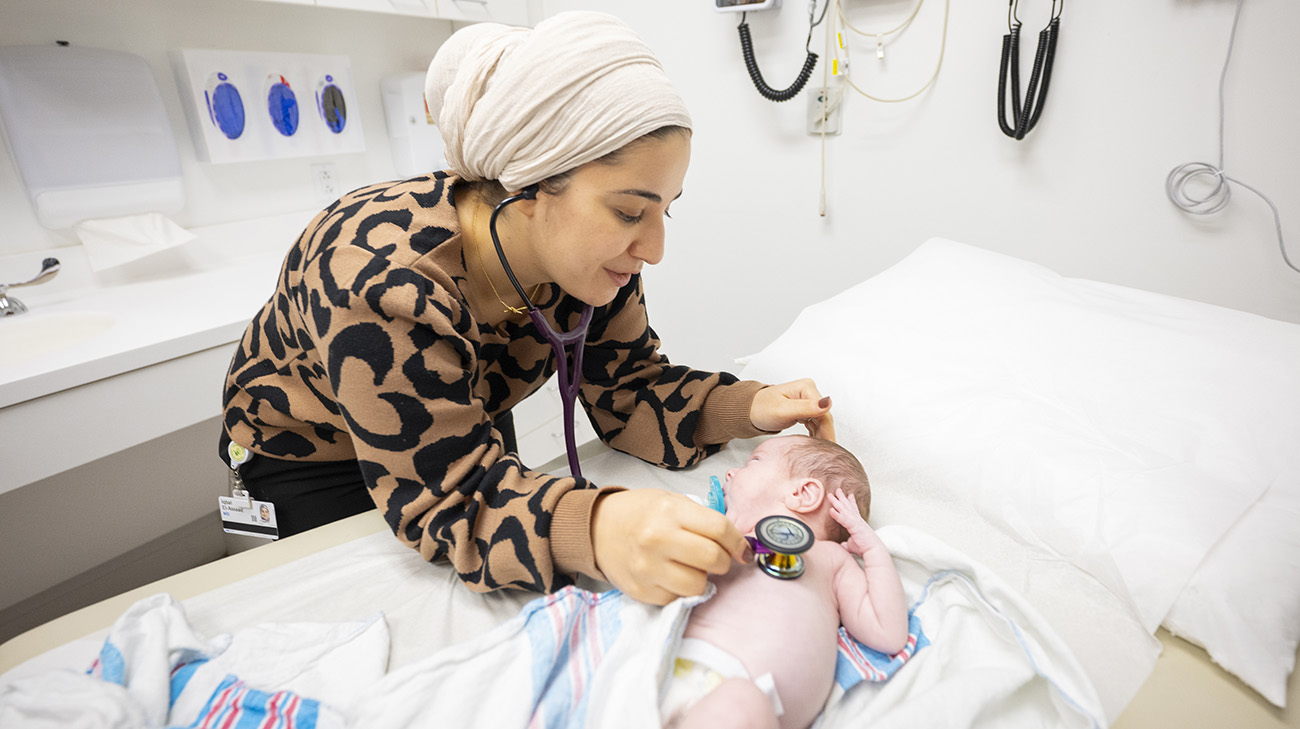
Sixx during a follow-up appointment at Cleveland Clinic Children's with cardiologist Dr. Iqbal El-Assaad. (Courtesy: Cleveland Clinic)
“I was so sad he was struggling,” Dylan says. “But I’m incredibly grateful he received all the care he needed.”
Drew and Dylan were also well cared for during their daily visits to the NICU, just a short drive from their temporary home at Ronald McDonald House. They praised Cleveland Clinic Akron General caregivers for their compassion and support—offering comfort during labor, helping with personal care, easing stress with thoughtful gestures, and even surprising them with baby essentials and handmade blankets. Those acts of kindness made a difficult time a little easier and left a lasting impression. “We had so much love and support from all the nurses. They were so amazing and loved Sixx so much,” Dylan emphasizes. “They felt like family to us.”
By the time the nurses, therapists, dietitians, physicians, and staff who cared for Sixx and his parents lined the NICU hallway for a celebratory “clap out,” the tiny newborn had more than doubled his weight reaching 7 pounds, 1.8 ounces as the family prepared for their drive back to Kentucky.
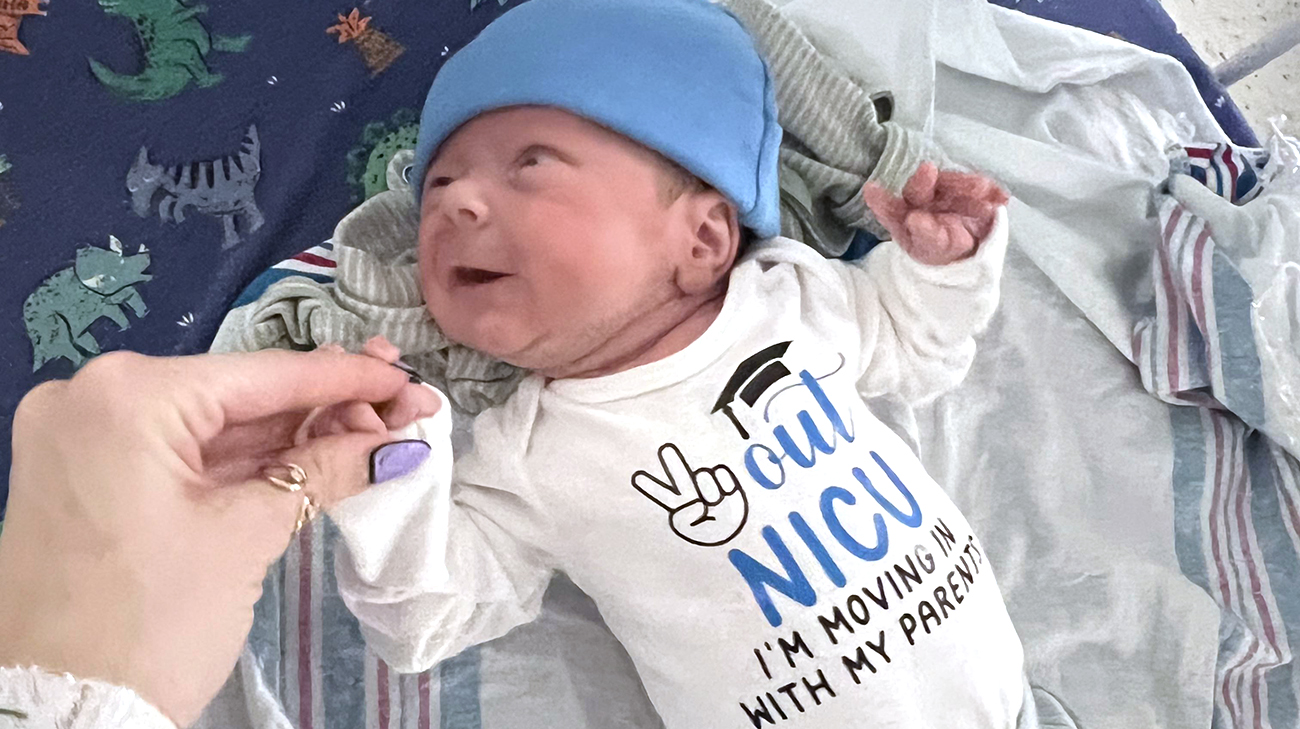
Sixx, Dylan and Drew went back to their home in Kentucky in December 2025. (Courtesy: Dylan Carter)
After completing CPR training and learning how to care for a premature baby, Dylan and Drew proudly walked out with their thriving son in their arms.
Dr. Abu-Shaweesh, who joined the “clap out,” says the tradition is meaningful for the entire team. “Part of our mission is to ensure parents feel prepared when their baby is ready to go home,” he explains. “Watching them walk out is an incredibly rewarding moment.”
Related Institutes: Cleveland Clinic Children's , Ob/Gyn & Women's Health InstitutePatient Stories
After Early Ovarian Cancer Diagnosis, Woman Finds Relief From Chemotherapy-Related Nerve Pain
Sep 18, 2026
Adelynn Strong: Family's Promise Carries Girl Through Leukemia Treatment
Sep 15, 2026