For as long as she can remember, Laura Zitzelberger’s life has revolved around animals. From nursing stray dogs and cats as a child, to working at the Toledo Zoo, to helping a coworker launch Nature’s Nursery Center for Wildlife Rehabilitation—a nonprofit that provides medical care for sick and injured wildlife—Laura, now 63, has dedicated her life to caring for creatures great and small.
Her passion has brought screech owls, woodchucks, eagles, opossums, rabbits, geese, and dozens of other species into her care, but it also led to a serious health challenge she never expected.
“When my pulmonologist finally figured out what was wrong, he said, ‘I’ve got good news. We can treat you. But you’ll have to give up your pet parrot and quit your job,’” recalls Laura from her Waterville, Ohio, home, where she lives with her husband, Tom, four cats, and a dog. “To me, that didn’t feel like good news at all. I’ve had my parrot for 23 years. And my work? It’s not just a job. It’s who I am.”
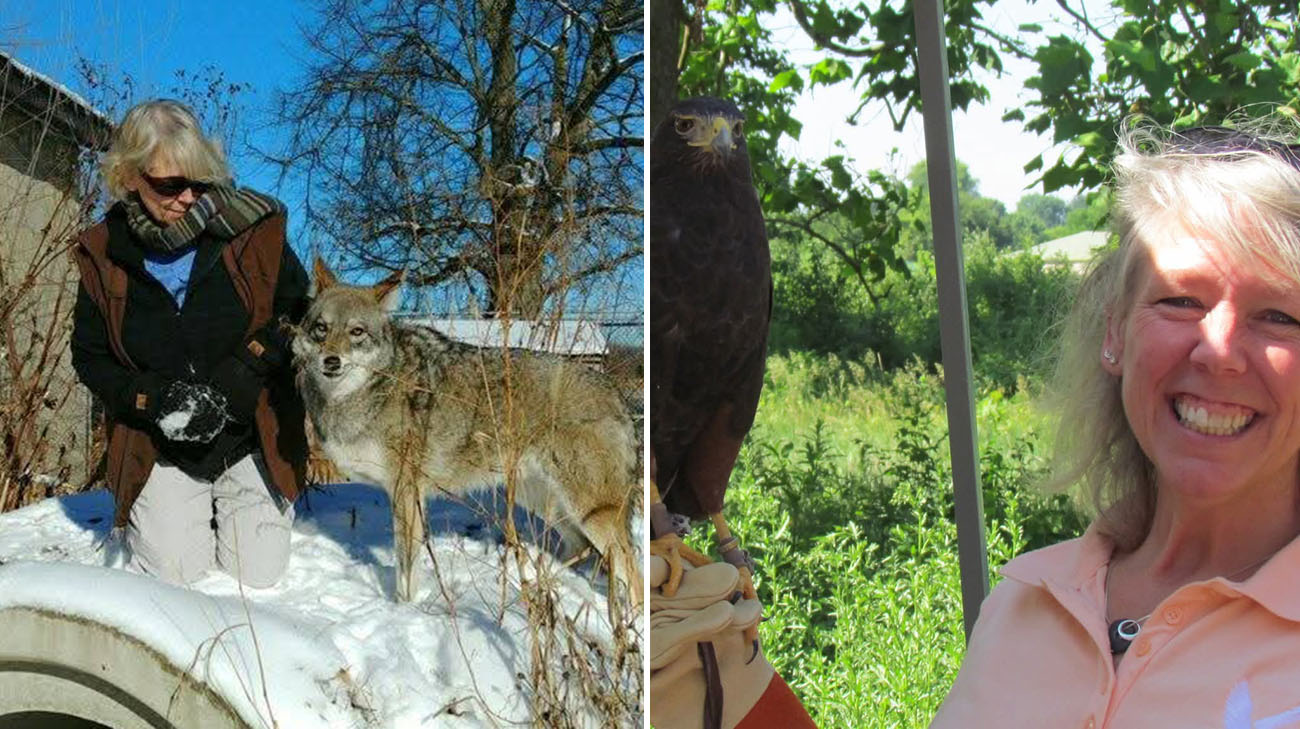
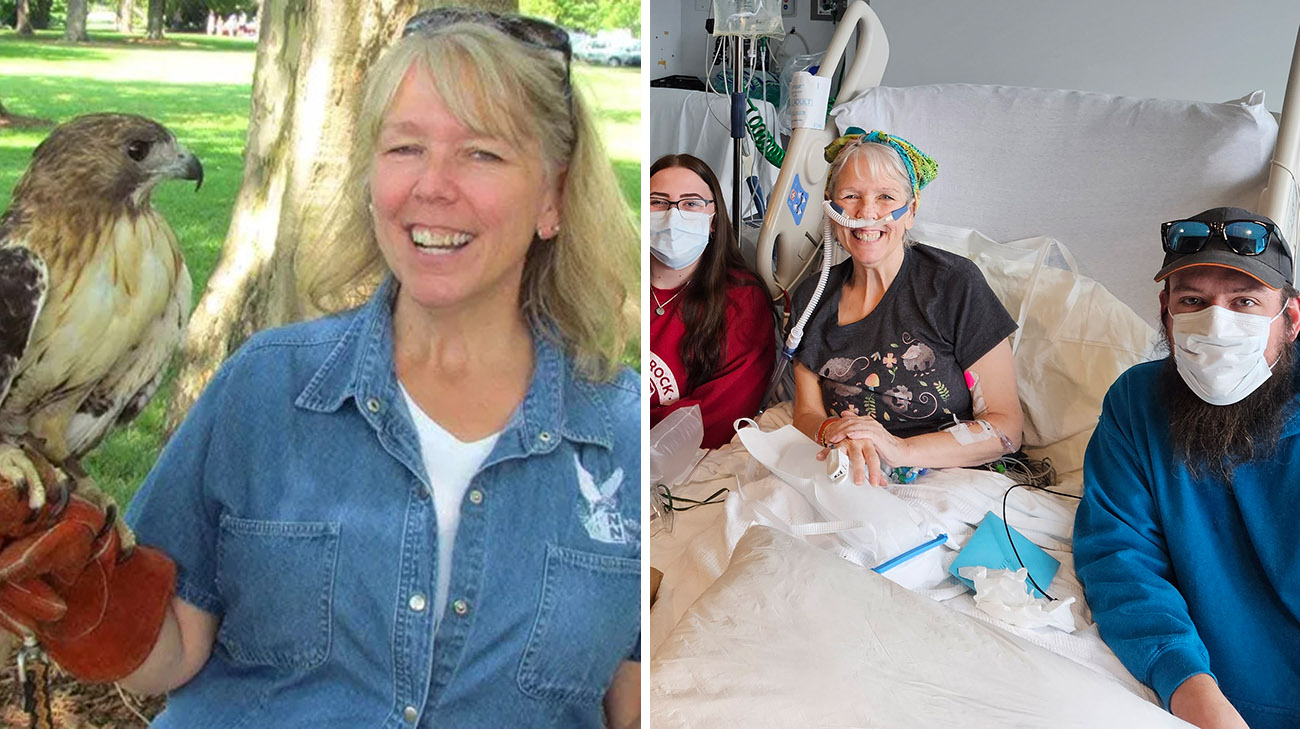
Laura devoted 36 years of her life to caring for birds and other animals. (Courtesy: Laura Zitzelberger)
The persistent cough Laura battled for years and the shortness of breath that gradually worsened was caused by hypersensitivity pneumonitis (HP), an allergic reaction that causes inflammation and, in some cases, scarring of the lungs. HP typically develops after repeated exposure to certain bacteria and allergens, often found in animals, especially wild birds, chickens, other fowl, and reptiles.
While acute HP can often be treated successfully, chronic HP may lead to permanent lung damage. For Laura, the challenge was compounded by her deep connection to the animals she cared for. Letting go wasn’t easy. Finding a suitable home for Reuben, her beloved parrot, took five years. During that time, her condition continued to progress.
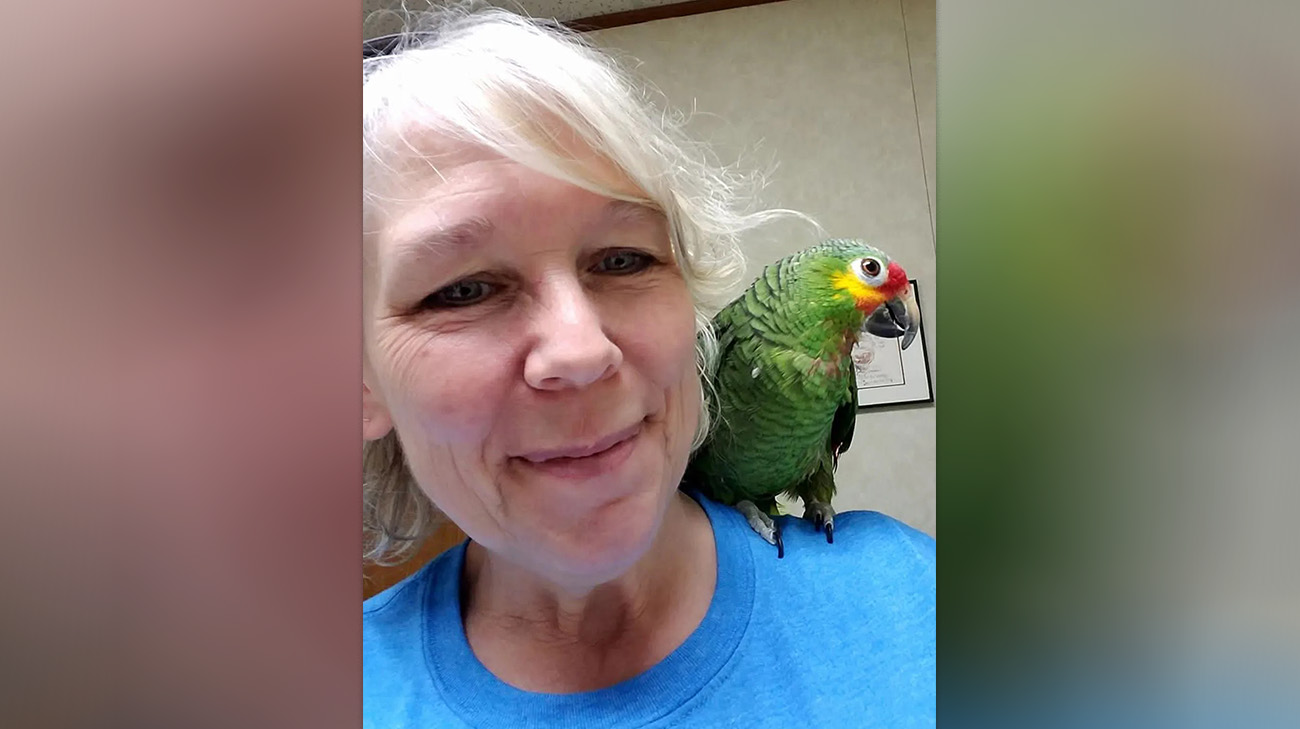
Laura with her pet parrot, Reuben, in May 2018. (Courtesy: Laura Zitzelberger)
Laura ultimately needed a double-lung transplant.
According to pulmonologist Marie Budev, DO, who is medical director of Cleveland Clinic’s lung transplant and heart-lung transplant programs, when HP reaches the chronic stage, as it did with Laura, lung transplantation is the only viable option for survival.
“Some patients with HP can go on for many years, consistently stable with only minor declines in function,” Dr. Budev explains. “But when scarring progresses and destroys the remaining healthy tissue, their condition can suddenly take a significant turn for the worse.”
A lung transplant was the last thing on Laura’s mind in 2013 when a lingering cough refused to go away after a bout of bronchitis. Initial tests came back negative, and steroids offered no relief. Her local doctor suggested the cough had likely become a habit. Unsatisfied, Laura sought a second opinion—leading to an open lung biopsy that revealed HP.
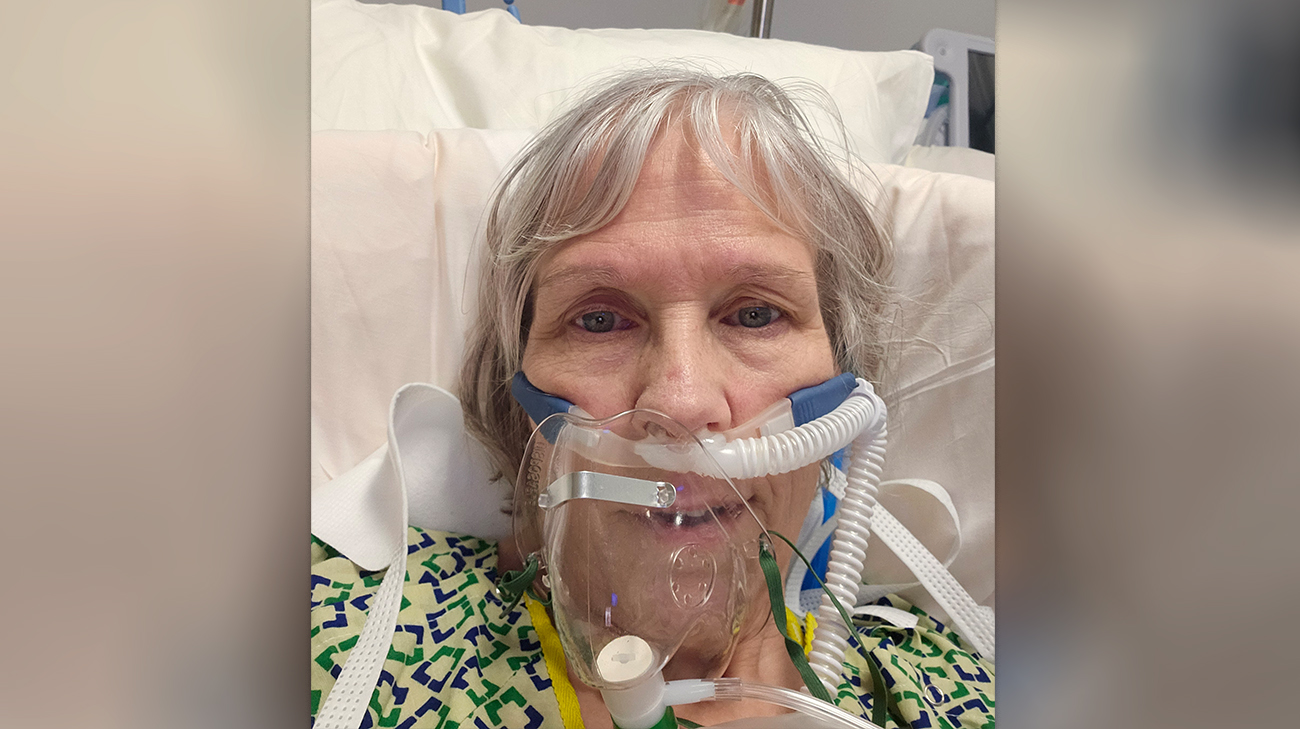
Laura on oxygen prior to undergoing a double-lung transplant. (Courtesy: Laura Zitzelberger)
“They found scarring and inflammation throughout my lungs, and I started to have to distance myself from the animals,” says Laura. “Except for the annoying cough, I wasn’t feeling that bad or noticing any effects on my ability to breathe. Everything happened gradually.”
The gradual decline became rapid in early 2023. Laura began pausing to catch her breath while walking up the hill to her home. Not long after, her Cleveland Clinic doctors told her she would need supplemental oxygen to help her breathe. Laura’s care team also began the process of getting her listed on the national lung transplant registry.
“I’m usually very optimistic about things, and I wasn’t afraid of death,” Laura adds. “But when they dropped off the oxygen concentrator and tanks of oxygen for the first time, I just sat down and cried.”
Even with oxygen, everyday tasks—like taking a shower—became exhausting. Within a few months, Laura’s need for oxygen increased from about two liters a day to more than 60. As her condition worsened, she faced occasional hospital stays at Cleveland Clinic. All she could do was wait and hope for new lungs.
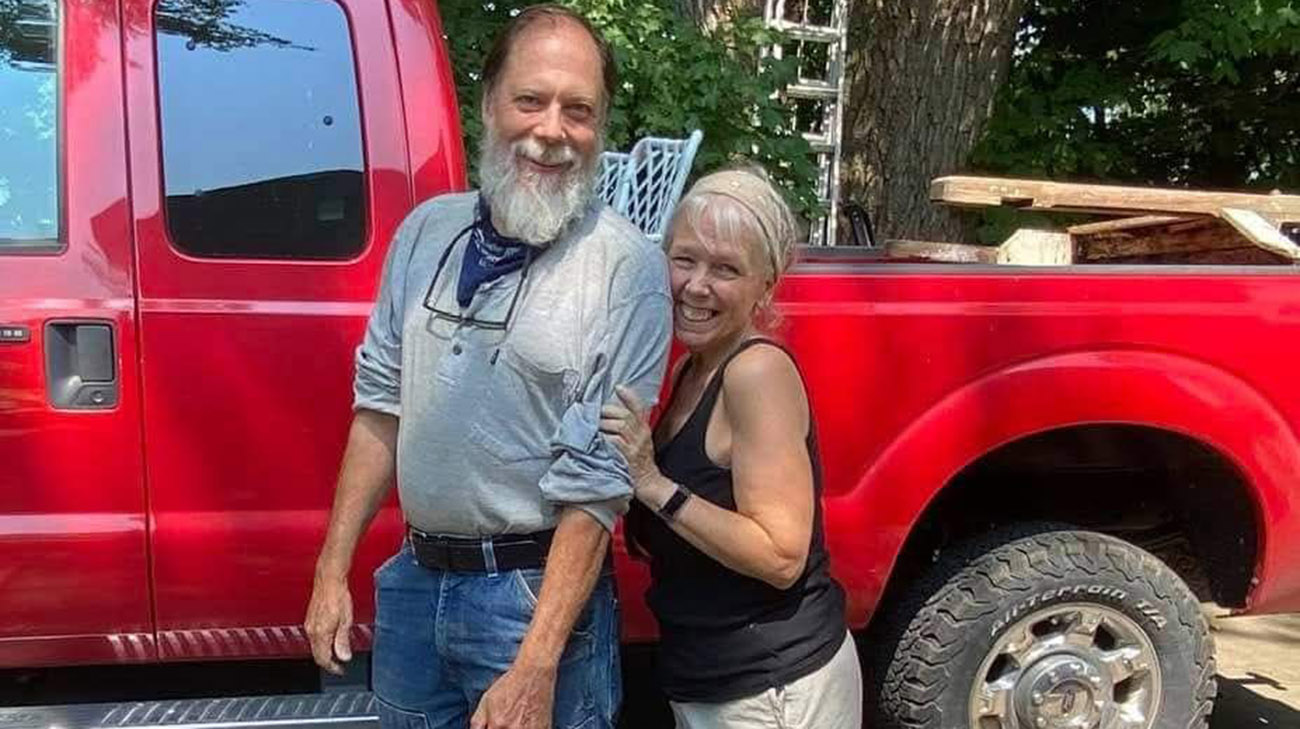
Laura with her husband, Tom, in August 2021. (Courtesy: Laura Zitzelberger)
Finally, on December 12, 2023, a matching pair of lungs was found for Laura. Cardiothoracic surgeon Kenneth McCurry, MD, and team performed the transplant, which was completed successfully and without complications.
“Laura’s transplant was a complex procedure, but everything went smoothly thanks to the skill and coordination of our entire team,” says Dr. McCurry, Cleveland Clinic’s enterprise director of transplantation and surgical director of Cleveland Clinic’s lung transplant and heart-lung transplant programs. “It’s always remarkable to see patients like Laura recover and regain the ability to breathe freely. Organ donation is a gift that changes countless lives.”
Laura was expected to remain in the hospital for six weeks or more, but she was discharged in three weeks—right after the holidays. It’s a season when she and Tom typically host their annual holiday open house for family and friends. That year, on an unseasonably warm Christmas Day, Laura stepped onto the hospital rooftop with friends for a few minutes and breathed in the fresh air.
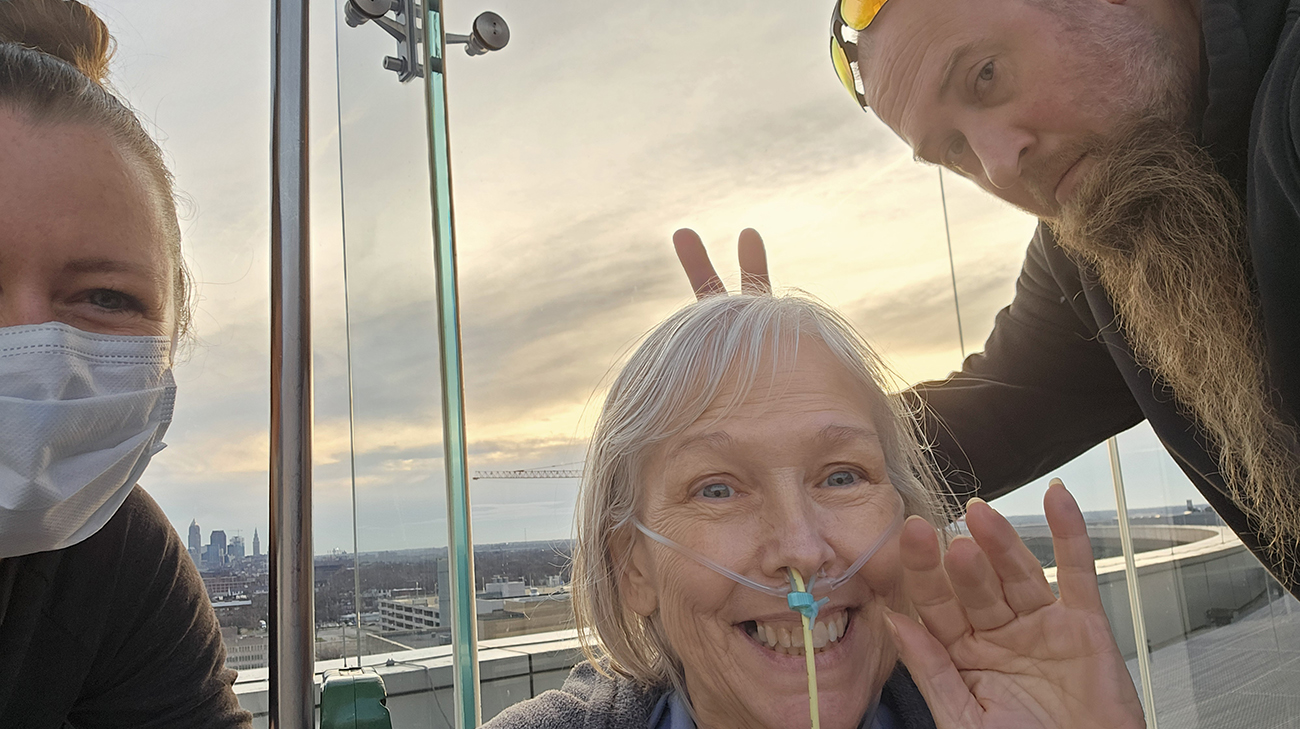
Laura on the rooftop with friends at Cleveland Clinic main campus on Christmas Day in 2023. (Courtesy: Laura Zitzelberger)
Dr. Budev adds a key to Laura’s quick recovery was her dedication to staying as fit and healthy as possible during the months leading up to the transplant surgery, despite her worsening condition.
“To breathe, it’s not just about the lungs but the entire muscular structure that surrounds them,” she explains. “The rib cage muscles, diaphragm, quadriceps –they all participate in breathing and must be kept strong. Laura had no major problems because, in part, she was otherwise strong before the transplant.”
These days, Laura continues to work in a more administrative and educational outreach position at Nature’s Nursery, where she has volunteered or worked for its entire 36-year history. But to protect her new lungs, she no longer interacts directly with the animals.
“My lungs are great now,” emphasizes Laura, who continues regular follow-ups with pulmonologist Jason Turowski, MD. “I’ve been given this incredible gift, thanks to a generous donor and their family, and I’m going to do everything possible to protect it.”
Related Institutes: Respiratory Institute, Heart, Vascular & Thoracic Institute (Miller Family)Patient Stories
After Early Ovarian Cancer Diagnosis, Woman Finds Relief From Chemotherapy-Related Nerve Pain
Sep 18, 2026
Adelynn Strong: Family's Promise Carries Girl Through Leukemia Treatment
Sep 15, 2026