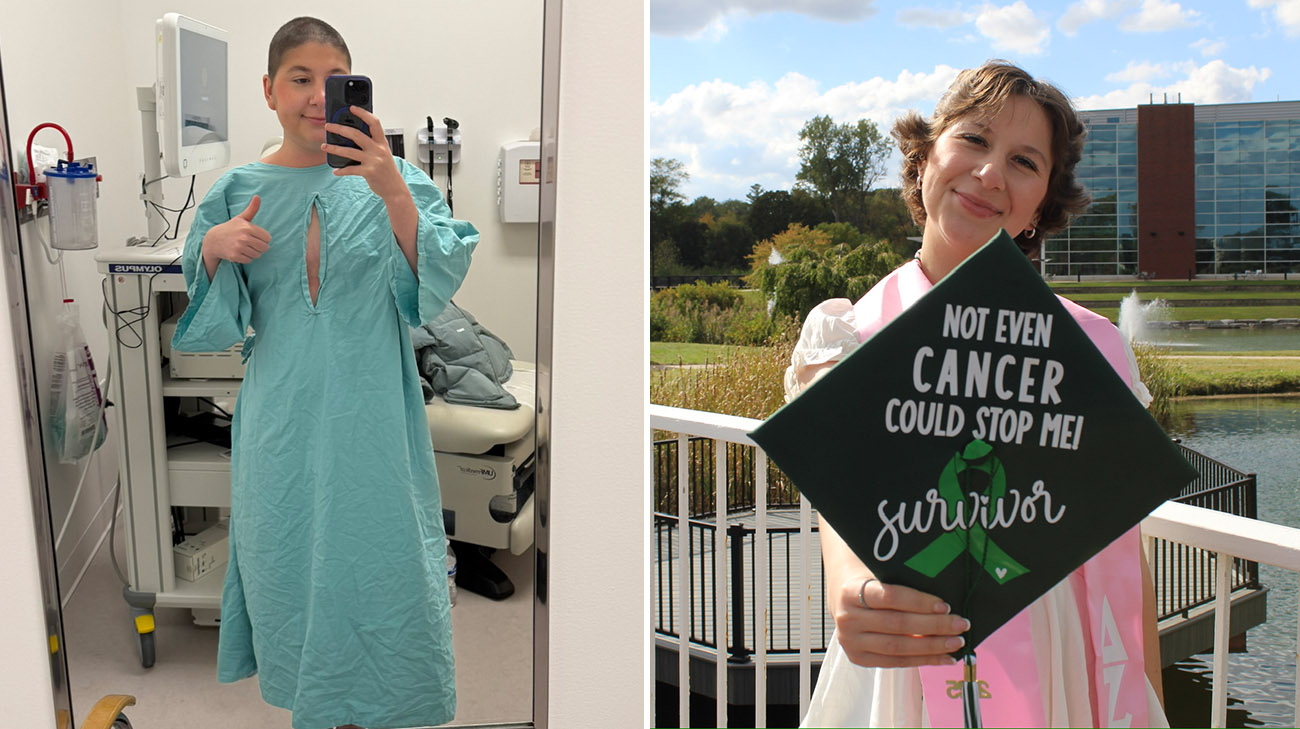
In the summer of 2024, Emma Operacz, 21, was heading into her last semester at Eastern Michigan University, pursuing a psychology degree. She was in a sorority, had a big circle of friends, and a part-time job as a barista. She was enjoying life.
But Emma wasn’t feeling well. She thought she had a urinary tract infection, so she went to an urgent care clinic near her school in Ypsilanti, Michigan. After two rounds of antibiotics, the pain was worse; she had a fever, felt weak, and wasn’t eating.
A CT scan ordered by her primary care physician found nothing out of the ordinary. But after a pelvic exam with a urogynecologist found her lymph nodes were swollen, Emma was sent to the local hospital’s emergency department for antibiotics, pain medication, and an ultrasound.
In the ED, physicians said it was either a pelvic infection or lymphoma.
She was admitted to the hospital for a week and treated with antibiotics. Still, her condition did not improve. A biopsy revealed Emma had stage four T-cell lymphoma, a rare type of blood cancer.
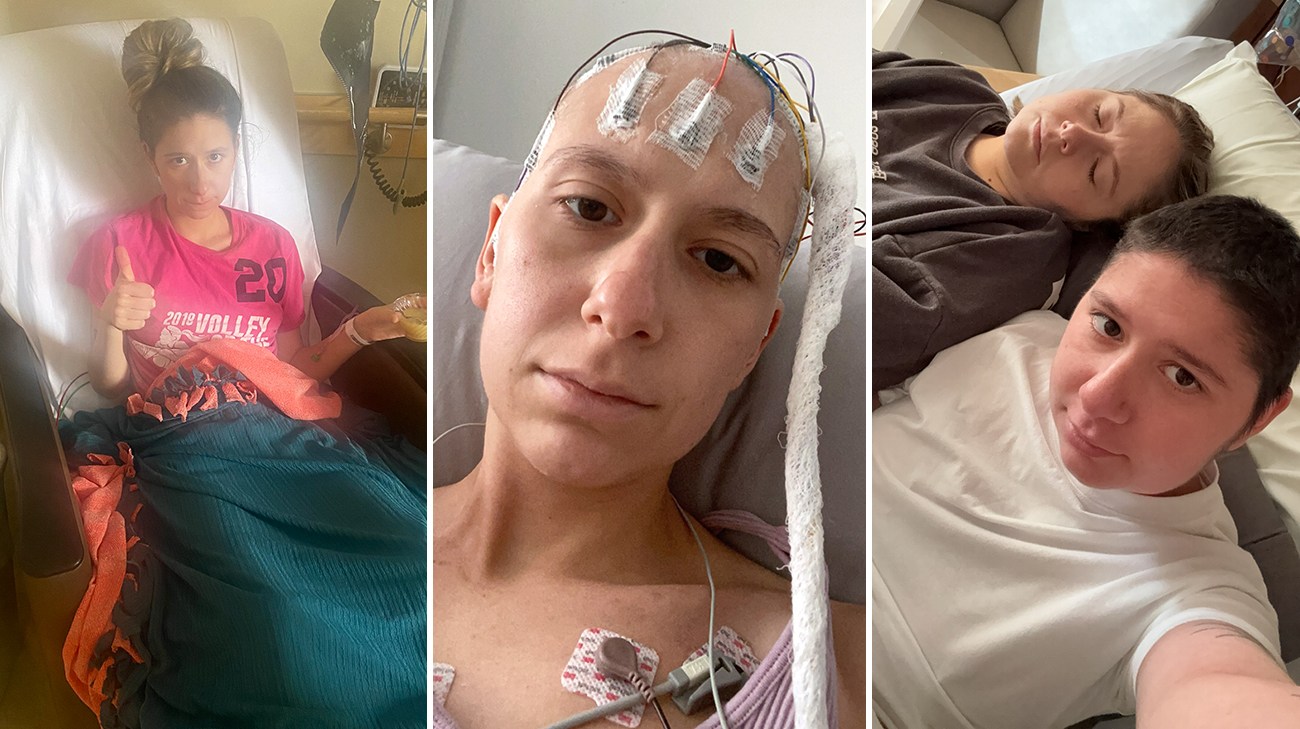
Emma during treatment at Cleveland Clinic. (Courtesy: Emma Operacz)
T-cell lymphomas are rare forms of non-Hodgkin lymphoma. They start in T lymphocytes, a type of white blood cell. Depending on the type of T-cell lymphoma, treatments may involve chemotherapy, targeted therapy, immunotherapy, and stem cell transplant.
At the time, Emma remembers thinking treatment would be easy. “It would probably be about six rounds of chemo, then I could finish school and go back to work.” However, her journey wasn’t simple.
Unfortunately, her disease did not respond to the first chemotherapy regimen she received. She was readmitted to the local hospital with headaches and fevers.
Further testing showed the aggressive cancer had spread to her central nervous system, including her brain.
Because of the seriousness of her condition, Emma’s family wanted to get a second opinion. A physician in Toledo, Ohio, referred Emma to Deepa Jagadeesh, MD, a hematologist/oncologist at Cleveland Clinic, who specializes in T-cell lymphoma.
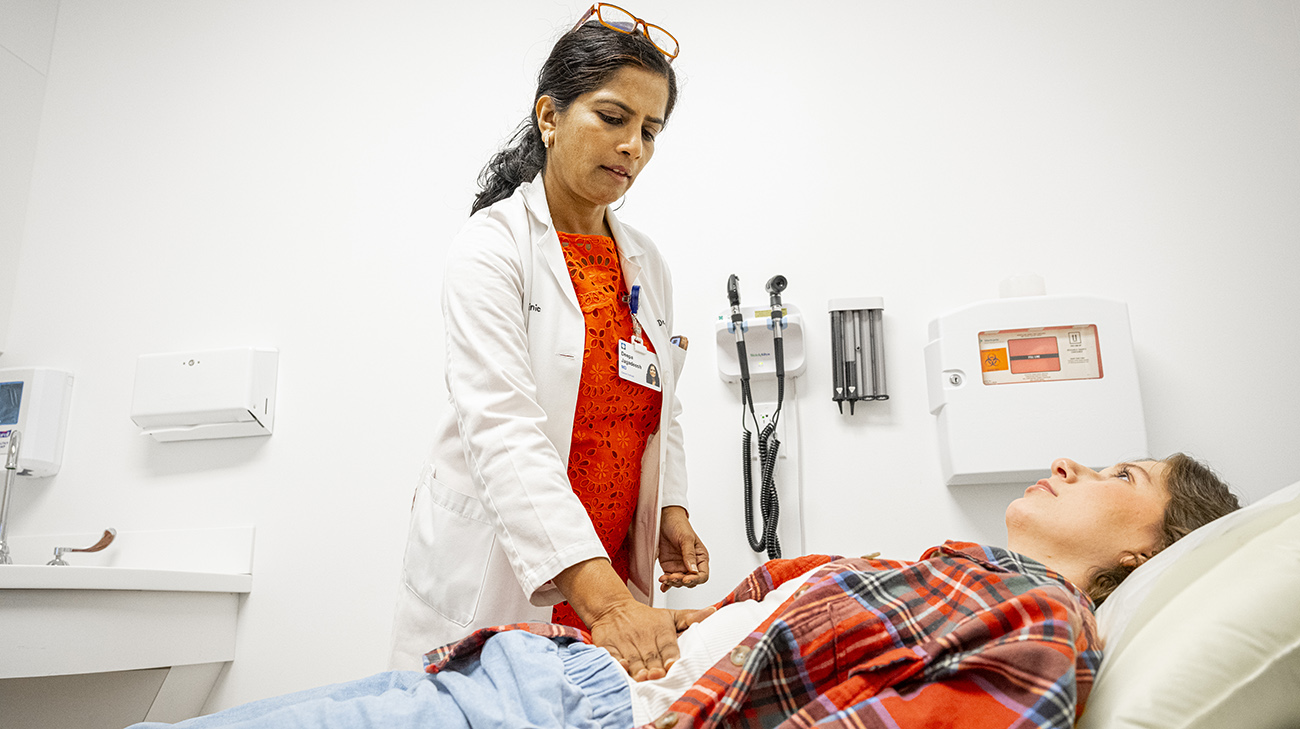
Emma at Cleveland Clinic during a follow-up appointment with Dr. Deepa Jagadeesh. (Courtesy: Cleveland Clinic)
Emma was transferred and admitted to Cleveland Clinic main campus in Cleveland, Ohio.
“I was on a lot of medication, in constant pain, and very out of it,” she says. “My parents said I was in the hospital for a month. The strong chemo did more harm than good. It was very scary.”
The situation was so critical, Emma’s family and friends began preparing for the worst. She signed a healthcare power of attorney so her parents, Mike and Jenny Operacz, could make medical decisions for her.
“Since the traditional chemotherapy treatment didn’t work for Emma,” according to Dr. Jagadeesh, “we tried a targeted novel therapy.”
Alectinib is a targeted therapy typically used to treat patients with lung cancer. Unlike chemotherapy, which attacks all rapidly dividing cells (including healthy ones), Alectinib targets the abnormal alk protein that is the driver for Emma’s lymphoma, making it more precise and generally less damaging to normal cells. It was a lengthy process to get it approved for T-cell lymphoma treatment, Dr. Jagadeesh says.
"T-cell research is advancing, but progress remains incremental," Dr. Jagadeesh says. "There are promising developments in rare disease treatments, yet greater funding for clinical research is essential to help accelerate breakthroughs."
Emma took four targeted therapy pills each morning and evening. Slowly, she started to improve.
Emma’s specific T-cell lymphoma was anaplastic large-cell lymphoma, referred to as ALCL alk positive. It is an aggressive subtype that grows very quickly. While T-cell lymphoma is a rare disease, it’s not uncommon in younger patients, Dr. Jagadeesh says.
Emma was disappointed she had to drop out of her last semester of school, but she says there was no way she could have gone back at that time. “My dad says I was only awake for about 30 minutes each day. Honestly, I don’t remember anything.”
After four months of targeted therapy, a PET scan showed Emma was in complete remission. But her care team had to continue monitoring her, Dr. Jagadeesh says, because Emma’s aggressive cancer might not stay in remission.
The next hurdle was finding a bone marrow donor quickly. Emma’s older sister Sara ultimately ended up being a match.
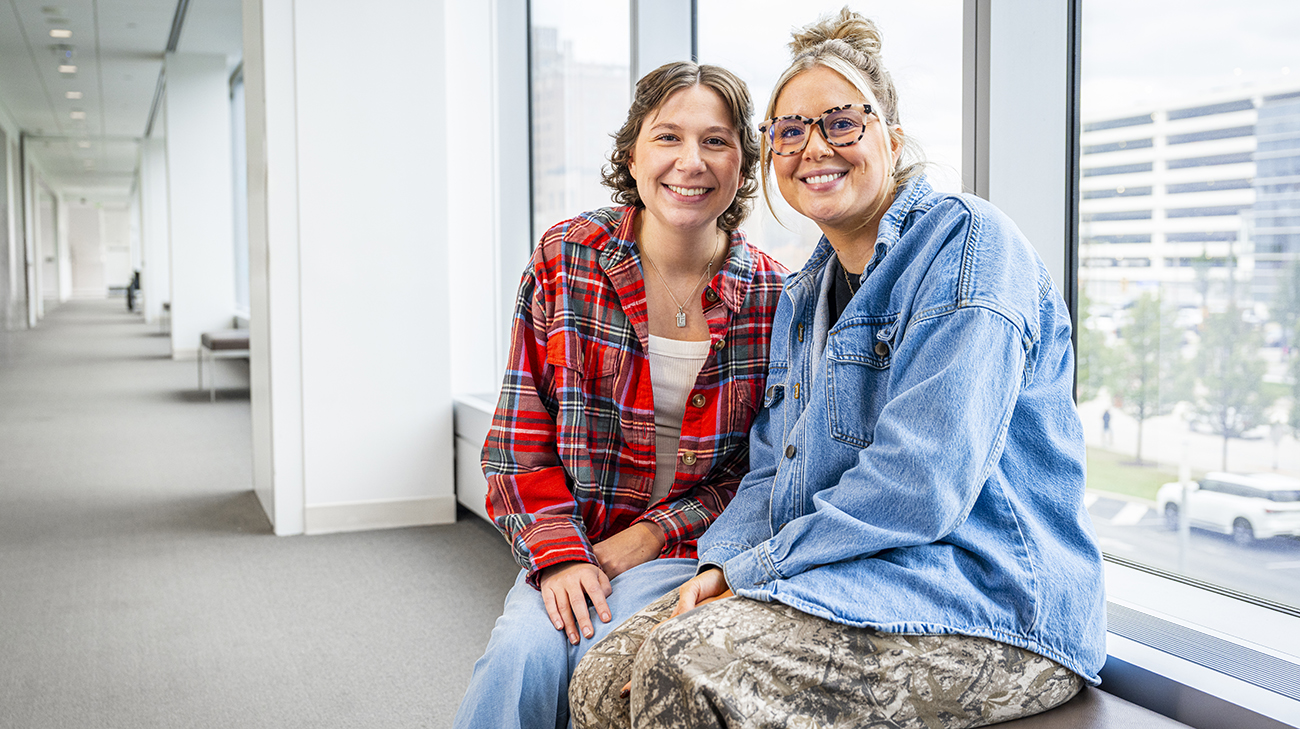
Emma with her sister and bone marrow donor, Sara. (Courtesy: Cleveland Clinic)
Dr. Jagadeesh says bone marrow transplantation is a prolonged process with the possibility of complications. Emma was in the hospital for 30 days prior to the transplant, receiving high doses of chemo and radiation prior to transplant.
“You are prone to infection, so there’s a special floor in the hospital and you can’t leave,” Emma says. “In November of 2024, I spent my 22nd birthday and Thanksgiving in the hospital. That Christmas, we were at a rental house in Cleveland.”
One hundred days after her bone marrow transplant, Emma was doing well and finally able to move back home with her parents.
Throughout her journey, Emma says she was never alone. Her dad took her to doctors’ appointments, and one of her parents or her sister slept at the hospital every night she was there. Her older brother Jeremiah and her friends were also part of her support system.
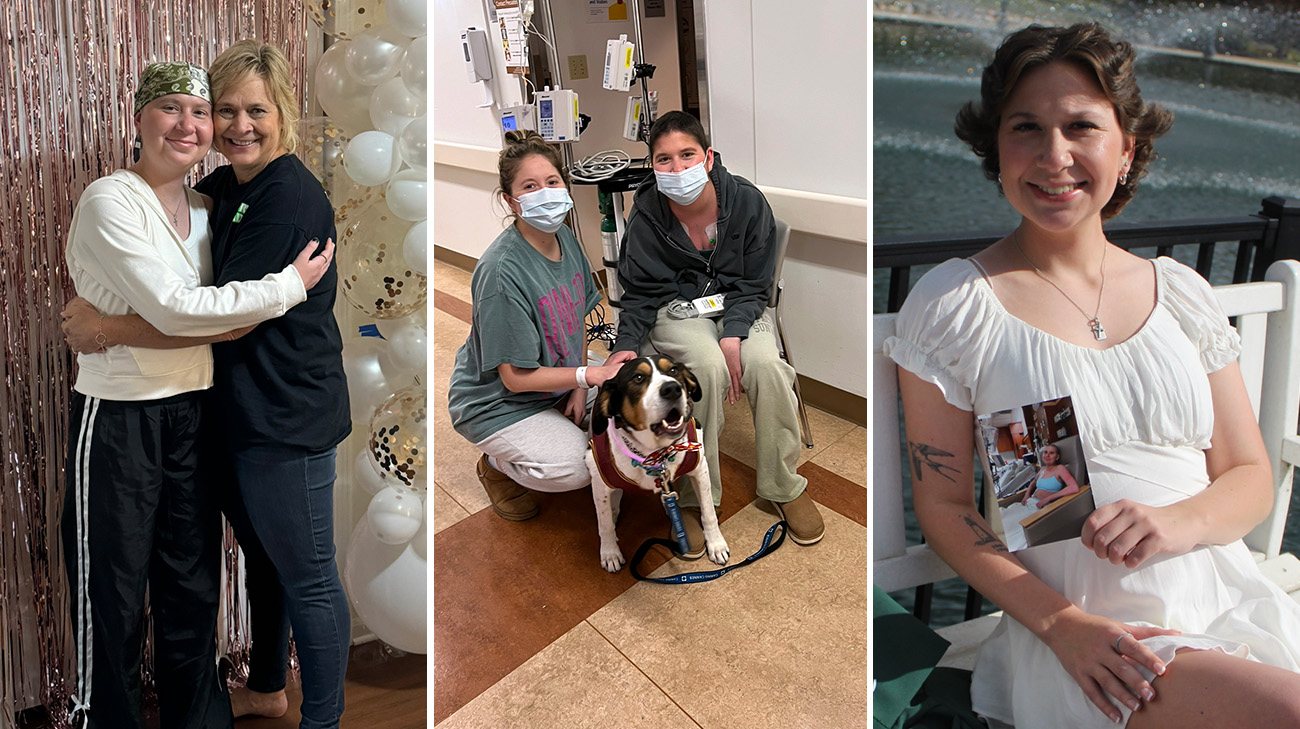
Emma is grateful for friends and family who supported her throughout her journey. (Courtesy: Emma Operacz)
“She's one year post transplant,” Dr. Jagadeesh says. “I’m happy to see her determined to go to grad school and move on with her life. Emma is now in tune with the disease and her body. She’s taken ownership of it. It’s very encouraging to see her growth and maturity. I’m so proud of her.”
Following recovery from the transplant, Emma and Sara got an apartment near their hometown in May 2025.
Emma finished three online classes to graduate from Eastern Michigan in December 2025. And she was accepted into Cleveland State University’s online graduate program in social work.
After completing graduate school and getting her social work license to practice, Emma’s goal is to work for Cleveland Clinic.
Having gone through her diagnosis and treatment, Emma says she realized she wants to do more to help people, much like the healthcare workers who helped and inspired her.
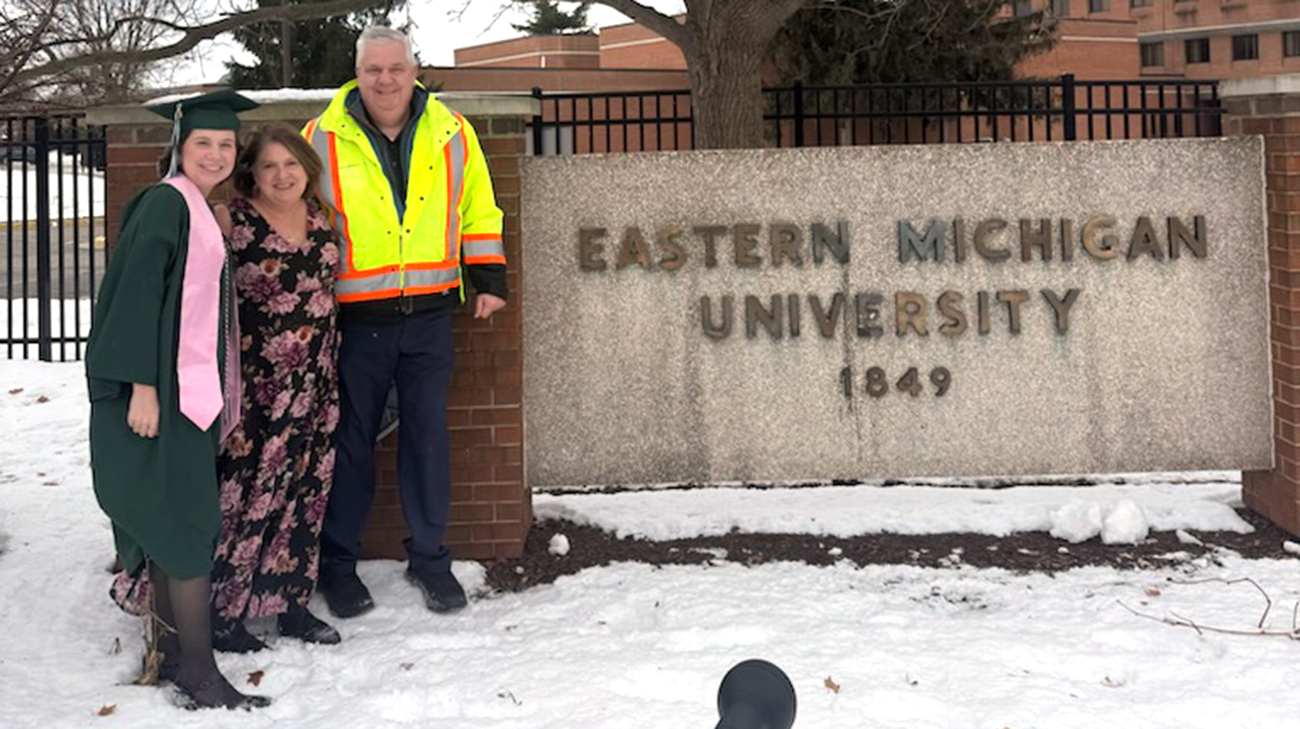
Emma with her parents after graduating from Eastern Michigan University in December 2025. (Courtesy: Emma Operacz)
“I was mad at the world for a long time,” Emma remembers. “I was really low – mentally and physically. Now, I can give back. I can help those going through something similar to me; I can relate to them.”
Emma says her family has been her rock. In addition, Emma recognizes Dr. Jagadeesh and all the providers who took care of her, along with her friends and the community.
“I can’t say thank you enough to all the people who helped and supported me,” she says. “I’m feeling great, and I’m heading in the right direction.”
Related Institutes: Cleveland Clinic Cancer CenterPatient Stories
Cleveland Clinic Team Helps Florida Patient Breathe Easier After Complex Lung Surgery
Oct 21, 2026

Teen Athlete Returns to Sports After Two Head Injuries Trigger Yearlong Headache
Oct 19, 2026