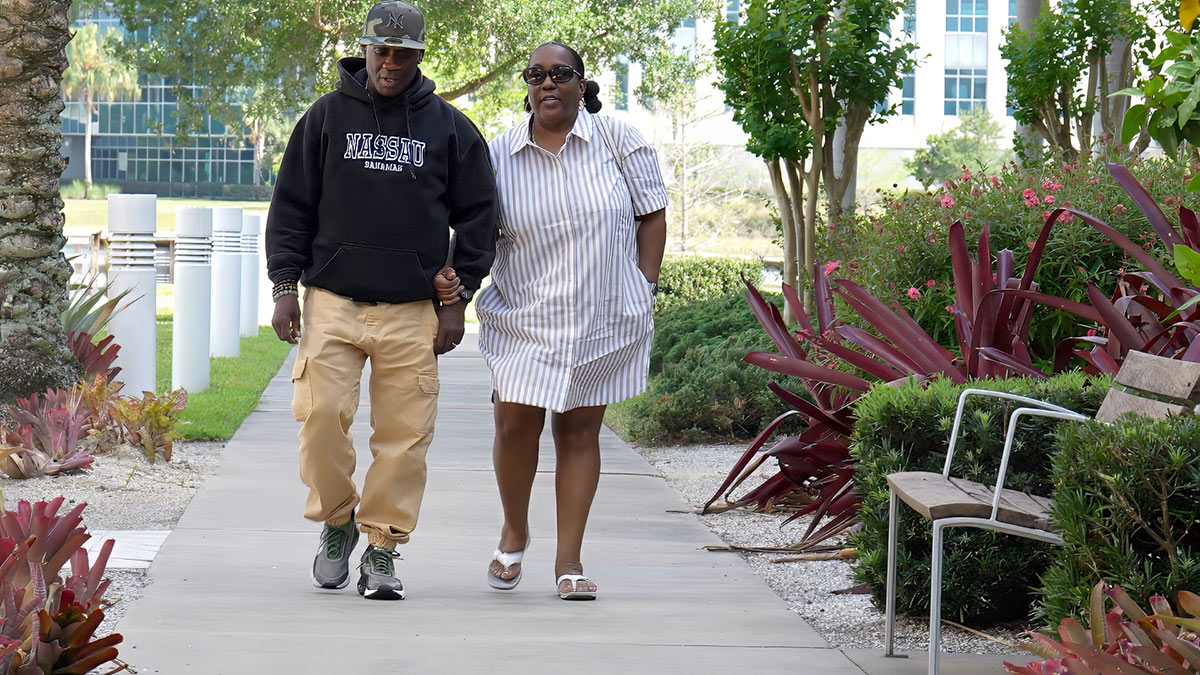
When Tyrone Hodge of Port St. Lucie called 911 on February 7, 2024 he suspected his wife, Rhonda, was having a stroke. His phone call set off a series of events that most likely saved Rhonda’s life.
Upon Tyrone’s call, an alert was released stating a woman was on her way to Cleveland Clinic Tradition Hospital with apparent stroke symptoms. The hospital’s specialized medical staff were mobilized, from the emergency department to imaging and surgery. The multidisciplinary stroke team met Rhonda at the door to immediately assess for stroke.
“Our mantra is ‘time is brain’,” says Jeffrey Miller, MD, Cleveland Clinic Tradition Hospital Director of Endovascular Neurosurgery. “With each second a stroke goes untreated, millions of neurons in the brain are rapidly and irreversibly damaged. The faster a patient receives treatment, the better the outcome.”
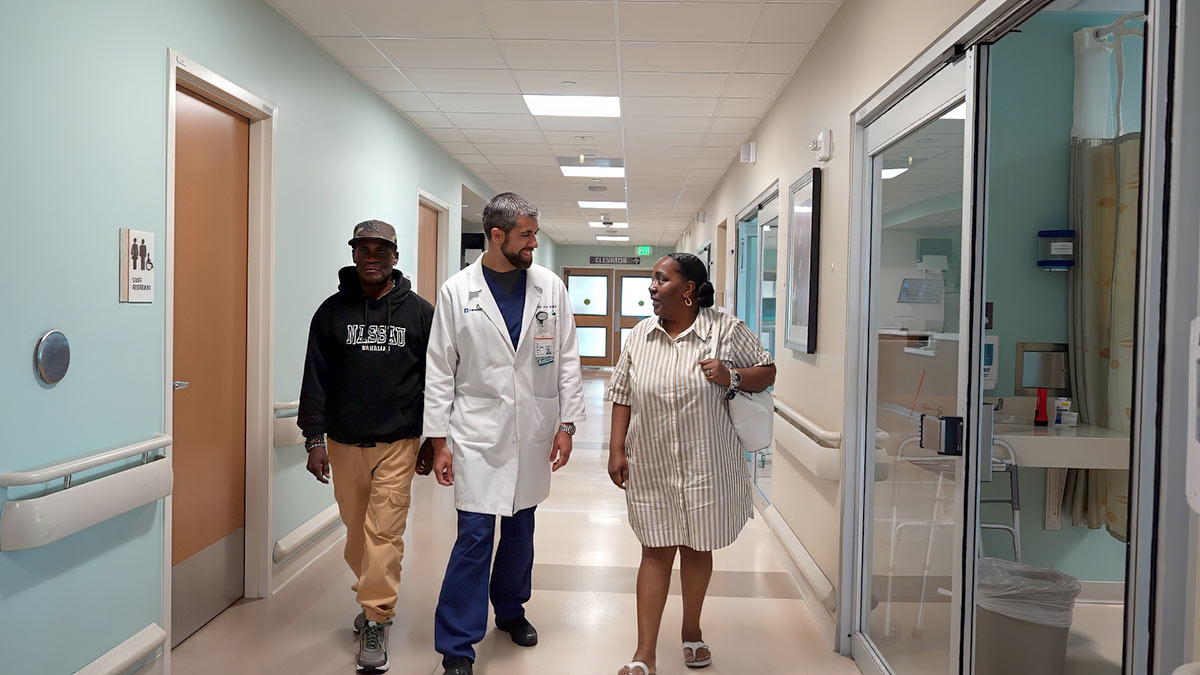
Rhonda arrived at the hospital with unilateral paralysis and was quickly diagnosed with an acute ischemic stroke. (This type of stroke occurs when a blood clot blocks or plugs an artery leading to the brain). Upon assessment, she was given a highly concentrated blood thinner, and prepared for an intracranial thrombectomy.
“Within 30 minutes, we were in the operating room,” Dr. Miller says. “Using advanced biplane technology, we guided a catheter through an artery from the groin to the base of the skull and removed the clot from Rhonda’s brain.”
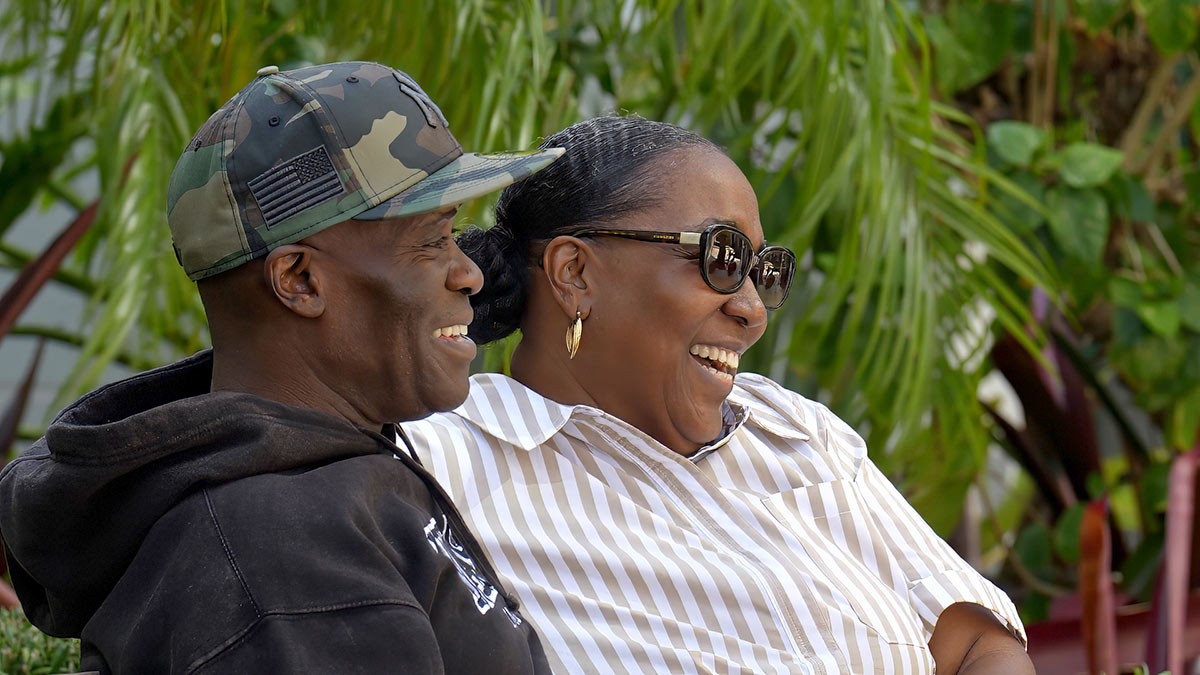
By the time Rhonda was delivered to her bed in the hospital’s Neuro Intensive Care Unit, her condition had vastly improved.
“When I woke up and opened my eyes, my sons, my husband and my father were all there,” she says. “I felt blessed.”
“This is the most gratifying part of my job,” Dr. Miller says. “When Rhonda arrived at the hospital, she was paralyzed and unable to speak. Following a procedure that literally took minutes, her body began recovering from a major stroke. She was like a different person.”
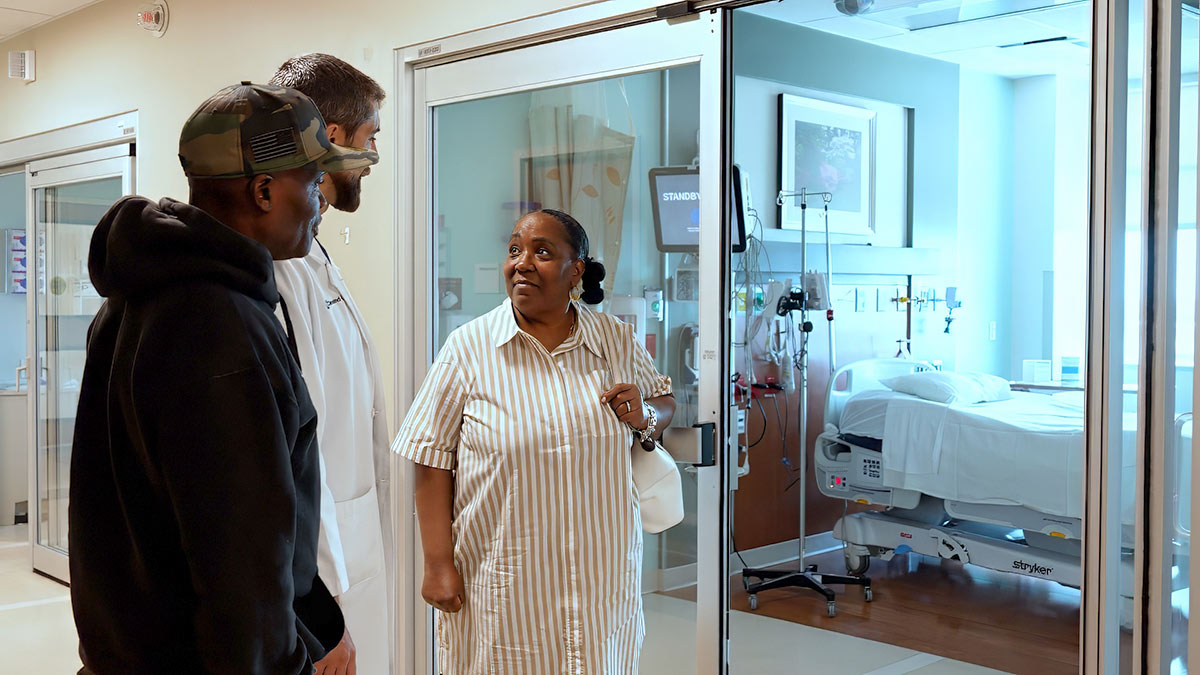
Rhonda was grateful. “The doctors and nurses were amazing,” she said. “You can tell they enjoy their jobs because they do it so well.”
She is equally grateful for her husband’s quick actions. “If Tyrone wasn’t there, none of this would be possible. I probably wouldn’t be here.”
Rhonda feels fortunate to live near Tradition Hospital, which became the first hospital on the Treasure Coast to receive certification by DNV GL Healthcare as a Comprehensive Stroke Center in 2023. The achievement recognized the hospital’s capacity to meet the highest level of competence to address the full spectrum of stroke care.
“Due to the time-critical nature of stroke, we continue to put tremendous efforts into our stroke program and our ability to act with extreme efficiency for the health and safety of patients like Rhonda,” Dr. Miller says.
Rhonda has resumed her daily activities and remains engaged in rehabilitation services. She is determined to regain her sharp memory and hopes to do some traveling with Tyrone. She happily exclaims, “Watch out world!”
 Related Institutes:
Neurological Institute
Related Institutes:
Neurological Institute
Patient Stories
Cleveland Clinic Team Helps Florida Patient Breathe Easier After Complex Lung Surgery
Oct 21, 2026

Teen Athlete Returns to Sports After Two Head Injuries Trigger Yearlong Headache
Oct 19, 2026