


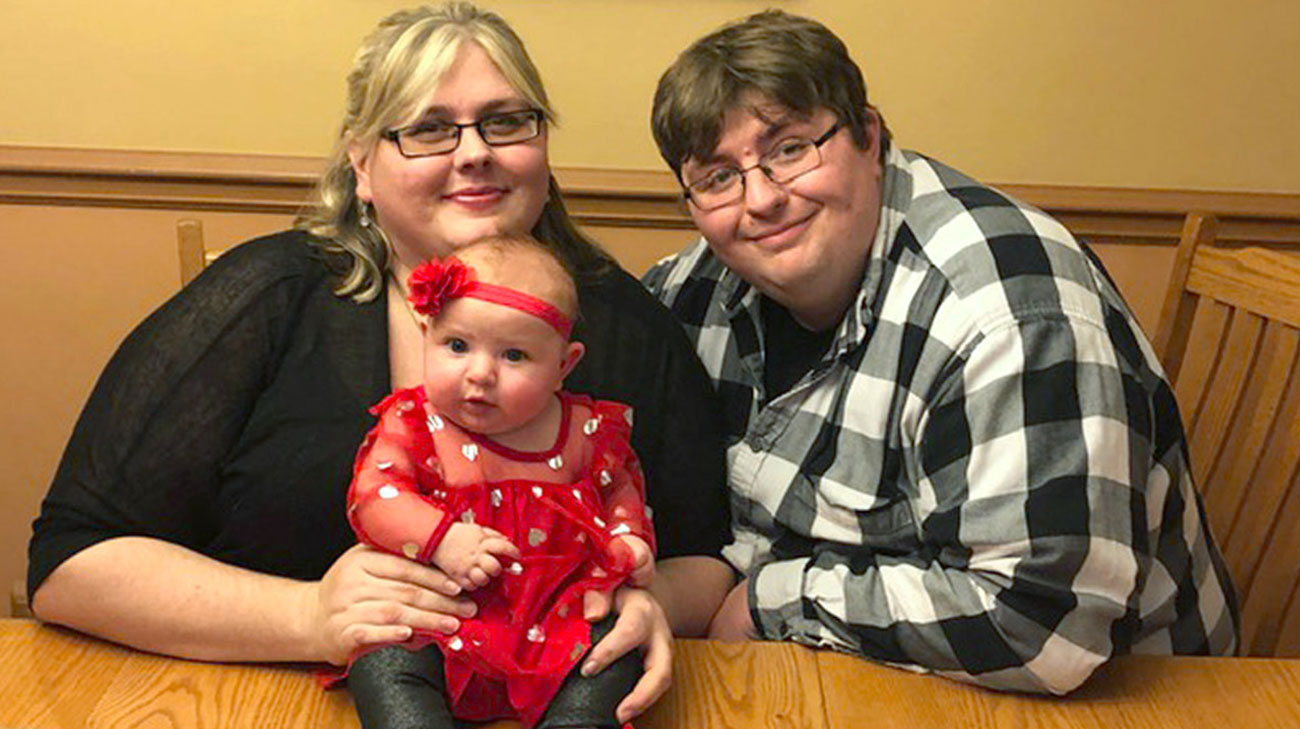
Polyendocrine metabolic ovarian syndrome (PMOS) — previously called polycystic ovary syndrome (PCOS) — is the most common hormonal condition in women of reproductive age. Many women with PMOS struggle with weight gain and infertility. Sarah Moralle is one of them.
“I’ve struggled with my weight pretty much my whole life, and from the time I was a teenager, I had irregular, painful periods,” says Sarah. “I chalked that up to being overweight.”
For many years, Sarah and her husband, Dustin, tried to get pregnant without success.
Following fertility treatments and three failed intrauterine insemination (IUI) attempts, the couple felt they needed to take a break for emotional and financial reasons. During that time, Sarah heard about a unique weight management program for PMOS patients, and she made an appointment with Ula Abed Alwahab, MD (Dr. Abed).
“My faith, my belief in my doctors and science, encouragement from other women in the group sessions and expert care and support from Dr. Abed and Diana Issacs played a big part in my successful pregnancy.”
Dr. Abed, who specializes in endocrinology, diabetes and metabolism, is the leader of the PMOS program within Cleveland Clinic’s Obesity and Medical Weight Loss Center.
“We started the program primarily as a weight management program,” says Dr. Abed. “Over time, we decided to start a separate program for PMOS patients because most women with PMOS are insulin resistant, which can suppress ovulation, and lead to diabetes and heart conditions.”
Following a thorough evaluation, physical exam and blood tests, Dr. Abed diagnosed Sarah with PMOS and suggested she participate in the PMOS program.
“The goal of the program is to help with weight loss, get periods back to a regular cycle, get other PMOS symptoms in check and help with fertility issues,” says Dr. Abed. “Previous research has shown that weight loss helps manage PMOS. The initial results from our program are quite promising, indicating the possibility of a ketogenic diet to resolve the symptoms of PMOS earlier than other methods.”
A traditional keto diet is essentially a high-fat diet – meals are 70 or 80 percent fat; about 20 percent protein; and about 5 percent carbohydrates. The Cleveland Clinic keto diet is different. It is not high in fat or protein, but instead very low carb, with only small amounts of healthy fat and normal amounts of protein.
Sarah hoped the keto diet would work for her.
“I had tried other diets with no success, but being able to have healthy fats like nuts or avocado, and to be able to use a little cooking oil or butter made the keto diet doable for me. I felt I could turn it into a lifestyle rather than a crash diet,” says Sarah.
Sarah also participated in shared medical appointments with other PMOS patients. Each session included health monitoring and education on topics related to PMOS.
About six to seven weeks into the program, Sarah had lost more than 30 pounds, her menstrual cycle returned, and she got pregnant.
During her pregnancy, Sarah developed type 2 diabetes, and worked closely with Dr. Abed and pharmacist Diana Issacs, RPh, PharmD, at Cleveland Clinic’s Diabetes Center, to manage her blood sugar levels.
Sarah gave birth to a healthy baby girl, Taylor Renee, in October 2019. She is back to work, and has also returned to the PMOS program to lose weight and get her PMOS under control.
“My faith, my belief in my doctors and science, encouragement from other women in the group sessions and expert care and support from Dr. Abed and Diana Issacs played a big part in my successful pregnancy,” says Sarah.
Related Institutes: Endocrinology & Metabolism InstitutePatient Stories

Teen Athlete Returns to Sports After Two Head Injuries Trigger Yearlong Headache
Oct 19, 2026
Exercise Medicine Program Helps Man Prepare for Surgery and Reclaim an Active Life
Oct 9, 2026

