



Lymph nodes can swell for all kinds of reasons. The ones in your armpits are no exception. But when those nodes swell a lot, hurt or stay swollen for days, it’s time to talk to a healthcare provider. They can look into what’s happening, advise you on how to manage a swollen node or guide you to a specialist who can help.
Advertisement
Cleveland Clinic is a non-profit academic medical center. Advertising on our site helps support our mission. We do not endorse non-Cleveland Clinic products or services. Policy
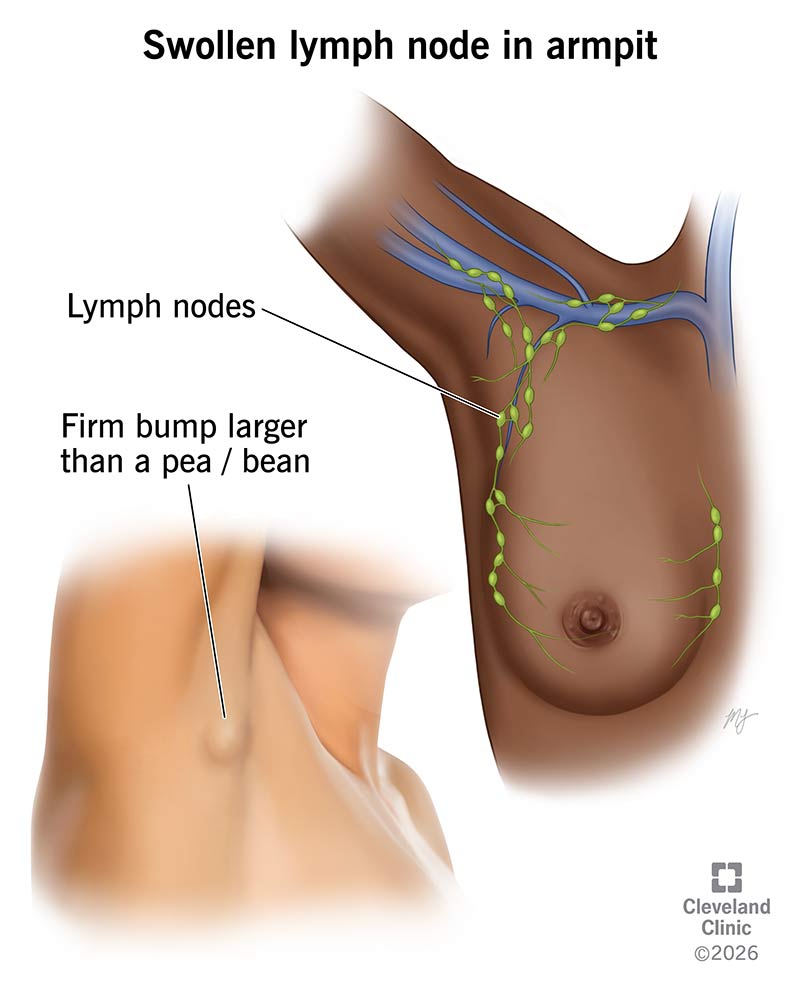
Image content: This image is available to view online.
View image online (https://my.clevelandclinic.org/-/scassets/images/org/health/articles/swollen-lymph-nodes-armpit.jpg)
Swollen lymph nodes in your armpit are small lumps of tissue under your arm that feel larger and firmer than usual. Inflammation often makes them hurt when they swell. They can happen for several reasons. Some of those reasons are temporary and minor. Others are more serious.
Advertisement
Cleveland Clinic is a non-profit academic medical center. Advertising on our site helps support our mission. We do not endorse non-Cleveland Clinic products or services. Policy
Lymph nodes are part of your lymphatic system. You have them scattered throughout your body. The nodes under your arm are also known as axillary lymph nodes. You have dozens of axillary nodes, bunched together in five clusters.
The lymph nodes in your armpit are soft and small, about the size of a pea or bean. When they swell, they become slightly larger and firmer.
Lymph nodes swell and hurt because of inflammation. That inflammation is a normal, healthy part of how your immune system works. Some things that can cause this inflammation include:
Advertisement
Treatment for swollen lymph nodes under your armpit depends on the cause. It’s very common not to need any treatment. Lymph node swelling is a natural part of your immune system doing its job, and often, the nodes recover on their own.
No matter what’s making your lymph nodes under your arm swell, a healthcare provider may recommend ways to treat your symptoms. That usually involves medications that help with inflammation or pain, such as NSAIDs (ibuprofen or naproxen) or acetaminophen. Or your provider might recommend simply giving it time to improve on its own.
Examples of condition-specific treatments for swollen lymph nodes under your armpit include:
Complications vary widely. Because of that, your healthcare provider is the best person to tell you what you should expect in your case.
Most of the time, lymph node swelling under your arm isn’t dangerous. But it can be dangerous if it happens because of cancer. It can also be serious when it happens because your immune system isn’t working as it should.
Lymph node swelling in your armpit usually isn’t a serious issue. But you should talk to a healthcare provider if the nodes stay swollen or are painful for a week or two. They could be a sign of something more serious.
You should also talk to a healthcare provider if you notice things like:
If you notice other issues or think there’s another reason to be concerned, call your primary care provider. They can do a physical exam and look for anything that might signal a more serious issue.
Maybe you’ve had some tenderness under your arm for a few days, or had some pain while you were showering. But then you felt around your armpit and noticed a small lump right around where it hurts. Finding a bump somewhere on your body that you don’t expect can send your thoughts jumping to worst conclusions. But don’t panic.
Advertisement
Swollen lymph nodes under your arm are common for all kinds of reasons. Most of those reasons get better on their own. But if the swollen area doesn’t get better after a week or two, or if you have other symptoms, it’s a good idea to talk to a healthcare provider. They can check the swelling and look for explanations. They can also help you find additional care if you need it.
Advertisement



Sign up for our Health Essentials emails for expert guidance on nutrition, fitness, sleep, skin care and more.
Learn more about the Health Library and our editorial process.
Cleveland Clinic’s health articles are based on evidence-backed information and review by medical professionals to ensure accuracy, reliability and up-to-date clinical standards.
Cleveland Clinic’s health articles are based on evidence-backed information and review by medical professionals to ensure accuracy, reliability and up-to-date clinical standards.
Cleveland Clinic’s primary care providers offer lifelong medical care. From sinus infections and high blood pressure to preventive screening, we’re here for you.
