An itchy throat feels scratchy or tickly and can make you cough. Common causes include allergies, infections, dry air and irritants. You can often ease it with home remedies or over-the-counter medicine. If it lasts more than a week or feels severe, see your healthcare provider.
Advertisement
Cleveland Clinic is a non-profit academic medical center. Advertising on our site helps support our mission. We do not endorse non-Cleveland Clinic products or services. Policy
An itchy throat is a sensation that feels scratchy, tickly or like you need to cough a lot. It’s your body’s way of telling you something’s bothering the lining of your throat. Just like a cough helps keep harmful things out, a tickle in your throat helps clear it.
Advertisement
Cleveland Clinic is a non-profit academic medical center. Advertising on our site helps support our mission. We do not endorse non-Cleveland Clinic products or services. Policy
An itchy or scratchy throat can be mild and temporary — like when you’re thirsty or have seasonal allergies. But it can also be stubborn and hang around for a while, possibly for weeks or even years.
Even though it’s often mild, itching inside your throat can affect your ability to speak, swallow or sleep comfortably. If it sticks around for a long time, you may need to see your healthcare provider. They can help rule out more serious causes and, if necessary, start you on treatment.
Lots of things can make your throat feel itchy. Here are the more common causes:
Advertisement
Even though an itchy throat is usually harmless, it can be frustrating. Paying attention to what triggers it — like foods, allergens or dry air — can help you feel better faster.
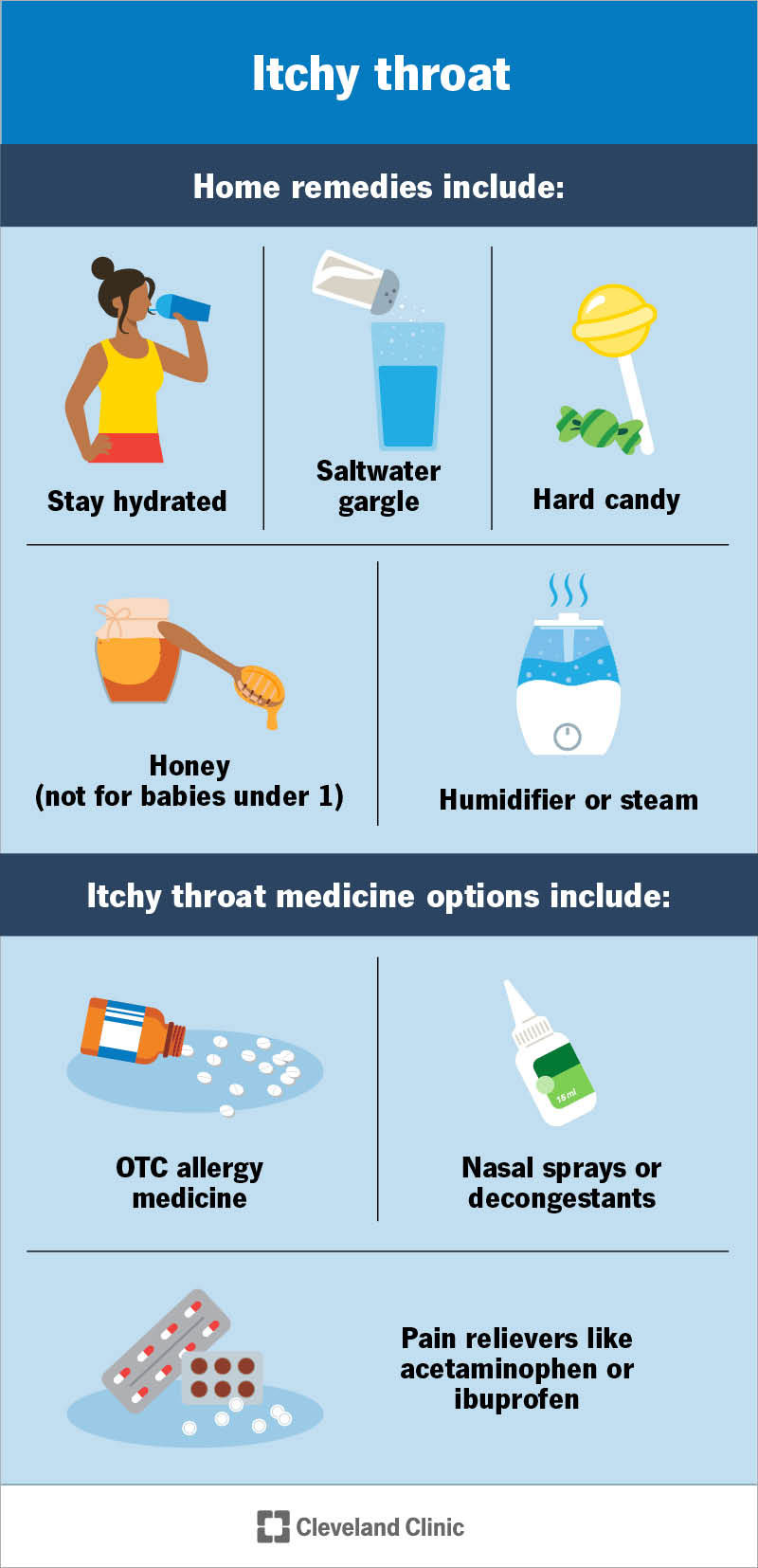
Image content: This image is available to view online.
View image online (https://my.clevelandclinic.org/-/scassets/images/org/health/articles/itchy-throat.jpg)
An itchy throat can be uncomfortable. But the good news is that there are lots of ways to treat it. You can try home remedies or over-the-counter (OTC) medications.
You don’t even have to leave your house to relieve an itchy throat. Remedies you can try include:
Sometimes, an over-the-counter (OTC) medication is the best way to soothe a scratchy throat. Options include:
An itchy throat is often minor. But letting it linger — especially if an infection or severe allergies caused it — can lead to bigger problems. These include:
Advertisement
You can’t always stop an itchy throat from happening. But there are many ways to reduce your chances. These include:
It’s important to see your healthcare provider if:
Mild cases usually get better within a few days to a week. If it’s from a virus, it may last five to seven days.
Advertisement
If the itch keeps coming back, allergies or dry air may be to blame. It may last weeks or months if you don’t seek treatment.
Living with an itchy, scratchy throat can be more than a small annoyance. It can interrupt your sleep, make conversations harder and even leave you feeling worn down. The good news is that you’ve got plenty of tools to ease discomfort, from simple home remedies to medications.
Paying attention to what sets it off, and giving your body a little extra care, can make a big difference. If it lingers or feels more serious, reach out to a healthcare provider.
Advertisement



Sign up for our Health Essentials emails for expert guidance on nutrition, fitness, sleep, skin care and more.
Learn more about the Health Library and our editorial process.
Cleveland Clinic’s health articles are based on evidence-backed information and review by medical professionals to ensure accuracy, reliability and up-to-date clinical standards.
Cleveland Clinic’s health articles are based on evidence-backed information and review by medical professionals to ensure accuracy, reliability and up-to-date clinical standards.
Need care fast? Cleveland Clinic’s Express Care and Urgent Care locations treat everything from sprains to sinus infections — no appointment needed.