



A barrel chest is when your chest looks full and rounded, like you’re always holding a deep breath. It’s usually a sign of a lung condition. Healthcare providers can diagnose the cause and recommend an appropriate treatment.
Advertisement
Cleveland Clinic is a non-profit academic medical center. Advertising on our site helps support our mission. We do not endorse non-Cleveland Clinic products or services. Policy
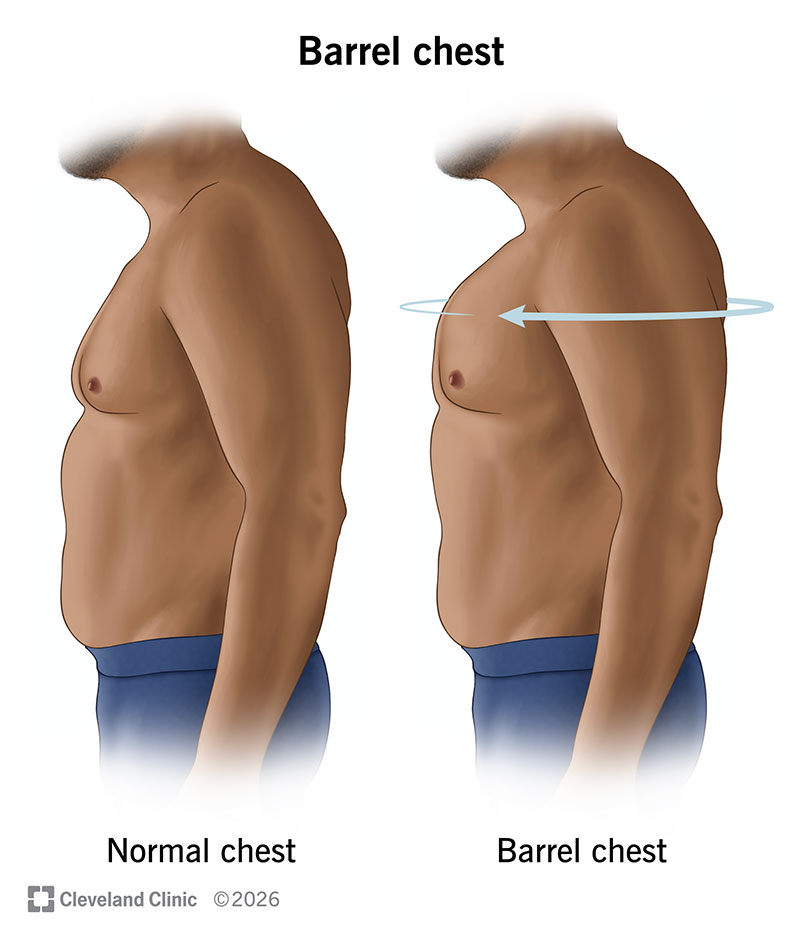
Image content: This image is available to view online.
View image online (https://my.clevelandclinic.org/-/scassets/images/org/health/articles/barrel-chest)
A barrel chest is when you have a broad, rounded chest that looks like a barrel. It happens when too much air fills your lungs or when air pockets build up in the hollow space in your chest (thoracic cavity).
Advertisement
Cleveland Clinic is a non-profit academic medical center. Advertising on our site helps support our mission. We do not endorse non-Cleveland Clinic products or services. Policy
When most people breathe, muscles help the rib cage extend out (expand) when they breathe in and shrink (contract) when they breathe out. But sometimes, aging and some lung conditions cause air to build up in your lungs or chest. This causes your rib cage to puff out like a barrel and stay in the extended position.
Common barrel chest causes include:
Advertisement
If you have a barrel chest, you may have other symptoms like:
No, a barrel chest doesn’t hurt. But some of the conditions that cause a barrel chest may cause discomfort or pain.
There’s no specific treatment for a barrel chest. Treatment involves identifying and treating the cause. This may help reduce a barrel chest. But in most cases, once your rib cage extends out from a chronic condition, it’s usually permanent. Treatments may include:
A barrel chest isn’t dangerous. But it indicates you may have issues with your lungs, muscles or bones that can cause breathing problems. If you don’t treat the cause, you may develop problems like:
You can help reduce your chances of developing a condition that causes a barrel chest by:
Get medical attention right away if you have a barrel chest and:
A barrel chest can indicate a lung problem that requires medical attention. If you have a barrel chest along with other symptoms like breathing issues, chest pain and a cough, reach out to a healthcare provider for advice. They can help diagnose the cause and recommend the best treatment for you.
Advertisement



Sign up for our Health Essentials emails for expert guidance on nutrition, fitness, sleep, skin care and more.
Learn more about the Health Library and our editorial process.
Cleveland Clinic’s health articles are based on evidence-backed information and review by medical professionals to ensure accuracy, reliability and up-to-date clinical standards.
Cleveland Clinic’s health articles are based on evidence-backed information and review by medical professionals to ensure accuracy, reliability and up-to-date clinical standards.
Breathing issues can affect your life in many ways. Cleveland Clinic’s respiratory therapy program treats your symptoms so you can feel better day to day.
