A seroma is a pocket of fluid that forms under your skin, usually after surgery. While it can be sore or uncomfortable, you don’t need to worry. It often goes away on its own. If it doesn’t, your provider can drain it or recommend other treatment options to help you heal.
Advertisement
Cleveland Clinic is a non-profit academic medical center. Advertising on our site helps support our mission. We do not endorse non-Cleveland Clinic products or services. Policy
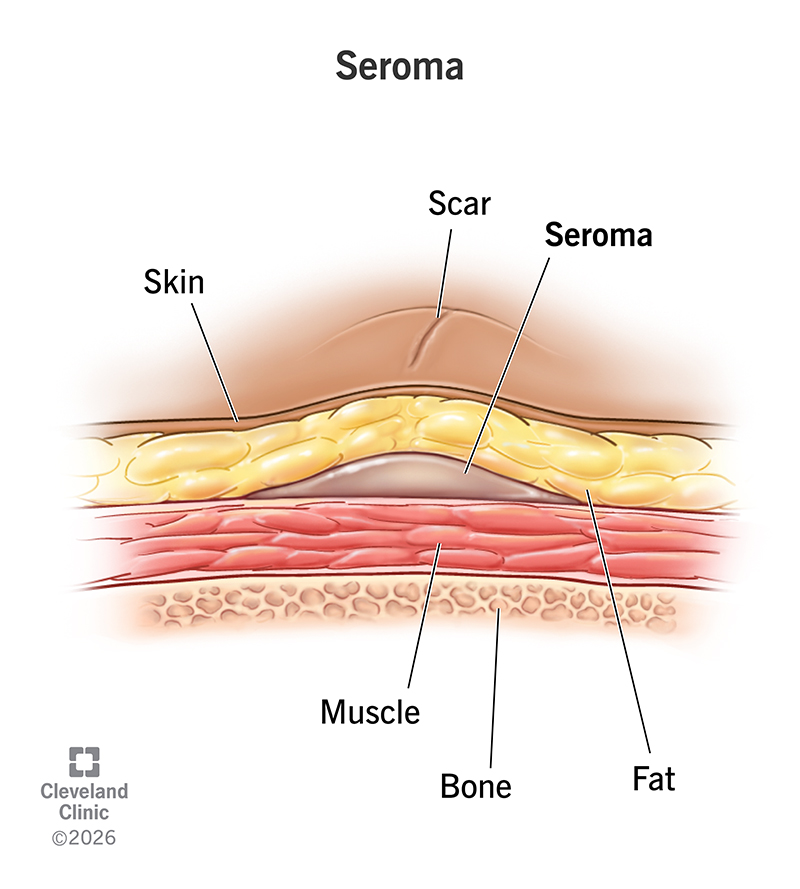
Image content: This image is available to view online.
View image online (https://my.clevelandclinic.org/-/scassets/images/org/health/articles/seroma-illustration)
A seroma is a pocket of fluid that builds up under your skin, most often after surgery. It forms in the empty space left behind as your body heals. You might notice a soft bump or swelling near the incision site. It can feel uncomfortable, tender or sore.
Advertisement
Cleveland Clinic is a non-profit academic medical center. Advertising on our site helps support our mission. We do not endorse non-Cleveland Clinic products or services. Policy
The fluid inside is called serous fluid. This is a clear, pale-yellow liquid made from blood plasma and lymphatic fluid. It seeps from tiny blood and lymph vessels into the open area created during surgery or an injury.
Most seromas go away on their own as your body absorbs the fluid over time. But if the area becomes very painful, bothersome or shows signs of infection, a healthcare provider can step in and treat it.
Symptoms usually appear seven to 10 days after surgery or an injury. You might notice:
In some cases, you might not have any symptoms at all.
Seromas form when damage to tissue creates an open space inside your body. This space gives fluid a place to collect. The most common surgical causes are:
During surgery, a provider may remove tissue and create flaps or small pockets. These open spaces make it easier for fluid to leak out and fill the gap.
Any tissue damage can raise your risk for a seroma. Your risk goes up if you:
Advertisement
Most seromas aren’t dangerous. But some can lead to problems, especially if you’re healing from surgery or an injury. Watch for:
If you notice these or anything that concerns you, contact your healthcare provider.
A seroma usually doesn’t burst like a water balloon. But it can leak fluid if the incision site or your skin opens a little. You may see a thin, clear-yellow fluid coming from the area. Keep the site clean and covered with a fresh bandage until the drainage slows down.
Call your surgeon if the fluid looks like pus (thick, milky-white to yellow and stinky) or if you notice signs of infection.
To diagnose a seroma, your healthcare provider will look at your skin and ask when symptoms started. They may gently press on the area to feel for fluid movement. They’ll also check for signs of infection.
Most people don’t need tests. But your provider may use an ultrasound to see the fluid pocket. They may also insert a small needle to remove a sample of the fluid (diagnostic aspiration).
Treatment depends on the size of the seroma and the symptoms you have. Common options include:
Advertisement
Recovery time varies. Small seromas may shrink in a little over a week, while larger ones may take up to six weeks to fully heal. If you have questions about when a seroma will go away, talk to your healthcare provider.
Visit a healthcare provider if you notice a seroma and it’s:
A seroma can look serious, but it’s usually not an issue. The soft bump often goes away in a few weeks. If it doesn’t shrink or if it starts to bother you, let your provider know. Some seromas can turn into an infection or take longer to heal. Your provider can help you manage anything that comes up.
A seroma can feel unsettling, especially when you notice a new bump or swelling after surgery. It’s natural to worry when your body doesn’t heal exactly as expected. But the good news is that most seromas are harmless and go away on their own with a little time and care.
Think of it like your body cleaning up after construction. The leftover fluid is part of that healing process. Still, it’s important to keep an eye on it. If it starts to hurt more, gets bigger or shows signs of infection, your provider can help you manage it.
Advertisement



Sign up for our Health Essentials emails for expert guidance on nutrition, fitness, sleep, skin care and more.
Learn more about the Health Library and our editorial process.
Cleveland Clinic’s health articles are based on evidence-backed information and review by medical professionals to ensure accuracy, reliability and up-to-date clinical standards.
Cleveland Clinic’s health articles are based on evidence-backed information and review by medical professionals to ensure accuracy, reliability and up-to-date clinical standards.
Need care fast? Cleveland Clinic’s Express Care and Urgent Care locations treat everything from sprains to sinus infections — no appointment needed.