



Renal vein thrombosis is a rare condition involving a blood clot that forms in one of your kidney veins. Many people don’t have symptoms. They get a diagnosis when they have imaging for a different reason. Treatment may include medicine or a procedure. Your prognosis often depends on the cause.
Advertisement
Cleveland Clinic is a non-profit academic medical center. Advertising on our site helps support our mission. We do not endorse non-Cleveland Clinic products or services. Policy
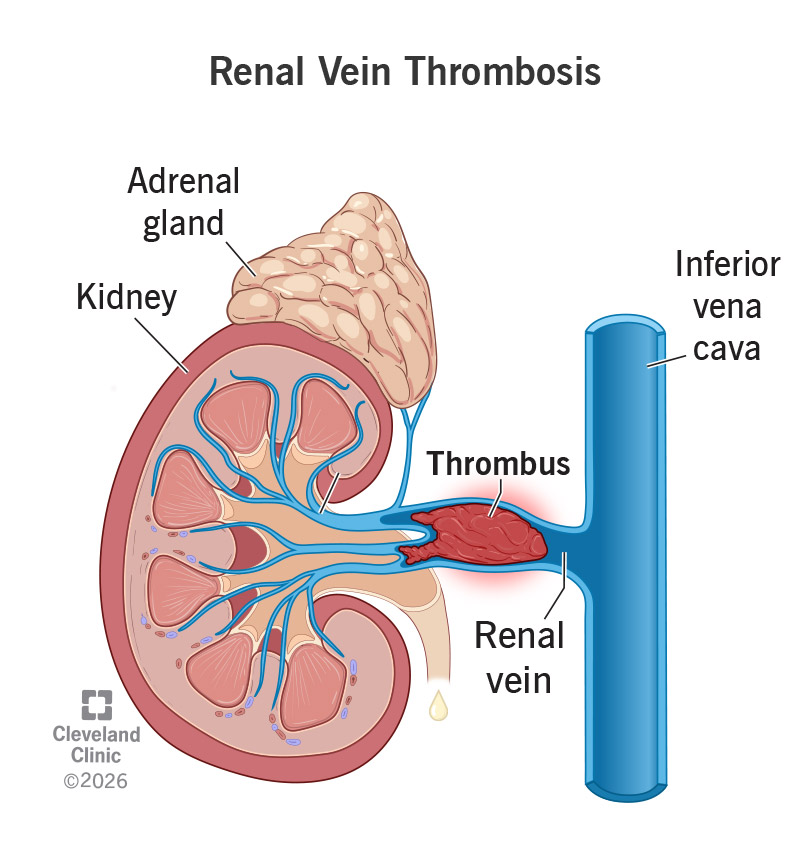
Image content: This image is available to view online.
View image online (https://my.clevelandclinic.org/-/scassets/images/org/health/articles/renal-vein-thrombosis)
Renal vein thrombosis is a blood clot in a vein coming out of your kidney. The blood clot can partly or fully block your vein, limiting how much blood can get through. This rare condition often affects renal veins on both kidneys at once. But it’s more likely to happen in the left renal vein than the right. This is because the superior mesenteric artery can put pressure on the left renal vein.
Advertisement
Cleveland Clinic is a non-profit academic medical center. Advertising on our site helps support our mission. We do not endorse non-Cleveland Clinic products or services. Policy
Renal vein thrombosis can be short term (acute) or long term (chronic). The acute type is more common in younger adults and includes symptoms. The chronic type is more likely to happen in older adults and often doesn’t cause symptoms.
You may have back, hip, flank or belly pain. You may also have blood in your pee (urine). But you may not have symptoms at first. Then, symptoms may be mild or grow little by little. In children and some adults, symptoms can start without warning.
Other renal vein thrombosis symptoms may include:
Most often, the cause of renal vein thrombosis is cancer or a release of too much protein into your pee (nephrotic syndrome). These can make you more likely to get blood clots.
Other causes include:
Advertisement
Renal vein thrombosis is more likely to happen in:
Renal vein thrombosis can lead to:
You may not know you have this condition until it shows up on imaging to look for something else. Healthcare providers can diagnose this condition with the following tests:
Healthcare providers start by treating the condition that caused renal vein thrombosis. They’ll want to get blood flowing well again in your kidney so it works better. Renal vein thrombosis treatment may include:
Get medical care right away if you have symptoms of renal vein thrombosis or a hard time breathing. Trouble breathing could mean you have a pulmonary embolism, which can be a life-threatening condition.
Questions to ask your provider may include:
After a healthcare provider removes or dissolves the blood clot, you may need to take blood thinners for six to 12 months. If you have kidney disease, you may take them even longer. You’ll also need to continue treatment for the disease that led to the clot.
You can expect to have follow-up visits with your provider several times during the first year after treatment. Then, you may have check-ups once a year.
With treatment, the prognosis is usually good. Your outlook depends on what caused the renal vein thrombosis and how much kidney damage you have. Complications also matter. For example, a pulmonary embolism can be fatal.
It can be upsetting to learn that a medical condition you have has led to another one. It may feel like you can’t catch a break. But your healthcare provider has several treatment options to offer for renal vein thrombosis. Your provider can help you make your way through this stressful time and answer your questions as you go.
Advertisement



Sign up for our Health Essentials emails for expert guidance on nutrition, fitness, sleep, skin care and more.
Learn more about the Health Library and our editorial process.
Cleveland Clinic’s health articles are based on evidence-backed information and review by medical professionals to ensure accuracy, reliability and up-to-date clinical standards.
Cleveland Clinic’s health articles are based on evidence-backed information and review by medical professionals to ensure accuracy, reliability and up-to-date clinical standards.
Vascular disease may affect your life in big and small ways. Cleveland Clinic’s specialists treat the many types of vascular disease so you can focus on living.
