



Renal infarction is a rare condition that involves a loss of blood flow to your kidney. Usually, the cause is a blood clot that limits or blocks blood from getting through a kidney artery. Symptoms are like those of some more common medical problems. Imaging and blood tests can confirm the diagnosis. Prompt treatment is best.
Advertisement
Cleveland Clinic is a non-profit academic medical center. Advertising on our site helps support our mission. We do not endorse non-Cleveland Clinic products or services. Policy
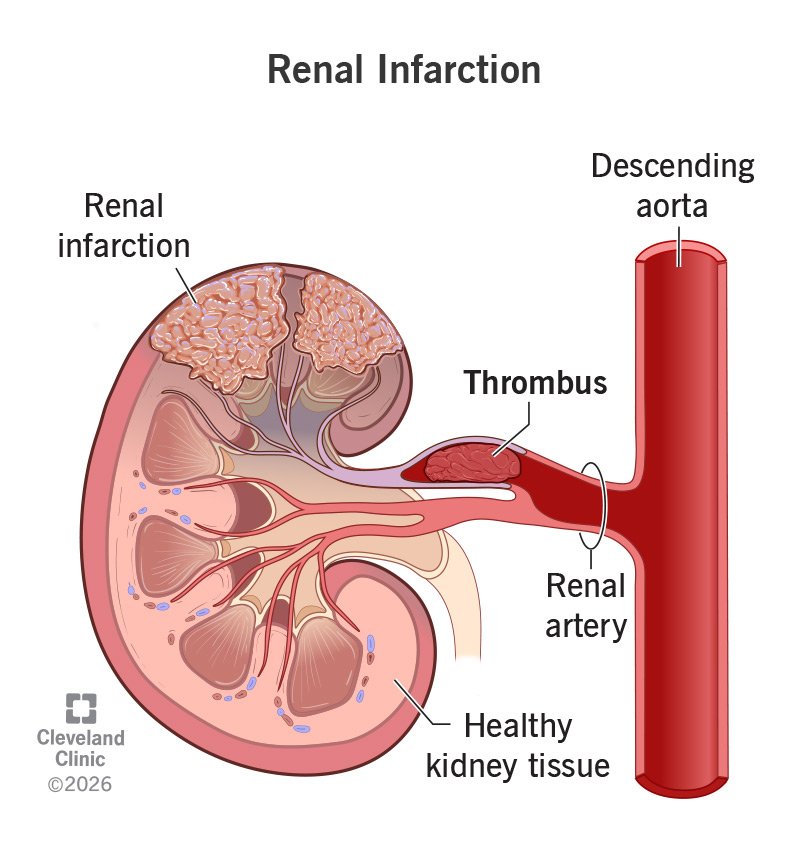
Image content: This image is available to view online.
View image online (https://my.clevelandclinic.org/-/scassets/images/org/health/articles/renal-infarction)
Renal infarction is a loss of blood flow to your kidney. It usually happens because of a blood clot that partly or fully blocks your kidney’s main artery or a branch of it. Without the oxygen your blood carries, this rare condition can damage kidney cells.
Advertisement
Cleveland Clinic is a non-profit academic medical center. Advertising on our site helps support our mission. We do not endorse non-Cleveland Clinic products or services. Policy
This is a medical emergency. You need medical care for it right away because it can lead to chronic kidney disease and kidney failure. High blood pressure is another complication.
Renal infarction usually happens in one kidney, but it can also happen in both kidneys.
In some cases, you may not have renal artery infarction symptoms. But if you do, they can happen suddenly. They may include:
A blood clot usually causes renal infarction. It can form in your renal artery or come from your heart. Sometimes, healthcare providers can’t find a cause. Other causes include:
Some risk factors are beyond your control. But you may be able to manage conditions that put you at risk for a renal infarction. Risk factors include:
Advertisement
It can be difficult to diagnose renal infarction because it shares symptoms with more common conditions. Lab results and imaging help healthcare providers make the diagnosis. Tests may include:
Your healthcare provider will work to get blood flowing to your kidney again. Treatments include:
Renal infarction recovery involves a hospital stay. In one study, the average length of stay in a hospital was about 11 days.
Contact your provider if you have bleeding from blood thinners you take for renal infarction treatment. You’ll need regular check-ups with your provider to see how well your kidney is working. You may need an MRI six months after treatment and again after a year.
Questions to ask your provider may include:
The sooner you get a diagnosis and treatment, the better. Quick treatment gives a better chance for your kidney to work well again. The amount of blockage in your renal artery also matters.
Your kidney should work better over time after treatment. The outlook isn’t as good if you have severe hardening of your arteries (atherosclerosis). You also may have a worse outcome if you have a renal infarction in both kidneys.
You can have a renal infarction more than once. But it seems less likely to happen again if it came from an unknown cause. You may need to see a vascular medicine specialist if no clear cause of renal infarction is found.
After treatment, you may need to keep taking blood thinners for three to six months. And you may need to take aspirin long term.
When pain sends you to the emergency room, you just want to feel better. It can be tricky when symptoms suggest several conditions. That means more tests. But there are treatments for renal infarction once you know you have it. Talk to your healthcare team about your condition and which treatments make sense for you.
Advertisement



Sign up for our Health Essentials emails for expert guidance on nutrition, fitness, sleep, skin care and more.
Learn more about the Health Library and our editorial process.
Cleveland Clinic’s health articles are based on evidence-backed information and review by medical professionals to ensure accuracy, reliability and up-to-date clinical standards.
Cleveland Clinic’s health articles are based on evidence-backed information and review by medical professionals to ensure accuracy, reliability and up-to-date clinical standards.
Whether you need stitches, a broken bone set or think your appendix might be causing your abdominal pain, Cleveland Clinic’s emergency medicine team is here to help.
