



Osteolysis is when your body breaks down and absorbs your bone tissue faster or more often than it should. Injuries and some health conditions can cause it. There are several types, but they can all lead to bone loss. Treatments vary depending on which type you have and what’s causing it.
Advertisement
Cleveland Clinic is a non-profit academic medical center. Advertising on our site helps support our mission. We do not endorse non-Cleveland Clinic products or services. Policy
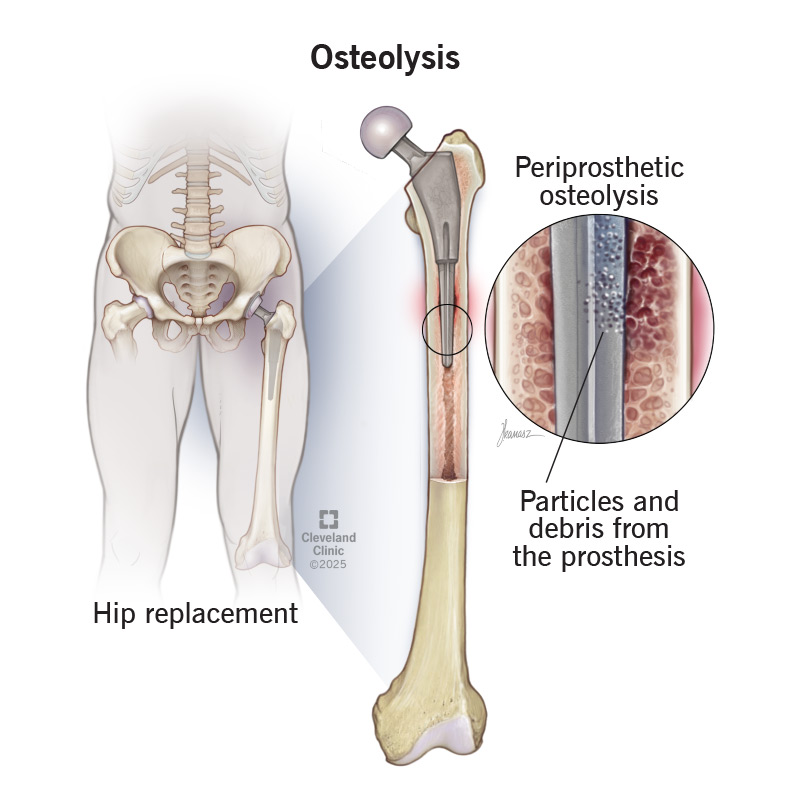
Image content: This image is available to view online.
View image online (https://my.clevelandclinic.org/-/scassets/images/org/health/articles/osteolysis)
“Osteolysis“ is the medical term for bone tissue in your body breaking down. It’s normally part of how your bones stay strong and healthy by regrowing their own cells. Old bone cells break down and get replaced with healthy new cells. But certain issues and health conditions can lead to more osteolysis than you need. This throws your bones’ regrowth cycle out of balance and can lead to bone loss.
Advertisement
Cleveland Clinic is a non-profit academic medical center. Advertising on our site helps support our mission. We do not endorse non-Cleveland Clinic products or services. Policy
Too much osteolysis makes your affected bones worn down or too thin. This can lead to problems, including:
There are several types of osteolysis. Three of the most common are:
Advertisement
Symptoms can vary depending on which type you have. Some of the most common osteolysis symptoms include:
Periprosthetic osteolysis may not cause symptoms you can feel or notice until it causes a more serious complication, like a broken bone or loosened implant. Contact a healthcare provider if you notice any changes or symptoms in or near your joint that was replaced. The sooner you get issues examined, the better.
Osteolysis happens when your body breaks down your bone tissue faster than it can regrow. Normally, special cells called osteoblasts and osteoclasts work together to recycle old bone tissue and start growing new cells in its place. Osteolysis happens when that process gets thrown out of whack. Your body ends up breaking down bone cells it shouldn’t. How this occurs depends on which type of osteolysis you have.
Distal clavicle osteolysis causes include:
Periprosthetic osteolysis is a complication after joint replacement surgery. After a hip replacement, your body might mistakenly break down more bone tissue in your hip than it should. That’s because the implanted joint reduces the kind of everyday stress your bones typically would use to know how much to rebuild themselves. It’s almost like the replacement works too well at supporting your hip. Healthcare providers call this “stress shielding.“
Other causes of periprosthetic osteolysis include:
Acro-osteolysis can result from lots of issues, including:
In addition to the issues and health conditions above, you may be more likely to develop osteolysis if you have:
Advertisement
A healthcare provider will diagnose osteolysis with a physical exam and some tests. Your provider will examine your bone and ask about your health history. Tell them if your work or hobbies put a lot of stress on the same parts of your body often. Make sure to mention if you have health conditions or have had surgery on your bones or joints.
Your provider will use some tests to take pictures of your bones and check their health, including:
Your provider might order blood tests to check for infections or signs of other issues.
Which osteolysis treatments you’ll need depends on which type you have. In general, your healthcare provider will suggest treatments that manage the symptoms, treat their cause and protect your bone health.
Treatments for distal clavicle osteolysis and acro-osteolysis may include:
Advertisement
Treating periprosthetic osteolysis is a little different. Your provider will take a series of X-rays over time. They’ll monitor your joint and the implant. You might need another surgery to repair or replace the implant if wear particles are causing osteolysis, or if the bone loss becomes unsafe.
The sooner your provider identifies issues with your implant, the better. Contact them as soon as you notice any new pain or other symptoms in your joint.
Your healthcare provider will help you understand what to expect. It depends on which type of osteolysis you have, what’s causing it and how well your body responds to treatments.
Some cases get better with treatment and don’t lead to long-term complications. But you might have to manage a health condition that affects your bones for the rest of your life.
Most of us would never imagine that our bodies, which are made to heal, could start destroying our own bone tissue. But it can happen if something goes wrong with the healing process, or with the way your body naturally recycles bone cells.
Your healthcare provider will explain what caused osteolysis and how they propose treating it. They’ll also explain what you can expect from the treatment and when you can expect to feel better.
Advertisement



Sign up for our Health Essentials emails for expert guidance on nutrition, fitness, sleep, skin care and more.
Learn more about the Health Library and our editorial process.
Cleveland Clinic’s health articles are based on evidence-backed information and review by medical professionals to ensure accuracy, reliability and up-to-date clinical standards.
Cleveland Clinic’s health articles are based on evidence-backed information and review by medical professionals to ensure accuracy, reliability and up-to-date clinical standards.