



Ocular melanoma is a type of eye cancer. Early detection is important because it increases the odds of getting a cure for and surviving this cancer. Visit an eye doctor as soon as you notice any changes in your eyes or vision, especially if they happen suddenly.
Advertisement
Cleveland Clinic is a non-profit academic medical center. Advertising on our site helps support our mission. We do not endorse non-Cleveland Clinic products or services. Policy
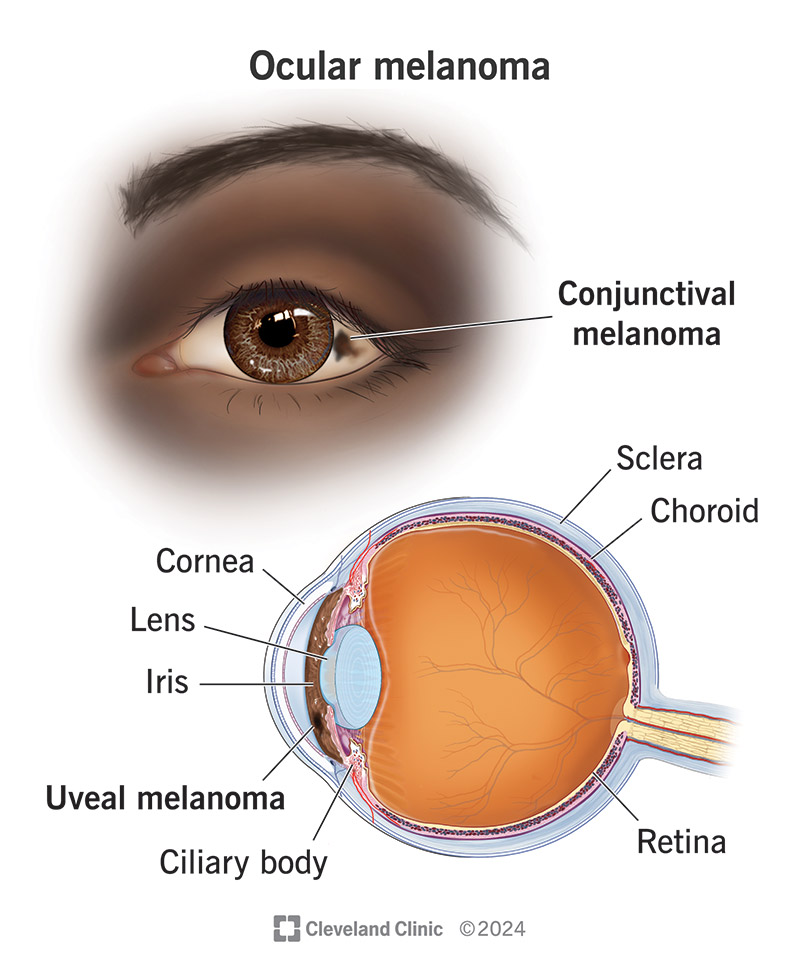
Image content: This image is available to view online.
View image online (https://my.clevelandclinic.org/-/scassets/images/org/health/articles/ocular-melanoma)
Ocular melanoma (eye melanoma) is a type of eye cancer that forms on or inside your eye.
Advertisement
Cleveland Clinic is a non-profit academic medical center. Advertising on our site helps support our mission. We do not endorse non-Cleveland Clinic products or services. Policy
Most people think of skin cancer with melanoma. And that’s where it’s most common. But it can develop in any of your cells that produce the pigment melanin. That includes cells in your eyes.
Ocular melanoma can be fatal. But it’s treatable. If a healthcare provider catches it early, it may be curable.
Healthcare providers classify ocular melanoma in a few ways.
Your provider might use a more specific name to classify where in your eye the cancer is:
The three subtypes of uveal melanoma include specific parts of your eye in your uvea:
Symptoms of eye melanoma can include:
Advertisement
You might be able to see changes in your eyes, including:
Many of the early signs of ocular melanoma are things you can’t see or notice yourself. An eye doctor can see them inside your eyes. That’s why it’s important to get regular eye exams, even if you don’t wear glasses or contacts.
Ocular melanoma happens when cells that make melanin pigment change (mutate) and multiply in ways they shouldn’t. These cells create cancerous tumors. Experts aren’t always sure why melanoma develops. But you may have a higher risk if you:
Complications of ocular melanoma can include:
Ocular melanoma can be fatal, even with treatment. This is especially true if it’s metastatic.
An eye doctor will diagnose ocular melanoma with an eye exam and some tests. They’ll look inside your eyes and check your vision. A slit lamp exam can show signs of cancer, even if it’s early.
Tell your eye doctor if you’ve noticed any symptoms. Let them know if anyone in your biological family has had melanoma before.
Your eye doctor might order other imaging tests if they see any signs of melanoma in your eyes. You may need:
Your eye doctor may use a fine-needle aspiration or biopsy to take a sample of any growths or tumors in your eyes. Healthcare providers will use these tissue samples to confirm that it’s ocular melanoma.
You’ll need to meet with a cancer doctor to stage the cancer and start treatments.
Ocular melanoma is treatable. In some cases, it’s curable. The most common treatments include:
Advertisement
It’s tough to predict one outlook that applies to everyone. Every case of eye melanoma is different. What you can expect depends on several factors, including:
Your cancer care team will help you understand everything you need to know. Caring for your overall physical and mental health is also important. Cancer survivorship starts when you get your diagnosis. Survivorship programs and organizations can help you access resources and care, including mental health support. Ask your care team about resources in your area or online that can help.
Healthcare providers usually refer to a five-year survival rate for cancers. This means the percentage of people with that cancer who survive at least five years after diagnosis.
Most people with eye melanoma that doesn’t spread survive at least five years. Talk to your providers about what to expect.
All survival rates are based on averages from lots of people. They’re just an estimate. And they can’t take the specifics of your life, body and health into account. Your cancer care team will help you set realistic goals and expectations.
A cancer diagnosis can feel like your life has stopped in its tracks. It’s OK to feel scared, angry, confused or overwhelmed. But having any health condition, including ocular melanoma, doesn’t change who you are. You’re still you, no matter what. Nothing can take that away.
Advertisement
Lean on your healthcare providers. Your care team is there to answer every question you can think of, big or small. They’ll help you understand what’s going on, which treatments you’ll need and what comes next.
Advertisement



Sign up for our Health Essentials emails for expert guidance on nutrition, fitness, sleep, skin care and more.
Learn more about the Health Library and our editorial process.
Cleveland Clinic’s health articles are based on evidence-backed information and review by medical professionals to ensure accuracy, reliability and up-to-date clinical standards.
Cleveland Clinic’s health articles are based on evidence-backed information and review by medical professionals to ensure accuracy, reliability and up-to-date clinical standards.
When you’re diagnosed with eye cancer, you’re probably wondering what’s next. Cleveland Clinic’s ophthalmic oncology providers personalize treatment just for you.
