



Nonmelanoma skin cancer develops in the top layer of your skin, often after years of sun exposure. It’s one of the most common and treatable cancers. It usually grows slowly and rarely spreads. Early detection and treatment can prevent complications and help keep your skin healthy.
Advertisement
Cleveland Clinic is a non-profit academic medical center. Advertising on our site helps support our mission. We do not endorse non-Cleveland Clinic products or services. Policy
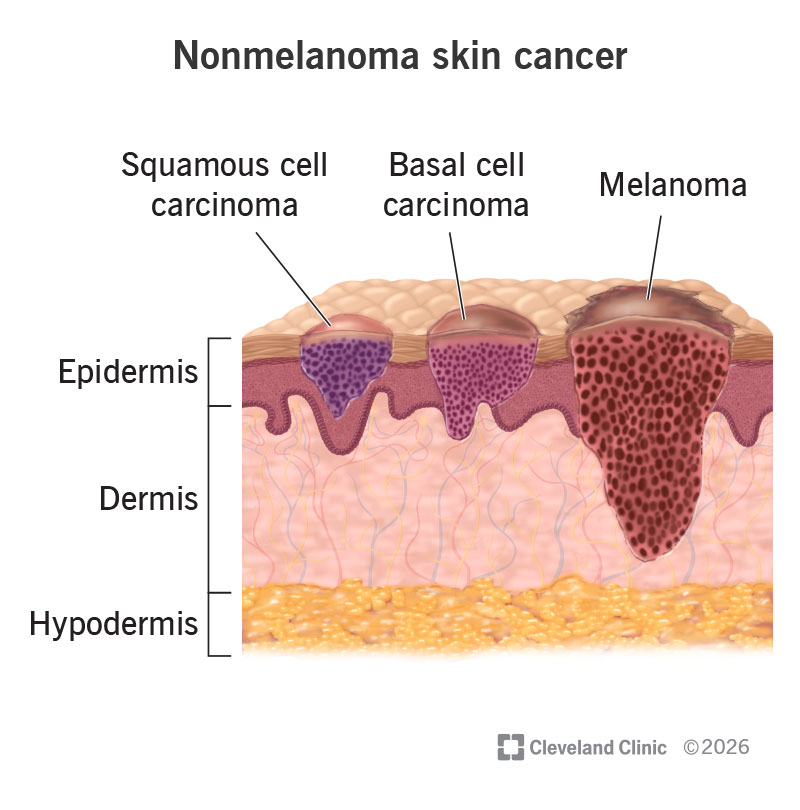
Image content: This image is available to view online.
View image online (https://my.clevelandclinic.org/-/scassets/images/org/health/articles/non-melanoma-skin-cancer-illustration)
Nonmelanoma skin cancers are types of skin cancer that form in the top layer of your skin. Unlike melanoma — an aggressive form of skin cancer — nonmelanoma skin cancers usually grow slowly and rarely spread to other parts of your body. Most cases develop after years of exposure to ultraviolet (UV) rays from the sun. This is the kind of light that causes sunburn.
Advertisement
Cleveland Clinic is a non-profit academic medical center. Advertising on our site helps support our mission. We do not endorse non-Cleveland Clinic products or services. Policy
Skin cancer is one of the most common types of cancer. Nonmelanoma skin cancer affects more than 3 million people in the United States each year. Catching skin changes early and getting treatment right away are the best ways to keep your skin healthy.
The two most common types of nonmelanoma skin cancer are:
There are also several rare types of skin cancer that aren’t melanomas. These include:
The first sign of nonmelanoma skin cancer is often a new bump, lump or sore that doesn’t heal. These usually appear on sun-exposed areas of skin, but they can develop anywhere on your body.
Here’s what you might notice:
Advertisement
If you see any of these changes, contact a healthcare provider. They can check your skin and, if needed, do a test to confirm what’s going on.
Nonmelanoma skin cancer happens when certain abnormal skin cells grow too quickly in the top layer of your skin (the epidermis). This is the part you can touch and see. The cancer usually starts in basal cells, but it can also begin in squamous cells.
Your skin constantly sheds old cells and grows new ones underneath. You can see this when your skin flakes — those are dead cells leaving the surface.
Sometimes, something goes wrong in this process. Changes in your DNA (the instructions inside your cells) can tell skin cells to keep making copies when your body doesn’t need them. This can lead to a buildup of cells called tumors.
The most common cause of these DNA changes is too much ultraviolet (UV) light from the sun or tanning beds.
While rare, nonmelanoma skin cancer can spread (metastasize). It doesn’t spread as quickly or as often as melanoma. Prompt treatment almost always prevents these cancers from spreading or becoming serious.
Nonmelanoma skin cancer can affect anyone, but some things can raise your risk. You may be more likely to develop it if you:
Nonmelanoma skin cancer isn’t usually as dangerous as melanoma, but it can still cause problems without treatment.
If left alone, the cancer can grow deeper into your skin and nearby tissues. This can lead to damage, scarring or changes in how your skin looks. In rare cases, the cancer can spread to nearby lymph nodes or other parts of your body.
Even after treatment, nonmelanoma skin cancer can sometimes come back, especially if the first tumor wasn’t fully removed.
A healthcare provider will start with a physical exam. They’ll look closely at the area of skin that concerns you and ask about your medical history. They may also ask questions like:
Advertisement
To confirm the diagnosis, your provider may order tests, like:
Healthcare providers use stages to describe how much cancer there is and whether it has spread. The stage helps guide treatment and shows how serious the cancer is.
Not every case of nonmelanoma skin cancer is formally staged. Many small cancers are treated and cured before staging is needed. When staging does apply, there are five main stages:
Your healthcare provider will explain your stage and what it means for your treatment plan. Knowing the stage helps you and your care team decide on the best next steps.
Advertisement
Surgery is the most common treatment for nonmelanoma skin cancer. During surgery, your provider removes the cancer and a small amount of healthy skin around it to make sure all the cancer cells are gone.
Common types of surgery include:
Other treatments for when surgery isn’t an option may include:
For more advanced or returning cancers, your provider may suggest targeted therapy or immunotherapy to help your body fight cancer cells.
Your treatment plan will depend on the cancer’s size, type and location, as well as your overall health. Your care team will help choose the option that’s right for you.
Advertisement
If you notice changes to your skin that aren’t getting better, see a healthcare provider. It’s always worth having it looked at — even if it’s a false alarm — to protect your health and catch problems early.
Checking your skin regularly can help you spot changes between provider visits. It might feel awkward at first to examine your skin in a mirror. But this is one of the best ways to protect your health.
Sometimes, it can help to take a photo of any spots you’re concerned about, so that you can watch the spot for changes over time.
Contact your provider if you:
Most people with nonmelanoma skin cancer have an excellent outlook, especially when found and treated early.
Recovery is usually quick. You might notice some minor scarring or skin discoloration at the treatment site. Your care team will let you know how to take care of your skin as you heal.
Because these cancers can come back, your provider will recommend regular follow-up visits and ongoing skin self-exams to watch for new changes.
You can’t prevent every case of nonmelanoma skin cancer. But you can lower your risk and catch early signs before they become serious.
To protect your skin:
To catch skin cancer early:
Nonmelanoma skin cancer is very treatable, especially when found early. It usually grows slowly and rarely spreads, but it still needs prompt care.
Most people respond well to treatment, often with simple surgery, and they have few long-term effects. Still, hearing the word “cancer” can be scary. Worries about recurrence, scars or how you’ll look and feel are completely valid. Support and follow-up care matter just as much as the treatment itself.
Regular skin checks, sun protection and routine dermatology visits can help you stay ahead of problems. And if something on your skin doesn’t look or feel right, don’t wait — getting it checked early can make all the difference.



Sign up for our Health Essentials emails for expert guidance on nutrition, fitness, sleep, skin care and more.
Learn more about the Health Library and our editorial process.
Cleveland Clinic’s health articles are based on evidence-backed information and review by medical professionals to ensure accuracy, reliability and up-to-date clinical standards.
Cleveland Clinic’s health articles are based on evidence-backed information and review by medical professionals to ensure accuracy, reliability and up-to-date clinical standards.
Non-melanoma skin cancer is highly treatable, especially when you catch it early. Cleveland Clinic experts are here to quickly diagnose and treat you.
