Lyme carditis is inflammation in your heart that develops as a complication of Lyme disease. It can lead to heart block, a serious issue that disrupts how electrical signals travel through your heart. Symptoms include shortness of breath, chest pain, dizziness and fainting. Antibiotics can clear up the condition and restore normal heart function.
Advertisement
Cleveland Clinic is a non-profit academic medical center. Advertising on our site helps support our mission. We do not endorse non-Cleveland Clinic products or services. Policy
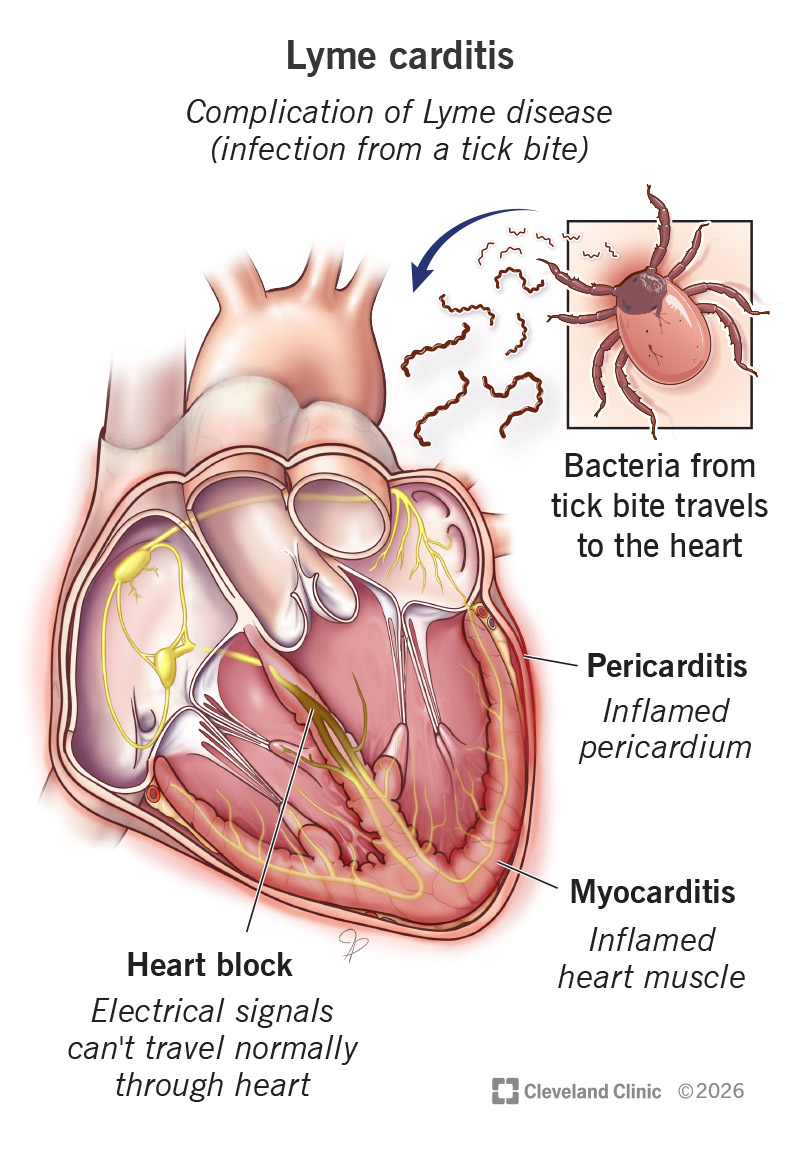
Image content: This image is available to view online.
View image online (https://my.clevelandclinic.org/-/scassets/images/org/health/articles/lyme-carditis)
Lyme carditis is heart inflammation caused by Lyme disease bacteria. It’s a rare complication of Lyme disease (an infection from a tick bite). It can lead to problems with heart function, especially with the network of electrical signals that control your heartbeat.
Advertisement
Cleveland Clinic is a non-profit academic medical center. Advertising on our site helps support our mission. We do not endorse non-Cleveland Clinic products or services. Policy
Heart block is by far the most common issue. This is when electrical signals can’t travel normally through your heart. It’s also possible to develop abnormal heart rhythms (arrhythmias). Or you might have sudden, severe inflammation in your heart muscle (myocarditis) or the sac that surrounds your heart (pericarditis). Prompt diagnosis and treatment can reverse Lyme carditis and restore normal heart function.
Experts estimate that Lyme carditis occurs in up to 1 out of every 10 people who have Lyme disease. But as Lyme disease is becoming more common, Lyme carditis may start affecting more people in the coming years.
“Cardiac Lyme disease” is another term people sometimes use to describe this condition.
Lyme carditis symptoms usually start within one to two months after the tick bite. This is what experts call the “early disseminated stage” of Lyme disease. It’s when the infection starts spreading to different areas of your body. You may progress to this stage if you don’t realize you have Lyme disease and don’t get treatment early on.
Possible symptoms include:
Most people also have more general symptoms of Lyme disease for days or weeks leading up to their heart issues. These can include a “bullseye” skin rash, body aches, fever and fatigue.
Advertisement
A type of bacteria called Borrelia burgdorferi causes Lyme carditis. This is the same bacteria that causes the initial Lyme disease infection. It can enter your body if an infected deer tick bites you.
The longer the tick stays attached to your skin, the greater your risk of developing Lyme carditis. Identifying and removing the tick as soon as possible lowers your risk of Lyme disease and subsequent carditis.
Once the bacteria enter your heart tissue, your immune system takes notice — so much so that it overreacts. Experts believe this too-strong response from your immune system leads to inflammation and related heart problems.
The same risk factors for Lyme disease apply to Lyme carditis, too. The main one is spending time outdoors in spots where infected ticks live. In the U.S., these are wooded areas in the Northeast, mid-Atlantic and North-Central regions.
Among those who have Lyme disease, males are much more likely than females to develop Lyme carditis. Experts aren’t sure why.
Your healthcare provider will talk with you about the symptoms you have and do a physical exam. They’ll ask about time spent outdoors and any places you’ve traveled. Tests you may need include:
Lyme carditis treatment involves:
Antibiotics are the main treatment for Lyme carditis. They can cure the infection (in your heart and throughout your body) and reverse the heart problems. The typical course of treatment is 14 to 21 days. You’ll take your antibiotics at home or in the hospital, depending on the severity of your condition.
For milder cases, you may just take your prescribed pills while recovering at home. If you have severe heart block or arrhythmias, you may need to stay in the hospital for a week or two. This is so providers can closely monitor your heart. While you’re there, you’ll receive antibiotics through an IV. As your condition improves, you’ll switch to pills you take by mouth.
Severe cases may also require a temporary pacemaker. This means your provider connects your heart to a device that corrects abnormal electrical activity. This can help while the antibiotics kick in. Once your heart can beat normally on its own again, you no longer need the device.
Usually, heart block and other issues go away with antibiotic treatment. But if they don’t, your provider may surgically implant a permanent pacemaker. This is a device that stays inside your chest and keeps your heart beating normally.
Advertisement
Contact a healthcare provider if you find a tick on your skin or start feeling sick after spending time in the woods. Your provider will talk with you and possibly run tests to see if you have Lyme disease.
You should also seek care right away if you have symptoms of Lyme carditis, like dizziness, chest pain or heart palpitations. This is true even if you don’t recall a tick bite. Many people don’t even realize a tick bit them until days or weeks later, when they develop symptoms. Plus, lots of other things besides a Lyme infection can cause these symptoms. It’s important to get checked and find the cause.
If you have Lyme carditis, you’ll need follow-up visits after treatment. Follow the schedule your provider gives you. These are important for making sure your heart is back to normal.
Most people fully recover from Lyme carditis. It usually goes away with treatment and doesn’t cause any more issues in the future. With timely treatment, death is extremely rare.
The key is getting a diagnosis early on, as soon as you notice symptoms. Once you start antibiotics, issues like heart block should improve within one to two weeks. Your healthcare provider can tell you more about what to expect in your case.
Advertisement
Lyme carditis can feel like a scary diagnosis. After all, you probably didn’t expect that a bug bite could lead to heart problems. But there’s some good news: This condition is very treatable. The sooner you start antibiotics, the better. Follow your healthcare provider’s guidance on how to take your medicine and when to return for any further tests to check your heart.
Advertisement



Sign up for our Health Essentials emails for expert guidance on nutrition, fitness, sleep, skin care and more.
Learn more about the Health Library and our editorial process.
Cleveland Clinic’s health articles are based on evidence-backed information and review by medical professionals to ensure accuracy, reliability and up-to-date clinical standards.
Cleveland Clinic’s health articles are based on evidence-backed information and review by medical professionals to ensure accuracy, reliability and up-to-date clinical standards.
Need care fast? Cleveland Clinic’s Express Care and Urgent Care locations treat everything from sprains to sinus infections — no appointment needed.