



Left ventricular outflow tract (LVOT) obstruction is a condition that makes it hard for blood to move from your lower left heart chamber (left ventricle) to your aorta. Many people with hypertrophic cardiomyopathy (HCM) have this problem. Medicines and procedures can treat it.
Advertisement
Cleveland Clinic is a non-profit academic medical center. Advertising on our site helps support our mission. We do not endorse non-Cleveland Clinic products or services. Policy
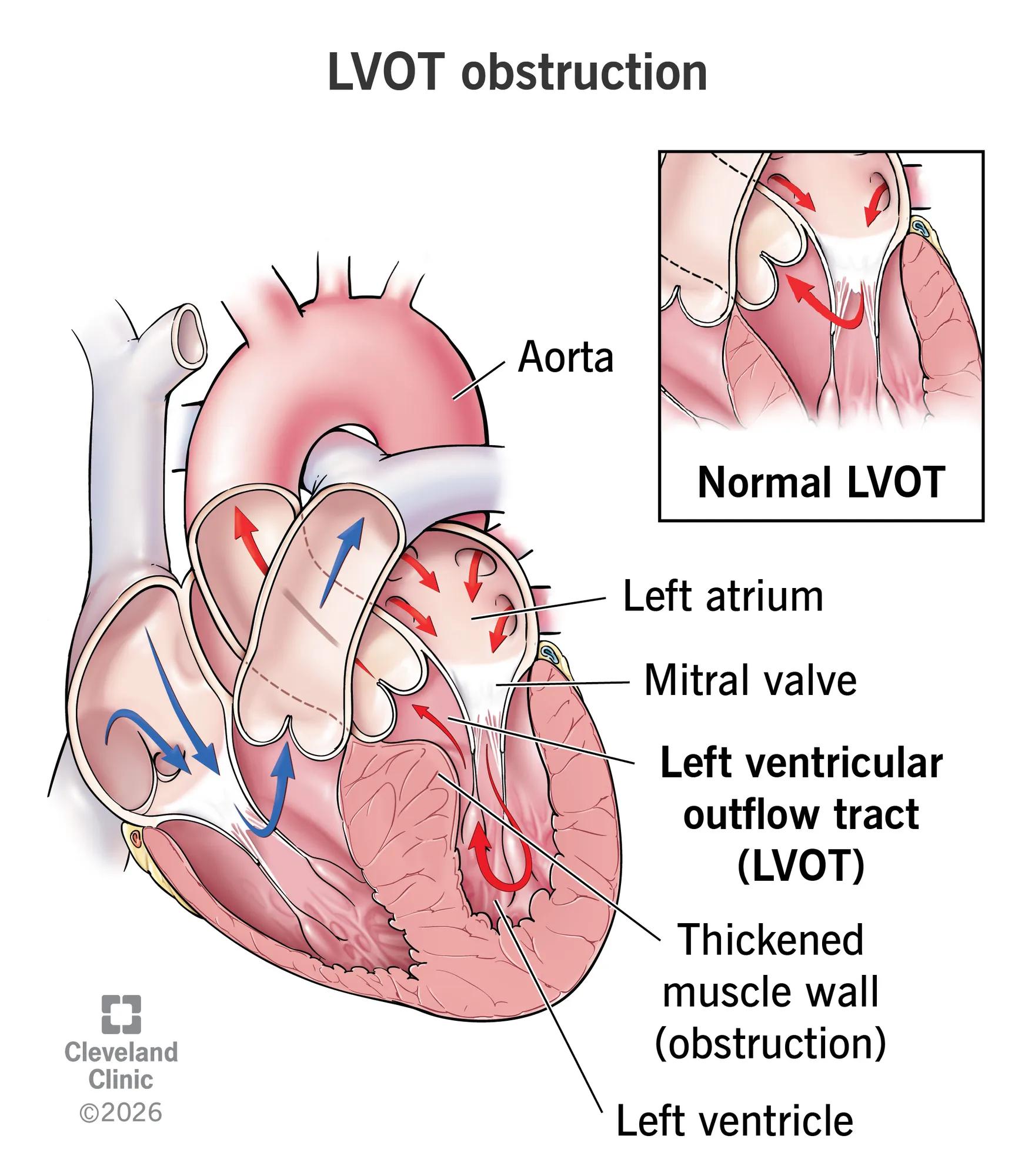
Image content: This image is available to view online.
View image online (https://assets.clevelandclinic.org/transform/cdb5ab52-8f99-4b06-8b4d-32f7bd466557/LVOT-Obstruction-26-HVI-8290211)
LVOT (left ventricular outflow tract) obstruction is a physical obstacle that restricts blood flow that your heart’s left ventricle pumps out as it attempts to deliver blood to your entire body.
Advertisement
Cleveland Clinic is a non-profit academic medical center. Advertising on our site helps support our mission. We do not endorse non-Cleveland Clinic products or services. Policy
With LVOT obstruction, this blockage creates a sudden pressure difference (gradient). This means your heart has to push harder than usual against the obstacle to move blood past it.
Causes include problems you have at birth or acquire later. This condition is common in people with hypertrophic cardiomyopathy (HCM).
Healthcare providers classify LVOTO by location. For example:
If the obstruction isn’t severe, you may not have symptoms. If you do have LVOT obstruction symptoms, these may include:
Often, LVOT obstruction symptoms are dynamic. This means things like physical activity and changes in your body’s “fight or flight” response (vagal and sympathetic tone) can provoke them.
Hypertrophic cardiomyopathy is a common cause of LVOT obstruction. Many people with HCM have a thickened interventricular septum (the muscle barrier between the two ventricles) and long mitral valve leaflets. These can cause obstructions.
Advertisement
Systolic anterior motion (SAM) of an anterior leaflet (the one closest to the wall, or septum) causes dynamic LVOT obstruction. Dynamic means the pressure can go up and down, depending on what you’re doing.
Systolic means the leaflet moves when your heart muscles contract. At that time, the anterior leaflet can touch the thickened wall between the lower heart chambers. When the leaflet and wall touch, they obstruct blood flow.
Other causes of LVOT obstruction include:
LVOT obstruction can happen to children and adults. In many cases, it develops because of an inherited condition. Lowering your risk of other causes, like a heart attack, can lower your risk of LVOTO, as well.
Sometimes, a surgeon sees something in your anatomy that puts you at risk of an LVOT obstruction from a mitral valve procedure. If this is the case, there are things they can do during surgery to limit your risk.
Without treatment, LVOT obstruction can make your heart’s left ventricle thick, stretched out or unable to work. This condition can also lead to kidney or liver injury.
Your healthcare provider may hear a heart murmur when they listen to your heartbeat.
To diagnose LVOT obstruction, they may request these tests:
LVOT obstruction treatment consists of medicines, procedures or surgery. These address the cause of the condition. You may need surgery if you have a severe case or other issues, like a hole between ventricles or a leaky aortic valve.
Treatments may include:
Contact your provider if you’re having symptoms of this condition or if symptoms don’t improve after treatment. You may get relief from medicines. If you don’t, ask your provider about procedures that could help.
Questions you may want to ask your provider include:
Advertisement
Sometimes, LVOTO can be a short-term condition. For example, it can happen with hypovolemia. Reducing certain medicines or starting others and adding fluids can fix LVOTO in these cases. But for many other people, this is a long-term problem.
A gradient or pressure difference of 50 millimeters of mercury or more in your left ventricular outflow tract is severe. Without treatment, this can give you a poor prognosis.
Surgery can relieve symptoms from LVOT obstruction. People tend to have better results when their surgical team does a higher volume of myectomies (removing thickened heart tissue). Your outcome also depends on what other conditions you have and their severity, as well as your age.
Having LVOT obstruction may increase your risk of endocarditis. Your healthcare provider may suggest taking antibiotics before some dental work. This medicine can help you avoid getting inflammation in your heart.
Chest pain and shortness of breath can make you stop whatever you’re doing. Then, you wonder what’s going on. But LVOT obstruction treatments can give you relief from these symptoms. Talk to your healthcare provider about the best treatment for your case. If medicines don’t help, you may be able to get a procedure.
Advertisement



Sign up for our Health Essentials emails for expert guidance on nutrition, fitness, sleep, skin care and more.
Learn more about the Health Library and our editorial process.
Cleveland Clinic’s health articles are based on evidence-backed information and review by medical professionals to ensure accuracy, reliability and up-to-date clinical standards.
Cleveland Clinic’s health articles are based on evidence-backed information and review by medical professionals to ensure accuracy, reliability and up-to-date clinical standards.
Cleveland Clinic offers personalized diagnosis and the latest treatments for hypertrophic cardiomyopathy.
