



Iritis is inflammation in the colored part of your eye (the iris). Most cases happen without a cause. But infections, injuries and some health conditions can all lead to it. You’ll probably need medicated eye drops to reduce the inflammation. Your eye doctor may also dilate your eyes to relieve pain and irritation while your irises heal.
Advertisement
Cleveland Clinic is a non-profit academic medical center. Advertising on our site helps support our mission. We do not endorse non-Cleveland Clinic products or services. Policy
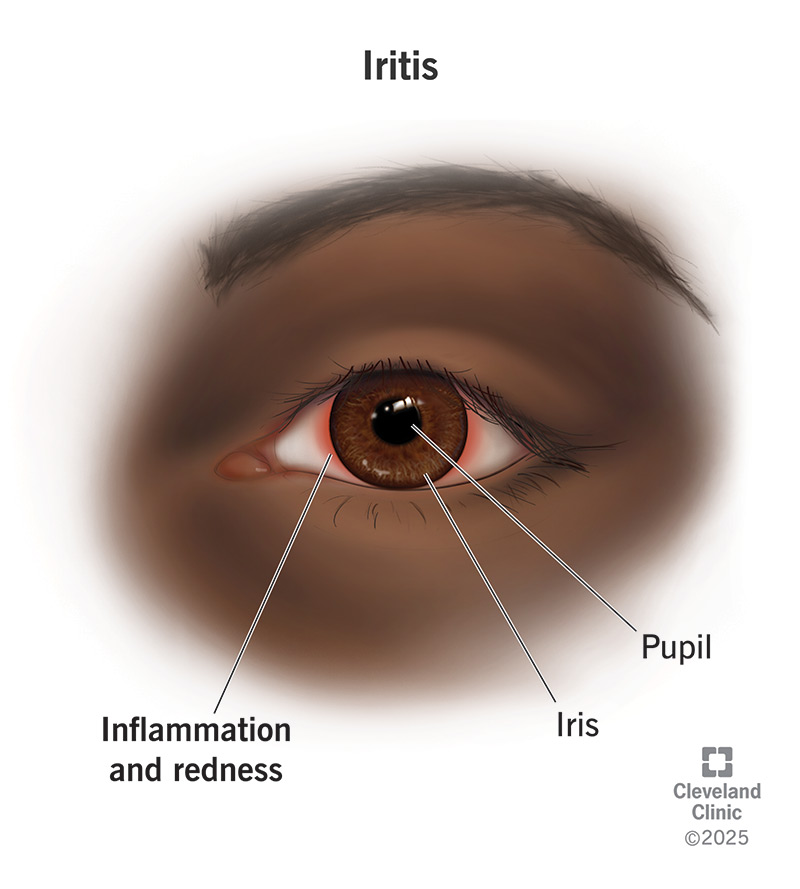
Image content: This image is available to view online.
View image online (https://my.clevelandclinic.org/-/scassets/images/org/health/articles/iritis)
Iritis is inflammation in the iris (the colored part of your eye). It’s the most common type of uveitis.
Advertisement
Cleveland Clinic is a non-profit academic medical center. Advertising on our site helps support our mission. We do not endorse non-Cleveland Clinic products or services. Policy
Eye doctors sometimes refer to it as anterior uveitis. Anterior is the medical word for front. Uveitis is any inflammation in the uvea. So, anterior uveitis is inflammation in the front of your uvea. This includes your irises.
Visit an eye doctor if you have redness, pain or other symptoms in your eyes for more than a few days.
Iritis can happen in one or both eyes at the same time. Symptoms can include:
Iritis can be acute or chronic. Acute iritis symptoms start suddenly and get worse in a few days. Chronic iritis usually takes at least a few weeks to develop. Symptoms can also come and go in episodes called flare-ups.
Iritis happens when there’s inflammation in your irises. Inflammation is your immune system’s response to germs or other things it detects as threats. But sometimes, it happens without a known cause. In fact, most cases of iritis happen like this. Your eye doctor might call this idiopathic iritis.
If there’s a cause, it might be:
Advertisement
You may be more likely to develop iritis if your biological family members have a history of it. You’ll also have a higher risk if you have a compromised immune system.
If it’s not treated right away, iritis can damage your eyes and vision. Complications can include:
An eye doctor will diagnose iritis with an eye exam and some tests. Your provider will check your vision with a visual acuity test. They’ll also look inside your eyes for signs of inflammation and damage. They might use a few other tests, including:
An eye doctor will recommend treatments that reduce the inflammation, including:
Visit an eye doctor if you have redness, eye pain or other symptoms that last for more than a few days. Tell your provider if it feels like the symptoms are getting worse or coming back. This might mean you have chronic iritis. Your provider may need to adjust your treatments.
See an eye doctor right away if you have:
Iritis can sometimes get better on its own. But you should still visit an eye doctor to get it diagnosed. Even if it happens without a cause, you might still need treatment. Plus, your eye doctor will check your eyes and vision to reduce your risk of complications.
Iritis usually lasts for a few weeks. Your eye doctor will tell you if you need to avoid wearing contact lenses while your eyes heal.
If a chronic condition causes iritis, it might come back again. Managing that condition can prevent flare-ups or make them happen less often. Ask your eye doctor what you should expect.
The color of your eyes is just as unique as your fingerprint. Nobody else’s irises are exactly like yours. That’s why it can feel scary to find out there’s inflammation inside your irises that may damage them.
The good news is that iritis is very treatable. Talk to your eye doctor about managing the symptoms and how long it will take your irises to heal. They’ll help you understand everything you need to know to keep your eyes pain-free and healthy.
Advertisement



Sign up for our Health Essentials emails for expert guidance on nutrition, fitness, sleep, skin care and more.
Learn more about the Health Library and our editorial process.
Cleveland Clinic’s health articles are based on evidence-backed information and review by medical professionals to ensure accuracy, reliability and up-to-date clinical standards.
Cleveland Clinic’s health articles are based on evidence-backed information and review by medical professionals to ensure accuracy, reliability and up-to-date clinical standards.
Uveitis is a serious eye condition that can cause vision loss. At Cleveland Clinic, our experts will create a treatment plan that’s personalized for you.
