



Bipolar disorder is a lifelong mental health condition with episodes of high energy (mania or hypomania) and low mood (depression). Symptoms may disrupt your sleep, activities and daily life. But treatment and support may help you stay stable.
Advertisement
Cleveland Clinic is a non-profit academic medical center. Advertising on our site helps support our mission. We do not endorse non-Cleveland Clinic products or services. Policy
Video content: This video is available to watch online.
View video online (https://cdnapisec.kaltura.com/p/2207941/sp/220794100/playManifest/entryId/1_licipby9/flavorId/1_5f3sgelj/format/url/protocol/https/a.mp4)
Learn the signs of bipolar disorder.
Bipolar disorder, formerly known as manic depression, is a mental health disorder that causes strong mood swings. You may have episodes of mania (a period of high energy and euphoria) and depression (a period of low mood and low energy).
Advertisement
Cleveland Clinic is a non-profit academic medical center. Advertising on our site helps support our mission. We do not endorse non-Cleveland Clinic products or services. Policy
This condition affects millions of people worldwide. In the U.S., about 3 out of every 100 adults have bipolar disorder in a given year.
During mania, you may feel full of energy, act without thinking or feel unusually happy. During depression, you may feel sad, tired or hopeless. In between mood shifts, you may have periods of a steadier mood, called euthymia.
These shifts can last for days, weeks or months. They may affect your daily life and routine. A healthcare provider can help you manage symptoms.
There are four main types. Each type involves mood shifts, but the patterns are different:
Advertisement
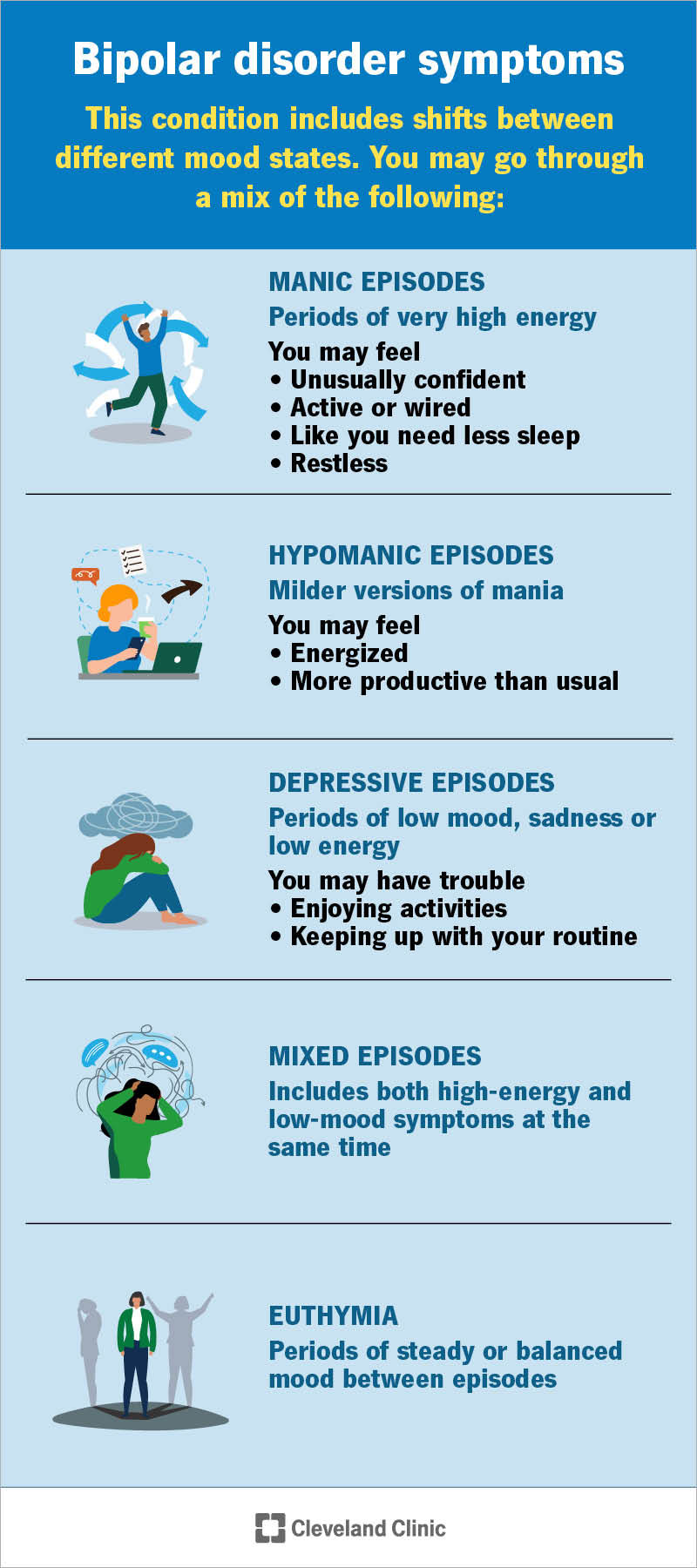
Image content: This image is available to view online.
View image online (https://my.clevelandclinic.org/-/scassets/images/org/health/articles/bipolar-disorder)
Bipolar disorder causes episodes that shift your mood, energy and activity levels. These episodes can last days, weeks or months. They’re a clear change from your usual self and can affect your daily life.
Not everyone has the same pattern. Some people move between episodes often. Others may stay in one mood state for a long time, with periods of steady mood (euthymia) in between.
Mania can happen many times over a lifetime or only rarely. Symptoms may include:
You may not see the negative effects of your actions. Mania can also increase suicide risk. Severe episodes may require hospital care.
Hypomania is a milder form of mania. You may feel very good, energized or productive. You may still function well at work or in social settings.
You might not notice a problem, but others may see changes in your mood or behavior. A depressive episode may follow hypomania.
Depressive episodes are the same as major depression. Symptoms may include:
If you have thoughts of suicide, call or text the Suicide and Crisis Lifeline at 988 (U.S.) right away.
Mixed episodes include symptoms of both mania and depression at the same time. You may feel low or hopeless, but also restless, agitated and full of energy. Many people describe mixed episodes as very challenging.
Rapid cycling is when you have four or more mood episodes (mania or depression) in one year. Different things may trigger it, like:
There isn’t one single cause of bipolar disorder. It likely develops because several factors add up over time.
Advertisement
As healthcare providers don’t know what causes this condition, there’s no way to prevent it.
Bipolar disorder can affect anyone. Symptoms often start in your teens or early adulthood, but some people don’t get a diagnosis until later in life.
Certain factors may raise your chances of developing it, including:
Bipolar disorder affects males and females in similar numbers, but it can affect them in different ways. For example, females may switch moods more quickly. Females may also have more periods of depression than males with this condition.
Mood episodes may cause the following:
If you ever have thoughts of harming yourself, call or text 988 (U.S.) or go to the nearest emergency room. Help is available 24/7.
The following conditions commonly happen alongside bipolar disorder:
Advertisement
A healthcare provider diagnoses this condition by learning about your symptoms, your history and how your mood changes over time. Your doctor may offer blood or urine tests to check for other causes of mood changes, like medical conditions or substance use. There isn’t a test or brain scan that can diagnose this condition.
Your provider may refer you to a mental health provider. They’ll ask detailed questions about past mood episodes, including times when you felt very “up” or very “down.” They may also ask to speak with someone close to you because loved ones may notice changes you might not.
You may fill out a screening questionnaire in your provider’s office. They may also ask you to keep a log of how you feel and how you sleep between appointments. These can help them learn more about what’s going on.
It can take time to diagnose bipolar disorder because its symptoms look like other mental health conditions. Your provider will track your mood over time to see if you’ve had manic or hypomanic episodes. These are required for a diagnosis, according to the Diagnostic and Statistical Manual of Mental Disorders (DSM-5).
Advertisement
Treatment for this condition may include a combination of the following:
In some cases, a healthcare provider may recommend a hospital stay or joining an outpatient program, especially during a mood episode. These settings help you stay safe, steady your mood and get care from people who understand what you’re going through.
Talk therapy (psychotherapy) can help you understand and manage your emotions, thoughts and behaviors. You’ll work with a mental health professional, like a psychologist or psychiatrist, who can offer support and guidance.
Common types of therapy include:
Medications may help manage symptoms. You might need to try more than one medication, with your provider’s guidance, before finding what works best for you.
Common medications include:
If medications don’t help enough, your provider might suggest other treatments, like:
If you have bipolar disorder, you’ll need regular visits with your healthcare team. These check-ins make sure your treatment is working and that symptoms stay manageable.
Call 911 (or your local emergency services number) or go to the nearest emergency room if you have any of the following:
Some medications may cause side effects. Your provider will let you know about these before you start a new treatment. For example, if you take lithium, there’s a risk of lithium toxicity. You should get help right away if you notice the following:
Bipolar disorder is a serious, long-term condition without a cure. It can affect your daily life if it isn’t well managed. Some complications may also affect life expectancy. People with bipolar disorder have a higher risk of suicide, so providers take mood changes and suicidal thoughts very seriously.
Treatment can help you feel steadier and safer. Taking your medication as directed may reduce mood swings. You should take your medication as prescribed, even if you feel well.
Knowing your symptoms and triggers could help you catch mood changes early. This may stop episodes from lasting too long or leading to a hospital stay.
It’s important to stay engaged in your treatment plan and reach out for care when something doesn’t feel right. Your healthcare team is there to support you.
The unpredictability of bipolar disorder might feel like your emotions are on a roller coaster — soaring highs and deep lows. These can affect your relationships, work and sense of self. It might feel frustrating, isolating or even scary at times.
But with the right mix of treatments, you may be able to find balance. Mood changes might still come and go, but they don’t have to take over.
Getting to know your symptoms, sticking with your treatment plan and checking in regularly with your provider can make a real difference. Care is tailored to your needs, and you don’t have to wait until things get really hard to ask for help.
Progress isn’t always easy or fast. But every step forward is still a step in the right direction.



Sign up for our Health Essentials emails for expert guidance on nutrition, fitness, sleep, skin care and more.
Learn more about the Health Library and our editorial process.
Cleveland Clinic’s health articles are based on evidence-backed information and review by medical professionals to ensure accuracy, reliability and up-to-date clinical standards.
Cleveland Clinic’s health articles are based on evidence-backed information and review by medical professionals to ensure accuracy, reliability and up-to-date clinical standards.
Your mental well-being is just as important as your physical well-being. Cleveland Clinic’s mental health experts can help you live life to the fullest.
