



Estrogen levels naturally drop as you age and enter menopause. But low estrogen can also be the result of a condition or medical treatment. Regardless of the cause, low estrogen leads to symptoms that can disrupt your health and daily life. Hormone replacement therapy may be a treatment option.
Advertisement
Cleveland Clinic is a non-profit academic medical center. Advertising on our site helps support our mission. We do not endorse non-Cleveland Clinic products or services. Policy
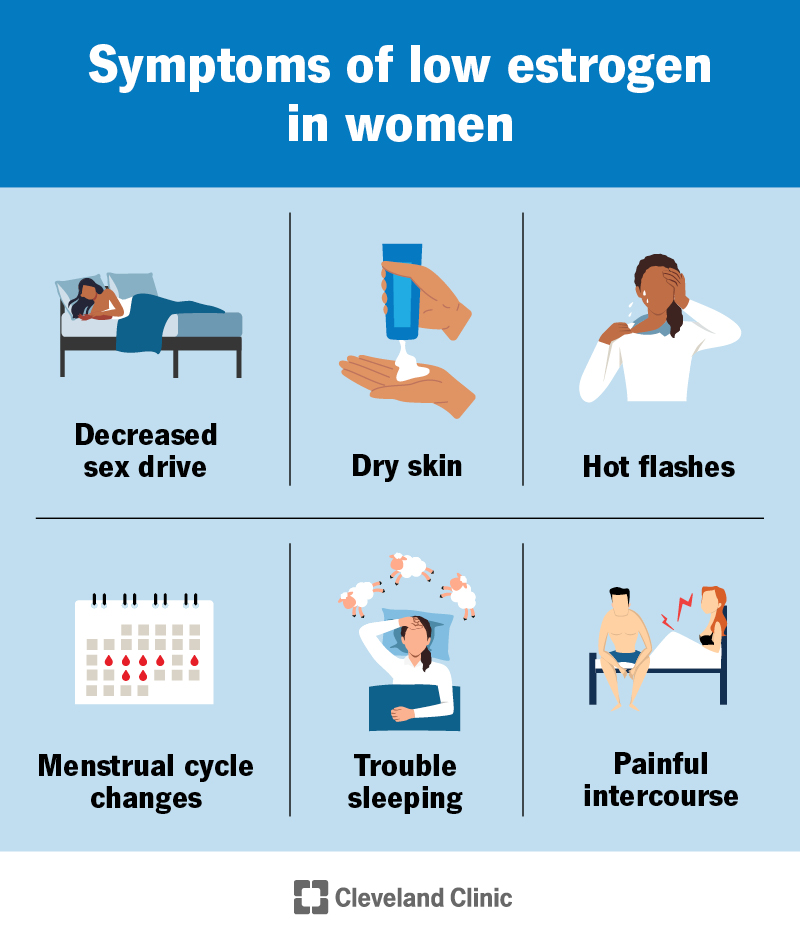
Image content: This image is available to view online.
View image online (https://my.clevelandclinic.org/-/scassets/images/org/health/articles/22354-low-estrogen)
Estrogen levels naturally rise and fall throughout your life. They also change during certain bodily processes, like your menstrual cycle. Depending on your age, consistently low estrogen may mean you’re going through the natural change of menopause.
Advertisement
Cleveland Clinic is a non-profit academic medical center. Advertising on our site helps support our mission. We do not endorse non-Cleveland Clinic products or services. Policy
But having estrogen levels that are consistently low when they’re not supposed to be is different. Sometimes, low estrogen is a sign of a condition or the result of a medical treatment. It can cause a variety of symptoms that affect both your reproductive and overall health.
After puberty, signs and symptoms of low estrogen in females can include:
In girls, low estrogen may delay puberty or slow or prevent sexual development.
Talk to your healthcare provider if you have these symptoms, especially if they’re unexpected or severe.
After puberty, symptoms of low estrogen in males can include:
In boys, low estrogen can limit their growth spurt in puberty due to the hormone’s effect on bones.
It’s natural for your estrogen levels to fall as you age and enter menopause. They also drop dramatically after giving birth (but then stabilize). Low levels unrelated to menopause or postpartum may be a sign of a condition or the result of a treatment.
Advertisement
Most causes of low estrogen result from issues with your ovaries, which are the primary source of estrogen. These causes include:
Other causes of low estrogen include:
Complications of low estrogen vary depending on your life stage. For example, low estrogen in girls can stall puberty and sexual development. Low estrogen during your reproductive years can cause infertility.
In general, low estrogen can contribute to complications like:
In addition, symptoms of low estrogen can be more severe in some people compared to others. This can cause significant distress and decreased quality of life. Don’t hesitate to reach out to your healthcare provider for help if low estrogen symptoms are affecting your daily life.
Your healthcare provider may consider checking your estrogen levels with a blood test. If you have periods, blood tests may not be accurate due to the natural fluctuations of estrogen throughout your menstrual cycle. They may recommend other tests to find the cause of the low estrogen level if it’s unknown.
Hormone replacement therapy (HRT) is the main treatment for low estrogen, especially during menopause and postmenopause. With HRT, you take manufactured forms of estrogen and/or progesterone. It helps manage certain features of menopause, like low bone density and vaginal dryness.
Advertisement
HRT has various risks and benefits. Talk to your healthcare provider to see if it’s an option for you.
There aren’t home remedies for most causes of low estrogen (like ovarian damage). But you can try to maintain healthy estrogen levels with the following lifestyle adjustments:
Many women shrug off the symptoms associated with low estrogen as an unpleasant part of getting older. But it's worth addressing symptoms that interfere with your quality of life. If you’re noticing bothersome signs of low estrogen, see your healthcare provider. They can discuss hormone replacement therapy and other ways to manage your symptoms.
Advertisement



Sign up for our Health Essentials emails for expert guidance on nutrition, fitness, sleep, skin care and more.
Learn more about the Health Library and our editorial process.
Cleveland Clinic’s health articles are based on evidence-backed information and review by medical professionals to ensure accuracy, reliability and up-to-date clinical standards.
Cleveland Clinic’s health articles are based on evidence-backed information and review by medical professionals to ensure accuracy, reliability and up-to-date clinical standards.
From routine pelvic exams to high-risk pregnancies, Cleveland Clinic’s Ob/Gyns are here for you at any point in life.
