



A heart rate monitor is a device that lets you see how fast or slow your heart is beating in real time. Many monitors also save heart rate data for you to review later. While these can be valuable tools in monitoring your health, you shouldn’t use them in place of medical care.
Advertisement
Cleveland Clinic is a non-profit academic medical center. Advertising on our site helps support our mission. We do not endorse non-Cleveland Clinic products or services. Policy
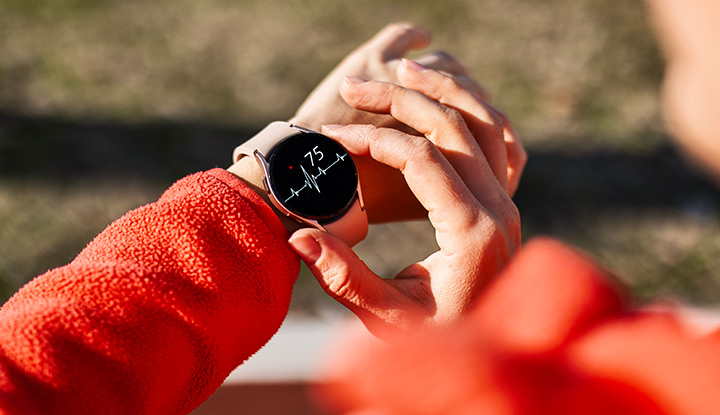
Image content: This image is available to view online.
View image online (https://my.clevelandclinic.org/-/scassets/Images/org/health/articles/23429-heart-rate-monitor)
Heart rate monitors measure how fast your heart is pumping in beats per minute (bpm). They’re usually small and wearable as a watch, an arm band or a ring, allowing you to track your heart rate all day or even at night. While they’re often reliable and convenient, they’re no substitute for check-ups and tests from a healthcare provider. Instead, they offer more information that you can share with your provider.
Advertisement
Cleveland Clinic is a non-profit academic medical center. Advertising on our site helps support our mission. We do not endorse non-Cleveland Clinic products or services. Policy
A heart rate monitor can help you:
Most heart rate monitors give you numbers in the moment, plus save data for you to review later — like your average heart rate during a workout or overnight. All this information can help you take an active role in managing your health. It’s also useful if you have a heart condition that your provider wants to keep a close eye on.
Heart rate monitors are generally very safe and don’t pose risks to your health. But it’s possible that getting so much data may stress you out. If you find yourself constantly checking the numbers or worrying about your heart rate, tell your provider. They may suggest wearing it only at certain times, like when exercising.
Heart rate monitors detect either your heart rate or your pulse rate. Your heart rate is the number of times your heart squeezes per minute to push out blood. Your pulse rate is the number of times your arteries widen and narrow in response to your heart’s activity. Usually, these numbers are the same or very close. That’s why devices that technically measure your pulse still report that data as “heart rate.” Some monitors can even detect abnormal rhythms.
Advertisement
Any heart rate monitor you use will be equipped with one of these technologies:
Monitors that use EKG technology are the gold standard in terms of accuracy. But as technology improves, many that use PPG are also highly accurate.
How you use it depends on the type you have. Here are some common ones:
Be sure to read the instruction manual before you start using it — or even before you buy it. Each one works a little differently. Many monitors have websites with user forums, where you can ask questions and learn from others.
Make a note of key points like:
Advertisement
Heart rate monitors that use EKG technology are the most accurate. Those that use PPG — especially the latest models — are often highly accurate. But it depends on the exact one you’re using.
Researchers are constantly testing heart rate monitors to learn more about their accuracy. Getting the right reading is important for anyone, but especially for those who have heart disease or conditions that require close monitoring.
Monitors that underestimate heart rate can be dangerous because they give you a false sense of security — you think your heart rate is lower than it actually is, and you may push yourself harder during a workout.
In general, heart rate monitors that use PPG (detecting your pulse) may be less accurate if:
Advertisement
Check with a healthcare provider before choosing a heart rate monitor. They’ll help you find one that meets your health needs.
You should also call your provider if:
If you’ve ever wondered how fast your heart is beating while you’re walking, stressed or even just sleeping, a heart rate monitor may be right for you. But these devices might not always give you precise readings. Plus, it can be hard to interpret the numbers you’re seeing or know if you’re in a healthy range.
That’s why it’s important to see a healthcare provider for routine check-ups. Tell them if you have any concerns about your heart rate. They’ll help you make sense of the numbers. And they’ll run tests if needed, to gain a bigger picture view of what’s going on.
Advertisement



Sign up for our Health Essentials emails for expert guidance on nutrition, fitness, sleep, skin care and more.
Learn more about the Health Library and our editorial process.
Cleveland Clinic’s health articles are based on evidence-backed information and review by medical professionals to ensure accuracy, reliability and up-to-date clinical standards.
Cleveland Clinic’s health articles are based on evidence-backed information and review by medical professionals to ensure accuracy, reliability and up-to-date clinical standards.
Cleveland Clinic’s primary care providers offer lifelong medical care. From sinus infections and high blood pressure to preventive screening, we’re here for you.
