



When fluid builds up faster in parts of your body than it can drain out, it causes swelling. That’s what edema is. It’s a common issue, especially with injuries. But when it happens in multiple body parts or without an obvious cause, you should talk to a healthcare provider about it.
Advertisement
Cleveland Clinic is a non-profit academic medical center. Advertising on our site helps support our mission. We do not endorse non-Cleveland Clinic products or services. Policy
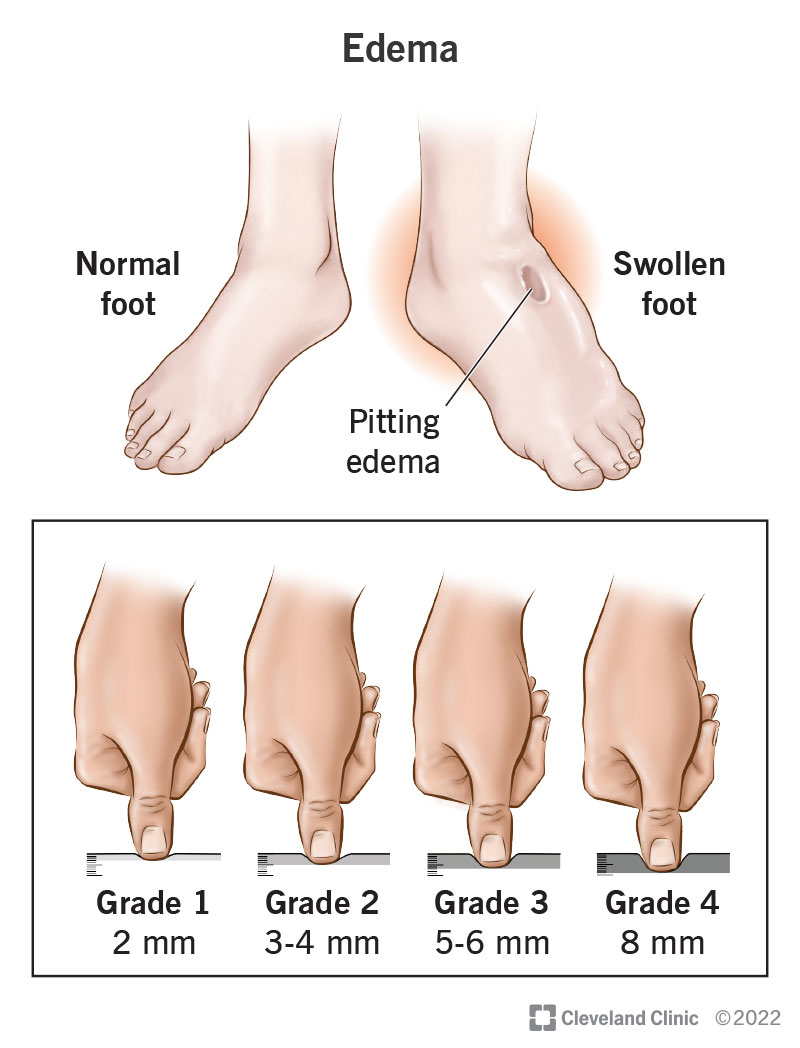
Image content: This image is available to view online.
View image online (https://my.clevelandclinic.org/-/scassets/images/org/health/articles/12564-edema)
“Edema” is the medical term for swelling from fluid trapped in your body’s tissues. It happens most often in your feet, ankles and legs. But it can affect other body parts, too, like your face, hands and belly.
Advertisement
Cleveland Clinic is a non-profit academic medical center. Advertising on our site helps support our mission. We do not endorse non-Cleveland Clinic products or services. Policy
Edema is common because many conditions can cause or contribute to it. It can also affect anyone, but it most often affects people with heart, liver or kidney disease. It can also happen in pregnant women, adults over 65 or people who spend a lot of time on their feet.
There are two main types of edema:
Generalized edema can be a symptom of serious health conditions. You should contact a healthcare provider if you have edema without an injury or obvious cause.
Edema’s effects can include:
Advertisement
There are several forms of edema, including:
Edema can happen for many reasons. Some of the possible causes and contributing factors include:
Edema treatments mainly depend on the cause. When your edema comes from an underlying condition, treating that condition may help.
Other examples of possible treatments include:
Because treatments can vary, you should talk to your healthcare provider about treatment options. They can tell you more about treatment options that are most relevant and likely to help you.
There are several things you can do to manage your edema. Managing it can help with swelling and ease its effects on you. Things you can do include:
Edema causes decreased circulation and can lead to:
Advertisement
It’s very important to see a healthcare provider if you experience swelling in multiple places in your body or body parts. This is even more important when the swelling happens suddenly or unexpectedly.
Call a provider if you have swelling and any of the following:
Swelling throughout your body from an allergic reaction, especially around your face or mouth, is a medical emergency. If you or someone you’re with has it, call 911 or your local emergency services number right away.
Swelling can be a minor issue, like a welt from a mosquito bite or a “goose egg” from bumping your shin on the stairs. But it can also be a serious concern, like a chronic condition or a life-threatening reaction. If you notice a swelling-related issue that’s not going away or getting worse, see a primary care provider.
If you have any form of swelling that makes you or your family concerned, then you should see a healthcare provider as soon as possible. You should even go to the ER or call 911 if you feel like something is very wrong. They can determine the cause and offer the best treatment.
Advertisement
Regular visits with a primary care provider can often catch chronic conditions that cause edema before they become severe.
Advertisement



Sign up for our Health Essentials emails for expert guidance on nutrition, fitness, sleep, skin care and more.
Learn more about the Health Library and our editorial process.
Cleveland Clinic’s health articles are based on evidence-backed information and review by medical professionals to ensure accuracy, reliability and up-to-date clinical standards.
Cleveland Clinic’s health articles are based on evidence-backed information and review by medical professionals to ensure accuracy, reliability and up-to-date clinical standards.
Cleveland Clinic’s primary care providers offer lifelong medical care. From sinus infections and high blood pressure to preventive screening, we’re here for you.
