



Hyperthyroidism happens when your thyroid gland makes and releases high levels of thyroid hormone. It speeds up several bodily functions, causing symptoms like fast heart rate, weight loss, increased appetite and anxiety. Hyperthyroidism is treatable, typically with medications.
Advertisement
Cleveland Clinic is a non-profit academic medical center. Advertising on our site helps support our mission. We do not endorse non-Cleveland Clinic products or services. Policy
Hyperthyroidism, also called overactive thyroid, is a condition where your thyroid makes too much thyroid hormone. This speeds up your metabolism and affects other bodily functions, like digestion and heart rate. It can lead to symptoms like a rapid heartbeat, weight loss and feeling anxious or nervous.
Advertisement
Cleveland Clinic is a non-profit academic medical center. Advertising on our site helps support our mission. We do not endorse non-Cleveland Clinic products or services. Policy
Many conditions can cause hyperthyroidism, but the most common is Graves’ disease. Treatment for hyperthyroidism usually involves medication to stop your thyroid from making too much hormone. It can sometimes include surgery to remove some or all of your thyroid gland, depending on the cause. About 1 in 100 people over age 12 in the U.S. has an overactive thyroid.
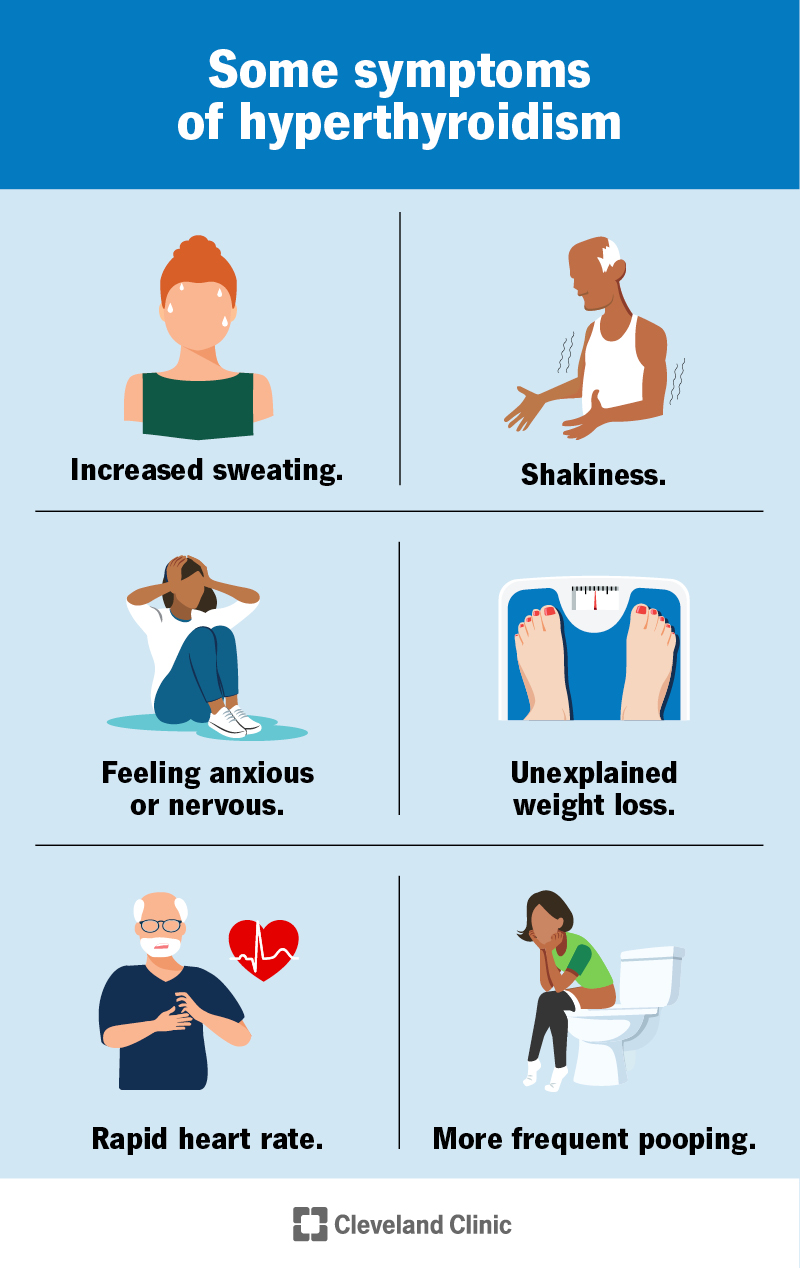
Image content: This image is available to view online.
View image online (https://my.clevelandclinic.org/-/scassets/images/org/health/articles/14129-hyperthyroidism)
Hyperthyroidism symptoms can include:
Symptoms can start suddenly or develop slowly over time. You may have some of these and not others, or many of them at the same time. It’s important to see a healthcare provider if you develop any of these symptoms.
Medical conditions and situations that can cause hyperthyroidism include:
Advertisement
Factors that increase your risk of developing hyperthyroidism include:
Diagnosing hyperthyroidism may involve multiple steps, including:
There are many treatment options for hyperthyroidism. The goal of treatment is to bring your thyroid hormone levels to a normal level. Depending on the cause, some options may be better for you than others. Your healthcare provider will discuss each option with you. Together, you can decide on a treatment plan.
Methimazole (Tapazole®) and propylthiouracil (PTU) stop your thyroid from making thyroid hormone. These medications are the most common treatment for hyperthyroidism. They can usually control thyroid function within two to three months. Your symptoms may get better within days to weeks.
RAI therapy involves taking radioactive iodine by mouth in a single capsule or liquid dose. It targets thyroid cells and destroys them. But it can slow down your thyroid too much and lead to underactive thyroid (hypothyroidism). If this happens, you’ll need to take thyroid hormone medication to replace what your thyroid stops making.
A surgeon may remove all or part of your thyroid gland. This will correct hyperthyroidism. But it can also lead to hypothyroidism. You’ll need lifelong treatment with thyroid hormones.
Beta-blockers are medications that can help manage symptoms such as a fast heartbeat, nervousness and shakiness. But they don’t change the level of hormone in your blood. Your provider may recommend beta-blockers along with another treatment.
Each of these treatments has specific side effects and risks. Your provider will go over them with you. Don’t hesitate to ask questions.
Complications from untreated or undertreated hyperthyroidism include:
Advertisement
A rare and life-threatening complication of hyperthyroidism is thyroid storm. It happens when your thyroid makes and releases a large amount of thyroid hormone in a short amount of time. It’s an emergency that requires immediate medical attention.
Hyperthyroidism is a treatable condition. Most people do well with treatment. While you might need to take medication for the rest of your life, this will help keep your thyroid hormone levels in a healthy range. Hyperthyroidism likely won’t affect your quality of life as long as you’re getting treatment.
Video content: This video is available to watch online.
View video online (https://cdnapisec.kaltura.com/p/2207941/sp/220794100/playManifest/entryId/1_fck7e4so/flavorId/1_5f3sgelj/format/url/protocol/https/a.mp4)
Learn the difference between hypothyroidism and hyperthyroidism.
Hyperthyroidism doesn’t typically cause weight gain. In fact, some people lose weight, even with an increased appetite. This is because hyperthyroidism speeds up your metabolic rate, causing your body to burn more calories. Hypothyroidism (underactive thyroid) slows down your metabolism, which may lead to weight gain.
Getting a new diagnosis can be stressful and leave you with many questions. The good news is that hyperthyroidism is very treatable. If you have symptoms, see a healthcare provider. They can recommend simple tests to find the cause. And treatments are available to help you feel better and keep your thyroid hormone level in check.
Advertisement



Sign up for our Health Essentials emails for expert guidance on nutrition, fitness, sleep, skin care and more.
Learn more about the Health Library and our editorial process.
Cleveland Clinic’s health articles are based on evidence-backed information and review by medical professionals to ensure accuracy, reliability and up-to-date clinical standards.
Cleveland Clinic’s health articles are based on evidence-backed information and review by medical professionals to ensure accuracy, reliability and up-to-date clinical standards.
Cleveland Clinic’s experienced healthcare providers treat all kinds of thyroid disorders, including issues that cause hypothyroidism and hyperthyroidism.
