



Nocturia is regularly waking up more than once because you have to pee. Sometimes, the cause is easy to explain, like drinking too many fluids before bed or taking a medication that makes you pee more than usual. But certain health conditions can also cause it, including sleep disorders or a bladder obstruction. Treatment depends on the cause.
Advertisement
Cleveland Clinic is a non-profit academic medical center. Advertising on our site helps support our mission. We do not endorse non-Cleveland Clinic products or services. Policy
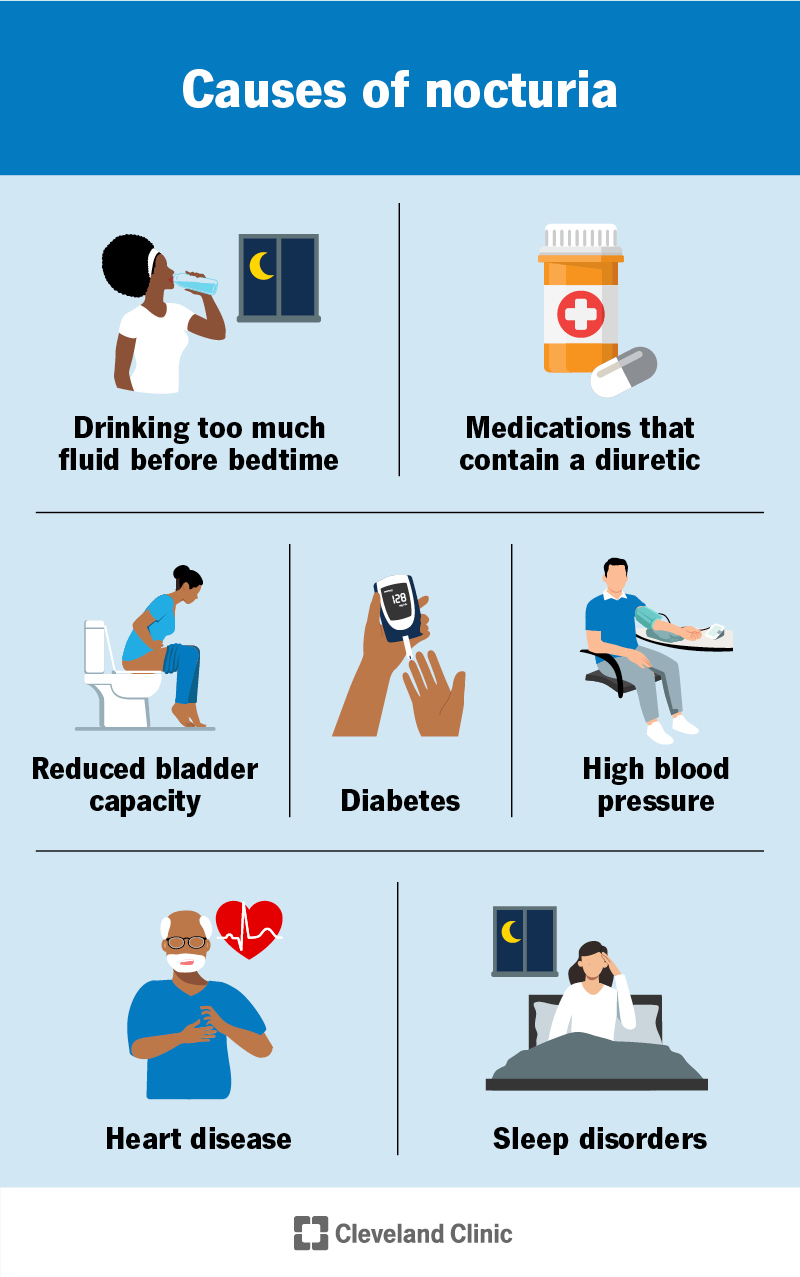
Image content: This image is available to view online.
View image online (https://my.clevelandclinic.org/-/scassets/Images/org/health/articles/14510-nocturia.jpg)
Nocturia is when you wake up to pee more than usual. It’s different than frequent urination, which is when you pee (urinate) too much while you’re awake. Nocturia (pronounced “nok-TOOR-ee-uh”) strictly means using the bathroom multiple times after bedtime, before you wake up to start your day.
Advertisement
Cleveland Clinic is a non-profit academic medical center. Advertising on our site helps support our mission. We do not endorse non-Cleveland Clinic products or services. Policy
It’s a very common condition, especially if you’re in your 50s or older. But it may also be a sign of an underlying problem. Nocturia can leave you feeling tired because it disrupts your regular sleep cycle. Treatment depends on the cause and may include lifestyle changes or medications.
Another name for nocturia is nocturnal urinary frequency. “Nocturnal” means it happens at night, when most people sleep.
Symptoms include:
Typically, you should be able to sleep six to eight hours without having to get up to pee. But it’s normal to get up once or twice to pee. If you have nocturia, you wake up to pee at least twice.
There are anatomical differences between males and females that can cause nocturia. For example, an enlarged prostate can affect males. Pregnancy, childbirth, menopause and pelvic organ prolapse can affect females.
Nocturia causes that can affect anyone include:
Advertisement
Certain health conditions can cause nocturia. These include:
If you have obstructive sleep apnea, not using a CPAP machine can cause nocturia.
Anyone of any age can have nocturia. But you’re more likely to have it if you’re:
Before age 50, it’s more common in females.
Many underlying conditions that cause nocturia can get worse without treatment. This can cause additional sleep loss. A lack of quality sleep can affect your overall health and well-being. Getting up to pee a lot can also wake your partner and affect their quality of sleep.
Your healthcare provider will review your health history and perform a physical exam. They’ll also ask questions about your symptoms, like:
To help them make a diagnosis, your provider may also ask you to keep a bladder diary. They’ll ask you to record information like:
They may also recommend that you get a special urine catcher with measuring lines. This allows you to measure and record the exact amount of pee every time you wake up to go.
To help determine the underlying cause, your provider may recommend some tests, including:
It depends on the cause. For example, if you have an enlarged prostate, you may need medications or surgery. If you have sleep apnea, you may need medications, a CPAP machine or surgery.
Whatever the cause, your provider may first recommend small lifestyle changes. These changes are usually low-risk and can help cut down on the number of trips you make to the bathroom. They may include:
Advertisement
Taking afternoon naps may also help. Sleeping allows your bloodstream to absorb liquids. Napping during the day may help your body get a jumpstart on absorbing liquids. You’ll need to pee after your nap. But it could help reduce your bathroom trips later.
Your provider may also recommend medications, like:
Schedule an appointment with your healthcare provider if you’re waking up more than once or twice to pee and it’s bothering you. You should also see your provider if your nocturia symptoms don’t go away after treatment or get worse.
The outlook is relatively good. Nocturia is annoying and can affect your quality of life. But in most cases, it’s highly treatable.
The condition itself isn’t life-threatening, though some of the causes can be serious. If test results don’t indicate any medical problems, there’s no need to worry about nocturia causing serious harm.
Nocturia can be a challenging and frustrating condition. But it’s important to remember that it’s not something you just have to get used to. If frequent pees stop you from catching ZZZs, talk to your healthcare provider.
Advertisement
Small lifestyle changes often make a big difference. But if you still have to hit the john a few times after you hit the sack, you may need medications or treatment. Your provider can find out the exact cause and recommend the most appropriate treatment.
Advertisement



Sign up for our Health Essentials emails for expert guidance on nutrition, fitness, sleep, skin care and more.
Learn more about the Health Library and our editorial process.
Cleveland Clinic’s health articles are based on evidence-backed information and review by medical professionals to ensure accuracy, reliability and up-to-date clinical standards.
Cleveland Clinic’s health articles are based on evidence-backed information and review by medical professionals to ensure accuracy, reliability and up-to-date clinical standards.
Having an overactive bladder isn’t a natural part of life. Cleveland Clinic’s experts are here to find treatments that work for you. We’ll get you the care you need.
