



Joubert syndrome is a rare disorder that happens when genetic mutations affect how a fetus’s brain develops. Most people inherit the mutations, but they can also happen for no known reason. Symptoms vary, but typically include issues with muscle control or muscle tone, breathing and eye movement. Treatments vary and depend on symptoms.
Advertisement
Cleveland Clinic is a non-profit academic medical center. Advertising on our site helps support our mission. We do not endorse non-Cleveland Clinic products or services. Policy
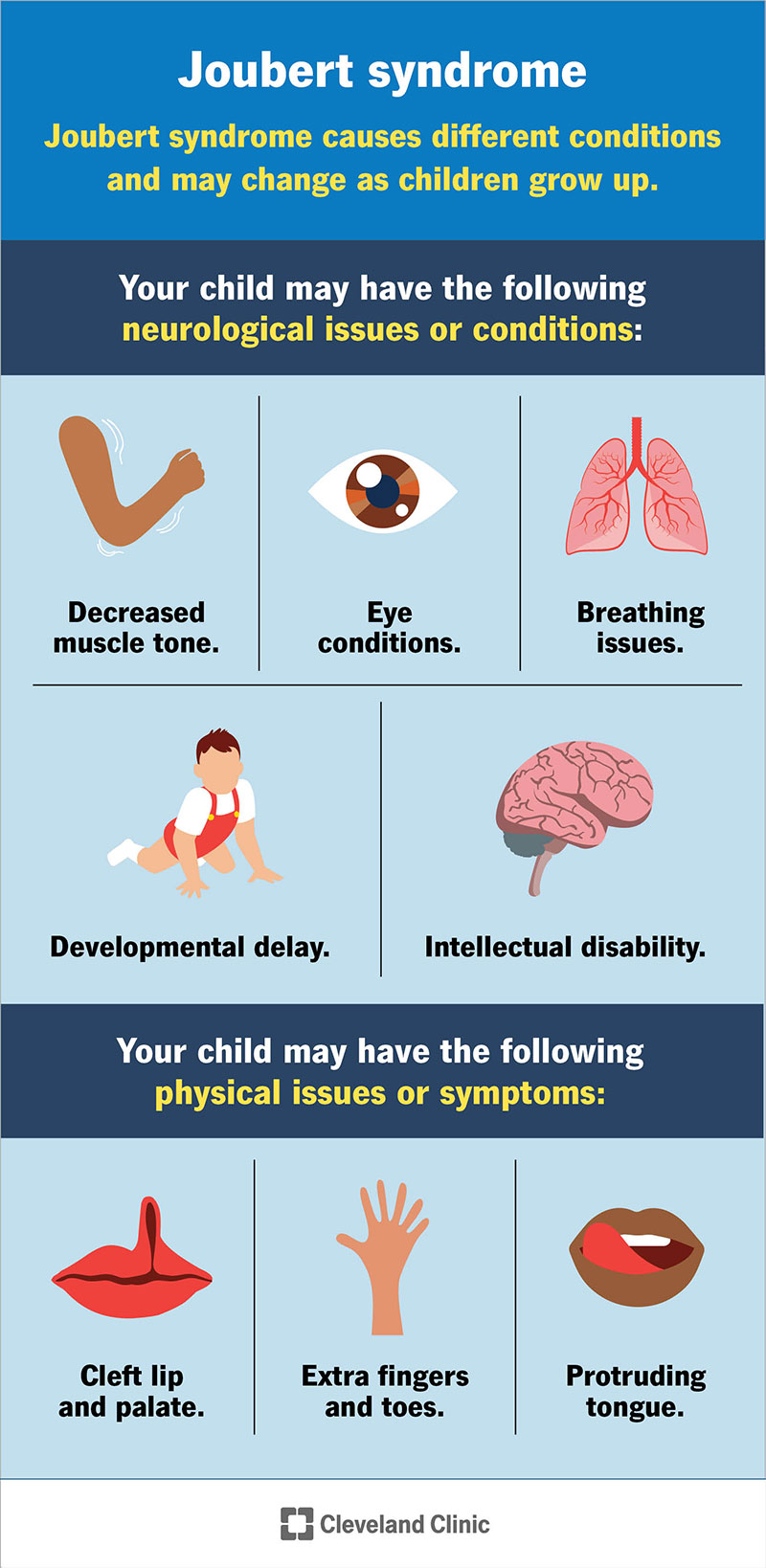
Image content: This image is available to view online.
View image online (https://my.clevelandclinic.org/-/scassets/images/org/health/articles/6040-joubert-syndrome)
Joubert syndrome is a rare genetic disorder that happens when the part of a fetus’s brain doesn’t develop as it should. The syndrome has many subtypes that cause different symptoms, but it typically causes issues with muscle control or muscle tone, breathing and eye movement.
Advertisement
Cleveland Clinic is a non-profit academic medical center. Advertising on our site helps support our mission. We do not endorse non-Cleveland Clinic products or services. Policy
Each year, 1 in 100,000 babies worldwide are born with Joubert syndrome. Most children with Joubert syndrome inherit genetic mutations that cause it, but it can also happen sporadically (for no known reason)
Joubert syndrome causes different conditions and may change as children grow up. Symptoms may include physical differences, including facial differences, symptoms of certain eye conditions, and liver and kidney disease.
Your child may have the following neurological issues or conditions:
Your child may have the following issues or symptoms:
As they grow up, your child may develop medical conditions that affect their retinas (the part of your eye that converts light to images), kidneys and liver. For example, children may develop conditions like Leber’s congenital amaurosis, polycystic kidney disease or liver failure.
Advertisement
Joubert syndrome can be the result of mutations in more than 35 different genes that play a part in brain development. Most of the time, people inherit these mutations in an autosomal recessive manner, which means both biological parents pass on the genetic mutations that cause Joubert syndrome.
But one of these mutations is X-linked, meaning the change is on the X chromosome. Mutations on the X chromosome can pass in a dominant or recessive pattern, but not every pattern is clear on how a child acquires the mutation from their parents.
The genetic mutations that cause Joubert syndrome result in abnormal versions of your child’s cerebellum, brainstem and cilia:
That depends on factors like the type of genetic mutation and sex:
Healthcare providers consider your child’s symptoms and imaging test results to diagnose Joubert syndrome. The criteria for diagnosing the condition are:
Providers may order genetic tests to confirm your child’s diagnosis and treatment. Studies show between 62% and 94% of children with Joubert syndrome have one of the genetic mutations that cause it. Identifying the specific mutation helps providers anticipate the kinds of health issues your child may have so they can treat them early on.
Advertisement
They can, but not always. Differences in a fetus’ brain stem or cerebellum may show up in a prenatal MRI. But a fetus may have brain abnormalities that don’t show up on an MRI scan.
Treatments are different for each child and depend on factors like the syndrome type and how it affects them. For example:
Depending on the ways Joubert syndrome affects your child, you might need regular visits with specialists who’ll diagnose, monitor and treat issues like kidney disease, eye issues and neurological issues.
The outlook for babies and children with Joubert syndrome depends on factors like how a specific genetic mutation affects your child. In general, children with Joubert syndrome will need medical treatment and other support for the rest of their lives. Your child’s healthcare provider is your best resource for information about what you can expect.
Joubert syndrome can be fatal in childhood, but people with the condition can live into adulthood. Researchers are still studying life expectancy with this rare condition. And your child’s situation is unique to them, including how the condition affects them. It’s natural to want to know how long your child will live, and your child’s healthcare team is your best source of information on what to expect.
Advertisement
There isn’t a way to prevent Joubert syndrome. But geneticists and genetic counselors can help determine who in your family may be at risk. That information can help people decide whether to have children, for example.
Joubert syndrome symptoms can change during your child’s life. Your child will need annual checkups so their healthcare provider can evaluate:
Your child may need periodic neurological examinations and development tests. They also may need specialized care to treat eye issues, kidney disease or liver disease.
Joubert syndrome changes family life, potentially putting pressure on everyone who loves and cares for a child with the condition. If you have a child with Joubert syndrome, some of these ideas may help:
Advertisement
You’ll probably have many questions about your child’s needs now and in the future. Here are some suggestions:
It may come as a shock to learn your child has Joubert syndrome. The condition is rare, and you may not know much about it. You could feel like you’re suddenly in a strange country without a compass or map to guide you.
Your child’s healthcare providers understand that you’ll have lots of questions and concerns as you navigate this unknown territory. Don’t hesitate to ask for information and help. For example, Joubert syndrome can cause many health issues with different symptoms. And your child may develop new issues as they grow up.
Most children with this condition need lifelong medical care and support. Your child’s care team will be there for you and your child as you navigate this unfamiliar path.



Sign up for our Health Essentials emails for expert guidance on nutrition, fitness, sleep, skin care and more.
Learn more about the Health Library and our editorial process.
Cleveland Clinic’s health articles are based on evidence-backed information and review by medical professionals to ensure accuracy, reliability and up-to-date clinical standards.
Cleveland Clinic’s health articles are based on evidence-backed information and review by medical professionals to ensure accuracy, reliability and up-to-date clinical standards.
Do certain health conditions seem to run in your family? Are you ready to find out if you’re at risk? Cleveland Clinic’s genetics team can help.
