



Cluster headaches cause severe, one-sided head pain. These headaches usually last for at least 30 minutes and happen multiple times per day. They tend to follow a pattern, often showing up at the same time each day. Headaches can last for months at a time before stopping. Treatment with medications can reduce how often and how painful these headaches are.
Advertisement
Cleveland Clinic is a non-profit academic medical center. Advertising on our site helps support our mission. We do not endorse non-Cleveland Clinic products or services. Policy
A cluster headache is pain on one side of your head that lasts from 15 minutes up to three hours. The pain occurs daily for weeks to months, often happening at the same time each day and up to eight times per day. When you feel recurring cluster headache pain, it’s called an attack. After an attack, you may go months or even years before you experience another cluster headache.
Advertisement
Cleveland Clinic is a non-profit academic medical center. Advertising on our site helps support our mission. We do not endorse non-Cleveland Clinic products or services. Policy
Cluster headaches get their name from how they affect you. They come on in clusters, or groups, before temporarily going away for most people.
Within your life, you’ve probably experienced a headache before. There are two main types of headaches:
A cluster headache is a type of primary headache. But not every headache is a cluster headache. It’s easy to mistake a cluster headache for the following types of headaches:
Advertisement
Cluster headaches aren’t common. They affect an estimated 0.1% of people around the world. This equals about 1 out of every 1,000 people.
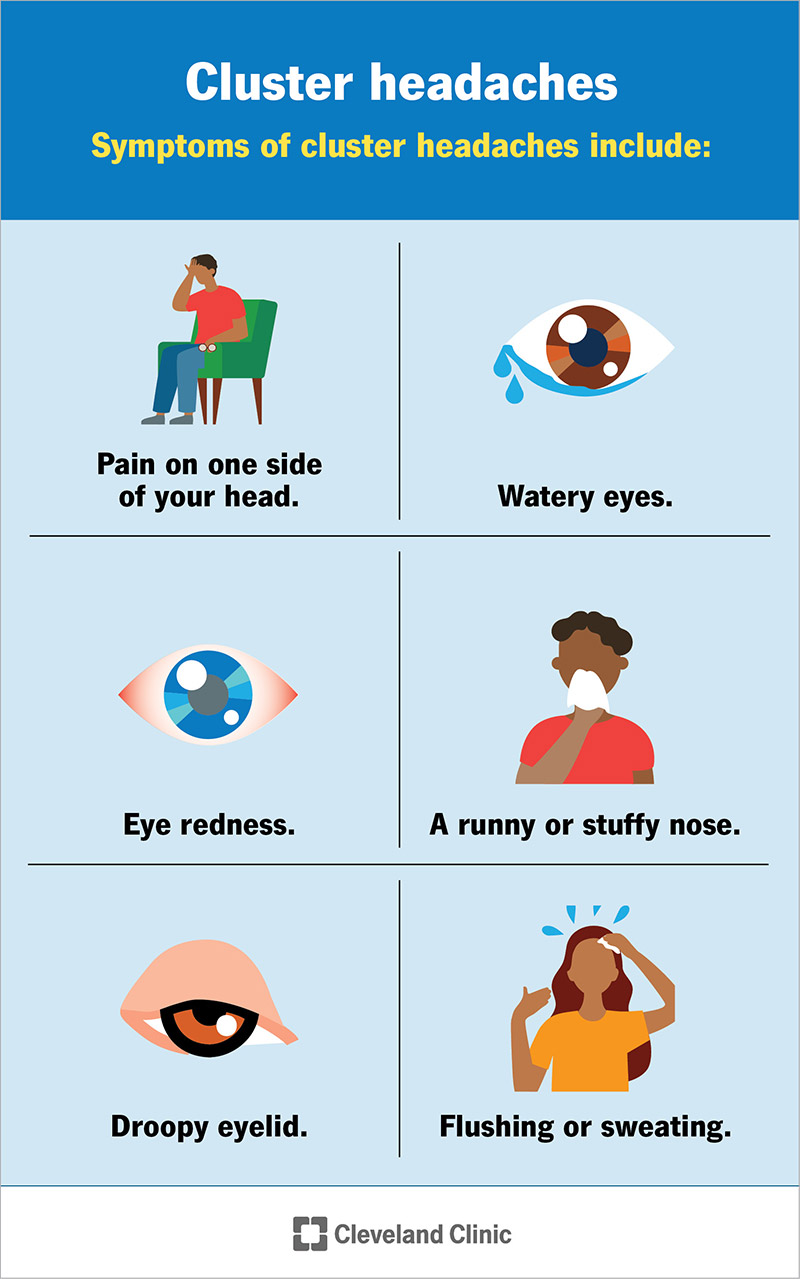
Image content: This image is available to view online.
View image online (https://my.clevelandclinic.org/-/scassets/images/org/health/articles/5003-cluster-headaches)
Symptoms of cluster headaches happen on the same side of your head as the headache (unilateral) and include:
The location of your head pain may vary. It happens on only one side (unilateral) and in one of the following regions:
Typically, you’ll have pain on the same side of your head during an attack cycle. While rare, it may switch locations during another attack. The most common location is around one eye to the side of your head at your hairline before your ear (temple).
Many people report that cluster headaches wake them up an hour or two after going to bed. They’re sometimes called alarm clock headaches for this reason. These nighttime headaches may feel more severe than those during the day.
When symptoms set in, it usually only takes five to 10 minutes for them to reach their worst.
A cluster headache feels like a:
Some people who experience cluster headaches report that they feel restless during an attack. This feels like you can’t sit still and need to pace.
You may experience slight discomfort or a burning feeling on one side of your head just before a cluster headache. But cluster headaches often come on fast, so these signs don’t leave you much time to prepare.
On average, a cluster headache tends to last 30 minutes. You may experience up to eight of these headaches within 24 hours. Many have daily cluster headache attacks that last for three months.
Then, the clusters usually pause, for reasons that aren’t yet understood. The headaches go into remission (go away) for months or years before returning.
Some people never get much of a break, though. They experience chronic (ongoing) cluster headaches. This happens to about 1 in 5 people who get cluster headaches.
Cluster headaches are commonly seasonal. You might notice them in the fall and springtime the most.
Healthcare providers don’t know the exact cause of cluster headaches. Research found that they could relate to your body releasing the following near the trigeminal nerve that sends sensations between your face and brain:
Advertisement
In addition, research found that cluster headaches may happen if there’s dysfunction in the area of your brain called the hypothalamus.
Research also found that cluster headaches can be genetic in up to 5% of people. Studies are ongoing to learn more about the causes of cluster headaches.
A trigger is something that causes your symptoms to start. Triggers during a cluster headache cycle vary from person to person but may include:
Triggers can also affect the start of a new cycle of attacks after a period of no symptoms. When headaches start, the shift may appear tied to changes in seasons. (You might think you have allergies or sinusitis). It may happen because of suspected ties between cluster headaches and the hypothalamus. This part of your brain contains your “circadian clock,” a built-in schedule that responds to sunlight. When seasons change, so does the amount of sunlight.
If you don’t know what triggers your symptoms, talk to a healthcare provider and keep a journal to help you identify them. In your journal, you can write down:
Advertisement
You may be more at risk of cluster headaches if you:
Cluster headaches can be an irritant that interferes with your daily routine, including your ability to complete personal obligations like work or school. You may not feel well enough to do the things you enjoy or even leave your home during an attack.
Having a severe headache every day can make you feel helpless like there’s no hope. While rare, you may develop depression that can lead to suicidal thoughts. Some people call cluster headaches “suicide headaches” for this reason. Luckily, you’re not alone. Healthcare providers can help you with these headaches. If you experience suicidal thoughts, contact (call or text) the Suicide and Crisis Lifeline at 988 (U.S.). Someone is available to help you 24/7.
A healthcare provider (a neurologist) will diagnose a cluster headache after a physical exam. They’ll want to know more about your symptoms and your medical history. A provider may offer an imaging test, like an MRI, to rule out conditions with similar symptoms. If you’re experiencing attacks, it can help your provider learn more about your symptoms as they happen. Your provider might request an exam during the time when your headaches happen each day to observe how the headaches affect you.
Advertisement
Cluster headache treatment options may include:
If medications don’t help, your healthcare provider might suggest surgery. A surgeon may implant a neurostimulator device to send electrical signals to certain nerves in your head to manage your symptoms. Your provider will let you know if surgery is a good option.
There are two types of medications that your provider might recommend for different reasons including:
Anti-inflammatory medications (NSAIDs like ibuprofen) aren’t effective medications to treat cluster headaches.
Some alternative therapies may provide relief from cluster headaches, including:
Your healthcare provider may make alternative recommendations based on your situation. If you have questions or want to learn more, don’t hesitate to ask.
Cluster headaches don’t affect your life expectancy and they’re not life-threatening, but they can significantly impact how you feel each day. While cluster headaches are a chronic (long-term) condition, many studies found that these headaches become less frequent as you age.
Unfortunately, there is no cure for cluster headaches. But you do have treatment options that can make them a little less painful or less frequent.
Your healthcare provider will work with you to develop an appropriate treatment plan. Make sure to follow your healthcare provider’s recommendations for the most effective relief.
You can’t prevent cluster headaches entirely. You can identify and avoid triggers that cause symptoms, like smoking or drinking alcohol, which reduces your risk of an attack. Triggers vary from person to person, so what you need to avoid may be different for someone else.
If you have sleep apnea that’s related to your headaches, talk to a healthcare provider about managing that condition or any other underlying health conditions.
If you suspect you have cluster headaches, reach out to a healthcare provider to confirm the diagnosis. You don’t have to be in the midst of a cluster to see a specialist or get a diagnosis.
Contact a healthcare provider if you have headaches that:
Let your healthcare provider know if you become pregnant or are thinking about becoming pregnant and you’re taking medications for headaches.
If you have cluster headaches and take medications for them and you notice side effects or don’t feel like it’s effective anymore, let your provider know.
Everyone gets headaches from time to time for various reasons. But cluster headaches are no ordinary headaches. If you experience severe headaches in a pattern, talk to your healthcare provider. Treatment is available to reduce the severity and how often these headaches occur. If you notice worsening changes to how you feel while you’re taking medications, especially if you notice side effects, contact your provider.



Sign up for our Health Essentials emails for expert guidance on nutrition, fitness, sleep, skin care and more.
Learn more about the Health Library and our editorial process.
Cleveland Clinic’s health articles are based on evidence-backed information and review by medical professionals to ensure accuracy, reliability and up-to-date clinical standards.
Cleveland Clinic’s health articles are based on evidence-backed information and review by medical professionals to ensure accuracy, reliability and up-to-date clinical standards.
Cleveland Clinic’s primary care providers offer lifelong medical care. From sinus infections and high blood pressure to preventive screening, we’re here for you.
