Bronchitis is when the airways leading to your lungs (trachea and bronchi) get inflamed and fill with mucus. You get a nagging cough as your body tries to get rid of the mucus. Your cough can last two or more weeks. Acute bronchitis is usually caused by a virus and goes away on its own. Chronic bronchitis never really goes away but can be managed.
Advertisement
Cleveland Clinic is a non-profit academic medical center. Advertising on our site helps support our mission. We do not endorse non-Cleveland Clinic products or services. Policy
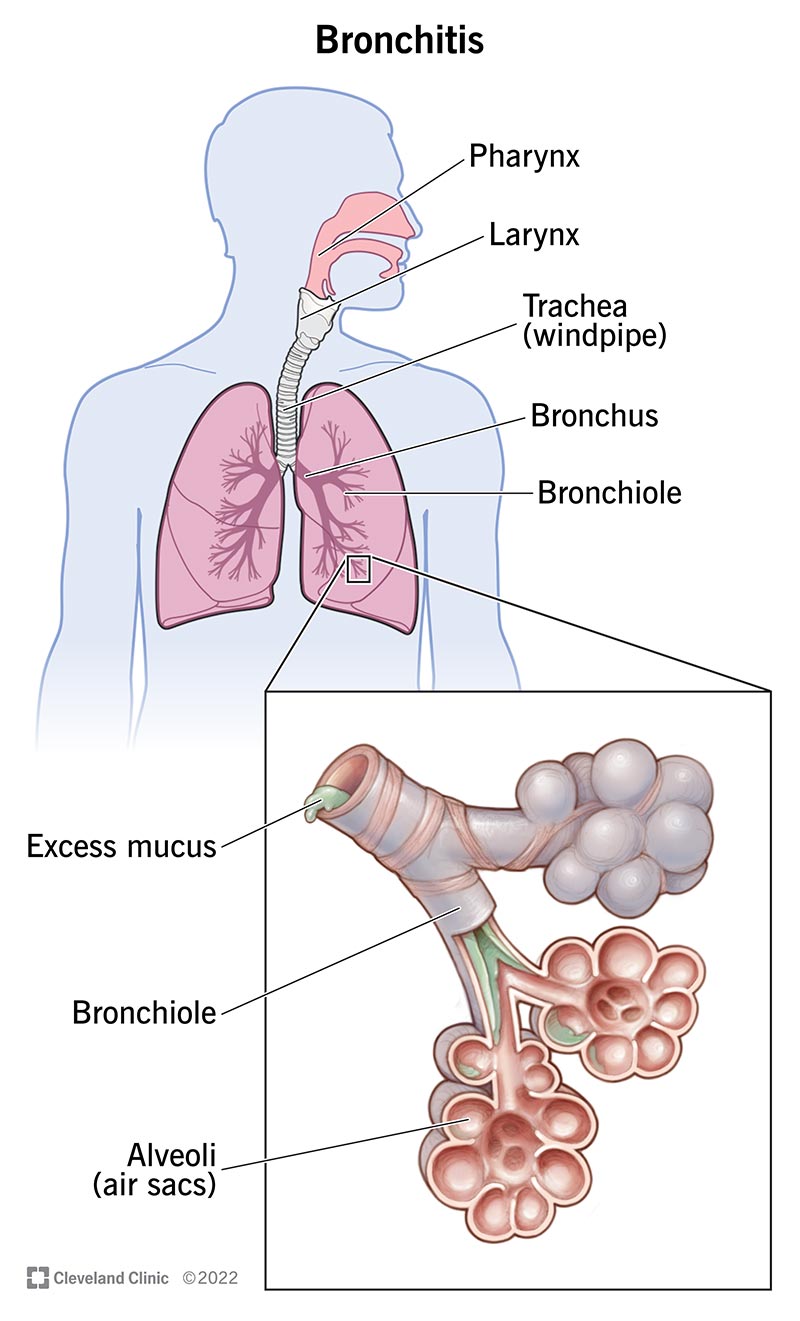
Image content: This image is available to view online.
View image online (https://my.clevelandclinic.org/-/scassets/images/org/health/articles/3993-bronchitis)
Bronchitis is an inflammation of the airways leading into your lungs.
Advertisement
Cleveland Clinic is a non-profit academic medical center. Advertising on our site helps support our mission. We do not endorse non-Cleveland Clinic products or services. Policy
When your airways (trachea and bronchi) get irritated, they swell up and fill with mucus, causing you to cough. Your cough can last days to a couple of weeks. It’s the main symptom of bronchitis.
Viruses are the most common cause of acute bronchitis. Smoke and other irritants can cause acute and chronic bronchitis.
When people talk about bronchitis, they usually mean acute bronchitis, a temporary condition that makes you cough. Some people get bronchitis so often that it’s considered chronic bronchitis.
Acute bronchitis is usually caused by a viral infection and goes away on its own in a few weeks. Most people don’t need treatment for acute bronchitis.
You have chronic bronchitis if you have a cough with mucus most days of the month for three months out of the year. This goes on for at least two years.
If you have chronic bronchitis, you may have chronic obstructive pulmonary disease (COPD). Ask your provider about whether you should get tested for COPD.
Anyone can get bronchitis, but you’re at higher risk if you:
Advertisement
When your airways are irritated, your immune system causes them to swell up and fill with mucus. You cough to try to clear the mucus out. As long as there’s mucus or inflammation in your airways, you’ll keep coughing.
A persistent cough that lasts one to three weeks is the main symptom of bronchitis. You usually bring up mucus when you cough with bronchitis, but you might get a dry cough instead. You might also hear a whistling or rattling sound when you breathe (wheezing).
You might have other symptoms, including:
You almost always get bronchitis from a virus. However, nearly anything that irritates your airways can cause it. Infectious and noninfectious causes of bronchitis include:
You get bronchitis when your airways swell up and fill with mucus. You can get the viruses and bacteria that cause bronchitis from close contact (shaking hands, hugging, touching the same surfaces) with someone who has them. You don’t have to have bronchitis yourself to pass on a virus to someone else who ends up with bronchitis.
Other irritants are in the air you breathe.
Bronchitis itself — inflammation of your airways — isn’t contagious, but the viruses and bacteria that can cause it are. For instance, if you’re sick with the flu, you might get bronchitis too. But when your friend gets the flu from you, their airways don’t get inflamed like yours did.
You can get bronchitis with almost any virus, including SARS-CoV2, the virus that causes COVID-19. The symptoms of bronchitis can be similar to COVID-19, so make sure you get tested to know which one you have. There haven’t been any studies that show that COVID-19 is any more likely to cause bronchitis than other viral illnesses.
Your healthcare provider can tell if you have bronchitis based on your health history and symptoms (clinical diagnosis). They’ll listen to your lungs for signs of congestion and to make sure you’re breathing well. They might test you for viral infections, like the flu or COVID-19.
There aren’t any specific tests to diagnose bronchitis, but you might be tested for other conditions. Possible tests include:
Advertisement
Acute bronchitis is usually not treated with medications. If you have the flu and your symptoms started within the past two days, your provider may prescribe antivirals to help it go away faster.
Since bronchitis is almost never caused by bacteria, antibiotics won’t help you get better and might even make you feel worse.
Your healthcare provider probably won’t prescribe medications to treat your bronchitis. In some cases, you can use medications to help you with symptoms or to treat the underlying cause, including:
Advertisement
No, taking antibiotics won’t help you get over bronchitis in most cases. Antibiotics are used to destroy bacteria that make you sick. Bronchitis is caused by a virus 95% of the time. Antibiotics don’t help you get rid of a virus.
You can manage the symptoms of bronchitis at home with over-the-counter medicines and rest. Running a humidifier or taking warm showers can help loosen mucus and make breathing easier.
You can use ibuprofen (Advil®, Motrin®) or acetaminophen (Tylenol®) to help with the aches and pains that come with a viral infection.
Bronchitis itself isn’t contagious, but some of its causes are. If your bronchitis is caused by a virus, you can be contagious for a few days to a week. If your bronchitis is caused by bacteria, you usually stop being contagious 24 hours after starting antibiotics.
Other causes of bronchitis aren’t contagious.
Acute bronchitis usually isn’t serious. While frustrating, you have to wait out the symptoms for a few weeks. If you’re living with a heart condition or another breathing condition, like asthma, it could make your symptoms worse or last longer.
Chronic bronchitis can be a serious condition and might mean you have lung damage. While the damage can’t be reversed, your provider can help you manage your symptoms and have fewer flare-ups.
Advertisement
If you have an ongoing condition like asthma, diabetes, chronic obstructive pulmonary disease or heart failure, bronchitis might make it worse (exacerbation). Tell your healthcare provider if you have any ongoing conditions.
Yes, acute bronchitis usually goes away on its own. It’s almost always caused by a virus, and you can’t get rid of most viruses with medicine. You can treat the symptoms at home while you wait for the inflammation to go down.
Bronchitis caused by something else may need treatment to help it go away. Chronic bronchitis usually doesn’t go away completely, but can get better with treatment.
Most people get over bronchitis in about two weeks, but it might take as long as three to six weeks. You can manage your symptoms at home with over-the-counter medicines while you get better. If you don’t feel better after three weeks, see your healthcare provider.
The best way to reduce your risk of bronchitis is to avoid getting sick from viruses and other causes of lung irritation. Specific ways to reduce your risk include:
If you have chronic bronchitis, you can reduce the frequency of your symptoms by treating underlying conditions, like COPD. You and your healthcare provider can make a plan together to treat your specific concerns.
It’s tough to know whether you have bronchitis or something more serious. See your healthcare provider if you have:
Video content: This video is available to watch online.
View video online (https://cdnapisec.kaltura.com/p/2207941/sp/220794100/playManifest/entryId/1_sajhznq8/flavorId/1_5f3sgelj/format/url/protocol/https/a.mp4)
The difference between bronchitis and pneumonia.
Bronchitis is an inflammation of the airways leading to the lungs. Pneumonia is an inflammation of the lungs themselves.
Bronchitis causes inflammation and mucus in your trachea and bronchi that make you cough a lot. Pneumonia causes inflammation and fluid in the small sacs in your lungs (alveoli) that makes it hard to breathe. You also usually have a cough and a fever. Pneumonia is more serious than bronchitis.
While you could have an infection that causes both, bronchitis doesn’t usually turn into pneumonia.
Bronchitis is inflammation in the larger airways (trachea and bronchi) coming into the lungs. Bronchiolitis is an inflammation of the next smaller airways (bronchioles) that come off of the bronchi. Children usually get bronchiolitis while adults get bronchitis.
You might use vapor rubs, like Vicks VapoRub® or Mentholatum® ointment, for anything that ails you and wonder if they work for bronchitis. Vapor rubs have ingredients in them intended to calm down coughs, so they may help your bronchitis symptoms. Don’t use vapor rubs on children under two without asking your pediatrician first.
Having bronchitis can be frustrating at best. Even once you’re free of a runny nose and body aches, the cough seems to last forever. Over-the-counter medicines and even home remedies, like honey, can help get you through until you feel better. If you’re having trouble managing your symptoms, talk to your healthcare provider.
If you frequently have bronchitis, you may have chronic bronchitis caused by an underlying condition that needs to be treated.



Sign up for our Health Essentials emails for expert guidance on nutrition, fitness, sleep, skin care and more.
Learn more about the Health Library and our editorial process.
Cleveland Clinic’s health articles are based on evidence-backed information and review by medical professionals to ensure accuracy, reliability and up-to-date clinical standards.
Cleveland Clinic’s health articles are based on evidence-backed information and review by medical professionals to ensure accuracy, reliability and up-to-date clinical standards.
Need care fast? Cleveland Clinic’s Express Care and Urgent Care locations treat everything from sprains to sinus infections — no appointment needed.