



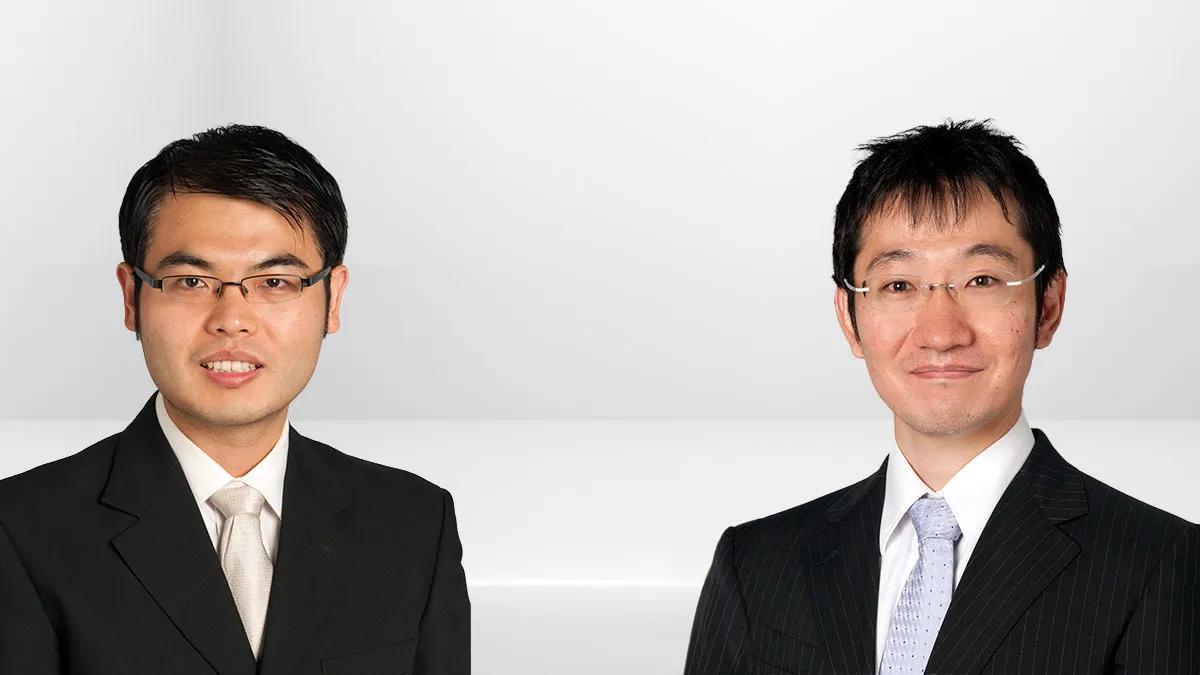
Infective Endocarditis Diagnosis and Management
Bo Xu, MD, and Shinya Unai, MD, discuss approaches to diagnosing and treating infective endocarditis, including indications for surgical intervention. The conversation highlights the role of multimodality imaging , individualized surgical planning and multidisciplinary care strategies to improve patient outcomes.
Looking to refer a patient? Please reach out to our Physician Referral team Mon. - Fri., 8 a.m. - 5 p.m. (ET) at 855.751.2469.
Advertisement
Cleveland Clinic is a non-profit academic medical center. Advertising on our site helps support our mission. We do not endorse non-Cleveland Clinic products or services. Policy
Recent Episodes
Lepodisiran and the Emerging Role of Oxidized Phospholipids in Lipoprotein(a) Risk
Luke Laffin, MD, speaks with Steven Nissen, MD, about findings from the ALPACA trial evaluating lepodisiran and its effects on oxidized phos…
Talking Tall Rounds®: Updates on Less Invasive Cardiac Surgery
In this excerpt from Tall Rounds®, Gianluca Torregrossa, MD, discusses minimally invasive and totally endoscopic coronary artery bypass graf…
CTX310 and the Future of Gene Editing for Lipid Disorders
Steven Nissen, MD, and Luke Laffin, MD, discuss one-year follow-up data for CTX310, a CRISPR-Cas9 gene-editing therapy targeting ANGPTL3 to…
Video content: This video is available to watch online.
View video online (https://cdnapisec.kaltura.com/p/2207941/sp/220794100/playManifest/entryId/1_gx5ys908/flavorId/1_5f3sgelj/format/url/protocol/https/a.mp4)
Transcript
Announcer:
Welcome to Cardiac Consult, brought to you by the Sydell and Arnold Miller Family Heart, Vascular & Thoracic Institute at Cleveland Clinic. This podcast will explore the latest innovations, medical and surgical treatments, diagnostic testing, research, technology and practice improvements.
Advertisement
Cleveland Clinic is a non-profit academic medical center. Advertising on our site helps support our mission. We do not endorse non-Cleveland Clinic products or services. Policy
Dr. Shinya Unai:
Bo, can you explain what is endocarditis and what part of the heart valve does it affect?
Dr. Bo Xu:
Endocarditis basically refers to inflammation, infection involving the endocardial surface of the heart. Commonly, it would involve an inflammatory reaction as a result of an infective agent. Commonly, it's an infection of the cardiac valves.
Dr. Shinya Unai:
How does an infection develop on a heart valve or within the heart?
Dr. Bo Xu:
That's a good question, Shinya. Basically, nowadays we have more and more patients undergoing cardiac procedures, including pacemakers and implants, as well as prosthetic heart valves. Also, under certain circumstances, you might develop a bacterial infection within the bloodstream, sepsis. Certain organisms might be more prone to spread to the implantable devices and prosthetic valves, setting up infection on these valve surfaces and foreign prosthetic material.
So when we talk about infection, Shinya, who's at greatest risk for developing endocarditis?
Dr. Shinya Unai:
The patients who are at the greatest risk of developing endocarditis are patients who had, first of all, previous endocarditis history and patients who had previous heart surgery with a prosthetic heart valve, and previous not only heart valve surgery, but also prosthetic material within the heart, patients who have a congenital heart condition such as a VSD (ventricular septal defect), patients who use intravenous drugs, patients who have pacemakers or defibrillators – we call them CIEDs – and patients that are on dialysis and immunocompromised patients. I think these patients are at higher risk of developing endocarditis.
Advertisement
Dr. Bo Xu:
Are there certain symptoms for patients to be aware of when detecting endocarditis?
Dr. Shinya Unai:
The most common symptoms are fevers, but not only just fevers. When you have a persistent fever or chills and night sweats, associated fatigue, lack of appetite, losing weight, developing new shortness of breath, or any kind of heart failure symptoms, these are the symptoms that raise suspicion for endocarditis.
When you see these patients that present with suspicious symptoms, how do you diagnose these patients? How do you do the workup of these patients?
Dr. Bo Xu:
This is actually a very important and relevant question. First of all, I'd say we have to maintain a fairly high index of suspicion by the history. Like Dr. Unai mentioned, think about these symptoms. If a patient has a fever that's unremitting and loss of weight and night sweats for unexplained reasons, think about the possibility of endocarditis first, because if you don't think about it, you will miss it.
A lot of the time, the initial workup would include dedicated blood cultures, ideally two sets from different locations prior to any antimicrobial therapy. Subsequently, obviously, because this involves the cardiac endocardial surface, this is where the role of cardiac imaging comes into play. When I say cardiac imaging, there are a number of different specialized tests. Generally, echocardiography, which is cardiac ultrasound, forms the cornerstone of diagnosis. We typically would investigate any patient with a suspicion of endocarditis with what's called a transthoracic echocardiogram from the chest wall, examining the heart valve structures in detail.
Again, patients who have prosthetic materials, prosthetic valves and pacemakers, defibrillators, it might be actually hard to image the endocardial surface and the prosthetic devices. A lot of the time, for those patients, it's very appropriate to investigate them with what's called a transesophageal echocardiogram, where we insert a probe into the food pipe and examine the cardiac structures in higher definition.
In the modern era, I think multimodality imaging has certainly evolved to include not only echocardiography, which is the cornerstone of diagnosis. We now have a wide range of advanced modalities, including cardiac computer tomography, including four-dimensional imaging sequences where appropriate, as well as PET/CT imaging. We've found through our research and experience here that in appropriate patients, these additional modalities play a key role.
For example, in cardiac CT, our research finds that it's particularly good at detecting periannular complications. For example, in patients having had prosthetic valves where either a pseudoaneurysm or abscess is not easily detectable by echo due to shadowing, cardiac CT comes into play. Cardiac CT is also extremely useful for preoperative assessment for Dr. Unai and the surgical team, as well as detecting other complications, for example, in the lungs or in the spleen.
Advertisement
PET/CT imaging is also a newly recognized, important modality that's been recognized by all of the major imaging and cardiology societies now in the sense that it's very sensitive to detect metabolic active sites of infection. We use it to detect cases of infection where there's uncertainty after the initial diagnostic pathway, including echocardiography. That's proven to be highly efficacious, especially for patients with prosthetic valves and grafts.
Having diagnosed endocarditis, what does treatment typically involve, Shinya?
Dr. Shinya Unai:
Once we have a diagnosis or suspicion for endocarditis, the first step is to start by giving intravenous antibiotics as soon as possible. At the beginning of the treatment, we may not know which specific bacteria are causing the infection. We start with fairly empiric antibiotics, and then once we identify the organism, we tailor the antibiotics to the specific organism.
Then based on imaging analysis, we identify that there is an indication for surgery, since some of the patients can be treated with antibiotics alone. But some patients do need surgery, and if the patients do require surgery, we move forward with surgical planning. The common patients that require surgery are there for three major reasons. One is from a significant or severe valve dysfunction causing heart failure. Infected heart valves, damaged heart valves don't get better on their own, so those need to be repaired or replaced by surgery.
Advertisement
The second reason is patients that have an infection or a specific organism that is difficult to treat with antibiotics. It could be a specific organism or it could be an abscess that formed around the valve, which is difficult for intravenous antibiotics to reach. Or if a patient has a prosthetic heart valve, once the heart valve, prosthetic valve is seated, it is very difficult to eradicate that infection with just antibiotics. The fourth is fungal infection, which is again, very difficult to eradicate with just antibiotics.
The third reason why we offer surgery is a large mobile vegetation, a lump of bacteria that is on the valve that is waiting to cause an embolic event, either stroke or bowel ischemia or limb ischemia. These patients do require a fairly emergent or urgent surgery.
Dr. Bo Xu:
So, Dr. Unai, how are the surgical approaches now tailored to the individual patient when you assess the patient?
Dr. Shinya Unai:
In planned surgery, the first principle is to remove all infected and necrotic tissue. Once that is done, then the first thing we think is to try to repair the valve as much as we can with native autologous tissue such as your own pericardium. But if the valves are not repairable, then we consider replacement.
Advertisement
The replacement strategy is individualized to each patient, either for an older elderly patient, a tissue valve, for a younger patient, a mechanical valve. For lower-risk younger patients, sometimes a Ross procedure or an Ozaki procedure may be more appropriate. These decisions are very individualized, and considering the patient's wishes, their comorbidity, age. All this comes into play when we decide which treatments or which surgical strategy we're going to take.
Dr. Bo Xu:
So now, having received the appropriate antimicrobial therapy and the appropriate patients underwent cardiac surgery, what would you say would be the outlook for patients who receive timely treatment?
Dr. Shinya Unai:
The patients that are referred for endocarditis, we do the preoperative workup as soon as possible. Especially in patients that are referred in a timely matter before they have any embolic events, the outcomes are excellent and they do very well. Once discharged from the hospital, our cardiologist will continue to follow long-term.
Dr. Bo Xu:
Yeah. In general, I always say to my patients, infection prevention is very important. Once you've been treated by an expert like Dr. Unai, if you essentially had a valve repair or replacement, generally we maintain regular surveillance and regular infection prevention protocols. I'd say the majority of patients do extremely well in the long term. Their outlook overall will be very similar to someone who's had cardiac surgery for a valve issue.
Dr. Shinya Unai:
Endocarditis is a medical emergency that requires teamwork. The best care comes from the various specialists working together, such as infectious disease (specialists), cardiologists, imaging cardiologists, neurologists and the surgeons. We're always happy to provide a second opinion. So, please contact us, and we'll be happy to answer any questions.
Dr. Bo Xu:
I just want to add that once you've been treated for endocarditis, I always tell my patients in clinic that it's important to maintain infection prevention and good oral hygiene. Make sure your dentition is maintained, and that perhaps prior to any dental procedures, always make sure that you maintain antibiotic prophylaxis.
Announcer:
Thank you for listening to Cardiac Consult. We hope you enjoyed the podcast. For more information or to refer a patient to Cleveland Clinic, please call 855.751.2469. That's 855.751.2469. We welcome your comments and feedback. Please contact us at heart@ccf.org. Like what you heard? Subscribe wherever you get your podcasts or listen at clevelandclinic.org/cardiacconsultpodcast.
Recent Episodes
Lepodisiran and the Emerging Role of Oxidized Phospholipids in Lipoprotein(a) Risk
Luke Laffin, MD, speaks with Steven Nissen, MD, about findings from the ALPACA trial evaluating lepodisiran and its effects on oxidized phos…
Talking Tall Rounds®: Updates on Less Invasive Cardiac Surgery
In this excerpt from Tall Rounds®, Gianluca Torregrossa, MD, discusses minimally invasive and totally endoscopic coronary artery bypass graf…
CTX310 and the Future of Gene Editing for Lipid Disorders
Steven Nissen, MD, and Luke Laffin, MD, discuss one-year follow-up data for CTX310, a CRISPR-Cas9 gene-editing therapy targeting ANGPTL3 to…
Never miss a moment - subscribe now.
Listen to the Health Essentials Podcast on your favorite streaming platform.
Other Podcasts You May Love
Beyond Leadership
Hosts Jim Pae and Elizabeth Pugel escort you through a network of thought leaders, sharing world-cla…
Beyond the Pages: CCJM Podcast
Beyond the Pages: CCJM Podcast takes the listener more in-depth into Cleveland Clinic Journal of Med…

Butts & Guts
A Cleveland Clinic podcast exploring your digestive and surgical health from end to end. You’ll lear…
Cancer Advances
A Cleveland Clinic podcast for medical professionals exploring the latest innovative research and cl…