Each morning, Tanya Tucker would wake up with a song in her head.
“I was still breathing, so I would sing in my mind ‘God Ain’t Finished Yet’. It got me through tests, biopsies and T-cell harvesting,” says Tanya, age 50, from Corunna, Indiana. “It inspired me to keep moving, and keep going, no matter what I was facing.”
For months, Tanya had been searching for answers as her symptoms worsened, at one point without a stable place to live. She experienced dizziness, brain fog, a racing heartbeat, shortness of breath and fatigue, but multiple visits and tests did not bring a clear diagnosis. She continued searching for answers and for a doctor who could connect the dots.
“I remember thinking I needed someone who could really piece everything together,” she recalls. “When we were meeting with Dr. Raza, I turned to my sister, who came with me, and said, ‘I think we finally found the right person.’”
Tanya met with Cleveland Clinic oncologist Shahzad Raza, MD, at the suggestion of one of her local physicians. After reviewing her extensive medical records, he suspected some form of amyloidosis was the issue.
“Often, patients with symptoms go through multiple visits and layers of testing before a diagnosis becomes clear,” says Dr. Raza, who was involved in a collaborative effort that led to a recent publication of amyloidosis guidelines for physicians. “Unfortunately, the average time from suspicion of the disease to diagnosis and treatment is 17 years. It’s a big problem, and why many patients are at risk of dying from heart failure during the process.”
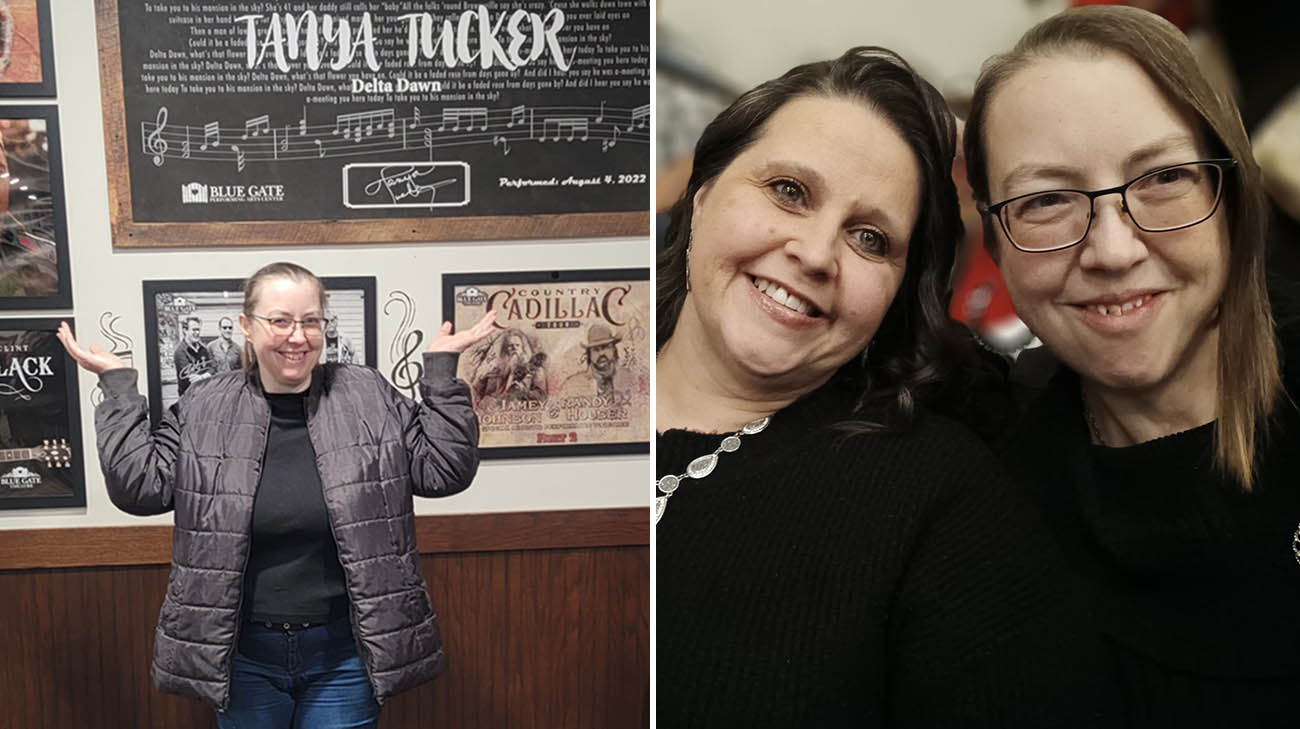
Tanya enjoying her favorite pastimes and spending time with friends, prior to her diagnosis. (Courtesy: Tanya Tucker)
Because Tanya already had Ehlers-Danlos Syndrome (EDS), a disorder that affects connective tissues in the body, and an often-related heart disorder, postural orthostatic tachycardia syndrome (POTS), she initially thought her new and worsening symptoms were connected to those existing conditions.
“I absolutely thought it was my POTS,” recalls Tanya, who frequently fell or passed out, and visited the hospital on two occasions with heart attack symptoms. “I was dizzy and lightheaded, but more so than normal, especially if I moved too fast. And my shortness of breath and fatigue were worse than before. But specialists said it wasn’t related to POTS.”
A neurological test revealed elevated M-protein levels, a possible sign of multiple myeloma. With those results, Tanya was evaluated at Cleveland Clinic’s Amyloidosis Center and Multiple Myeloma Program, where Dr. Raza and the care teams continued working towards a diagnosis.
After confirming his suspicion Tanya had amyloidosis, based on results from a heart biopsy performed by Cleveland Clinic cardiologist Andres Carmona Rubio, MD, as well as a specialized mass spectrometry test that determined the specific form of her disease, Dr. Raza ordered rounds of chemoimmunotherapy. It is the standard treatment for systemic light-chain (AL) amyloidosis and leads to a complete hematologic response in about 53% of patients. Because Tanya lives several hours from Cleveland Clinic main campus, in Cleveland, Ohio, the chemotherapy was administered at a hospital near her home.
But after three months, periodic blood test results showed the treatment wasn’t working effectively. Dr. Raza gave Tanya two options: undergo a bone marrow transplant or enroll in an early-phase clinical trial with a drug that targets a patient’s T cells, white blood cells that help fight disease and infection.
Although she had a few weeks to decide, Tanya knew early on the clinical study was the right choice for her.

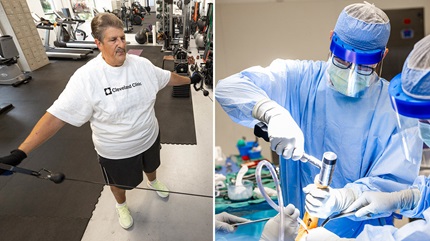
As part of a clinical trial, Tanya underwent CAR T-cell therapy, an approach that uses a patient's own immune cells to target disease. (Courtesy: Cleveland Clinic)
“All the options had risks. Nothing was guaranteed,” Tanya emphasizes. “But with the trial, even if it didn’t work, at least I’m helping move the science forward, which may help somebody else. To me, that option sounded worth trying.”
In April 2025, accompanied by her sister, Tanya made the trip back to Cleveland Clinic. She enrolled in the NEXICART-2 study. The clinical trial is the first in the U.S. to study CAR T-cell therapy for patients with relapsed or refractory disease. She underwent a process called leukapheresis, which removes T cells from the blood through a central venous catheter in the neck. It takes at least two to three hours to complete. The cells were frozen and shipped to a cell therapy lab in California, where they were genetically modified to transform their surface into cancer-fighting chimeric antigen receptor (CAR) T cells.
Less than two weeks after Tanya underwent leukapheresis, the modified CAR T cells arrived back at Cleveland Clinic. First, Tanya received chemotherapy to lower the number of other immune cells in her blood, which helps improve the effectiveness of the CAR T cells.
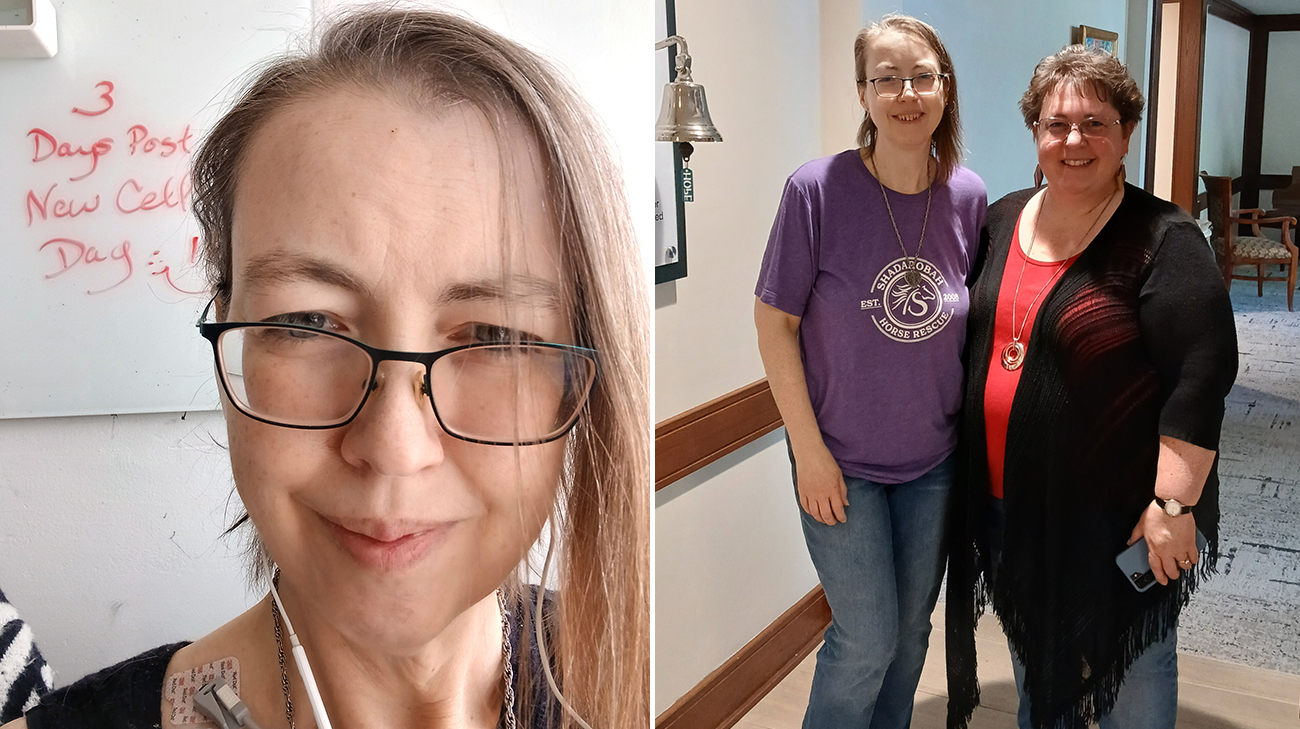
“It only took 15 minutes to get the cells back in me, through an IV (intravenous) bag. This part of the process was much easier,” she recalls.
Soon after, Tanya fell into a deep sleep for nearly 24 hours as her body adapted to the new CAR T cells. For a few days, she experienced flu-like symptoms, a sign the treatment was working. Near the end of her two-week hospital stay, before moving to the nearby Hope Lodge to remain close for monitoring and follow-up tests, Dr. Raza shared positive news.
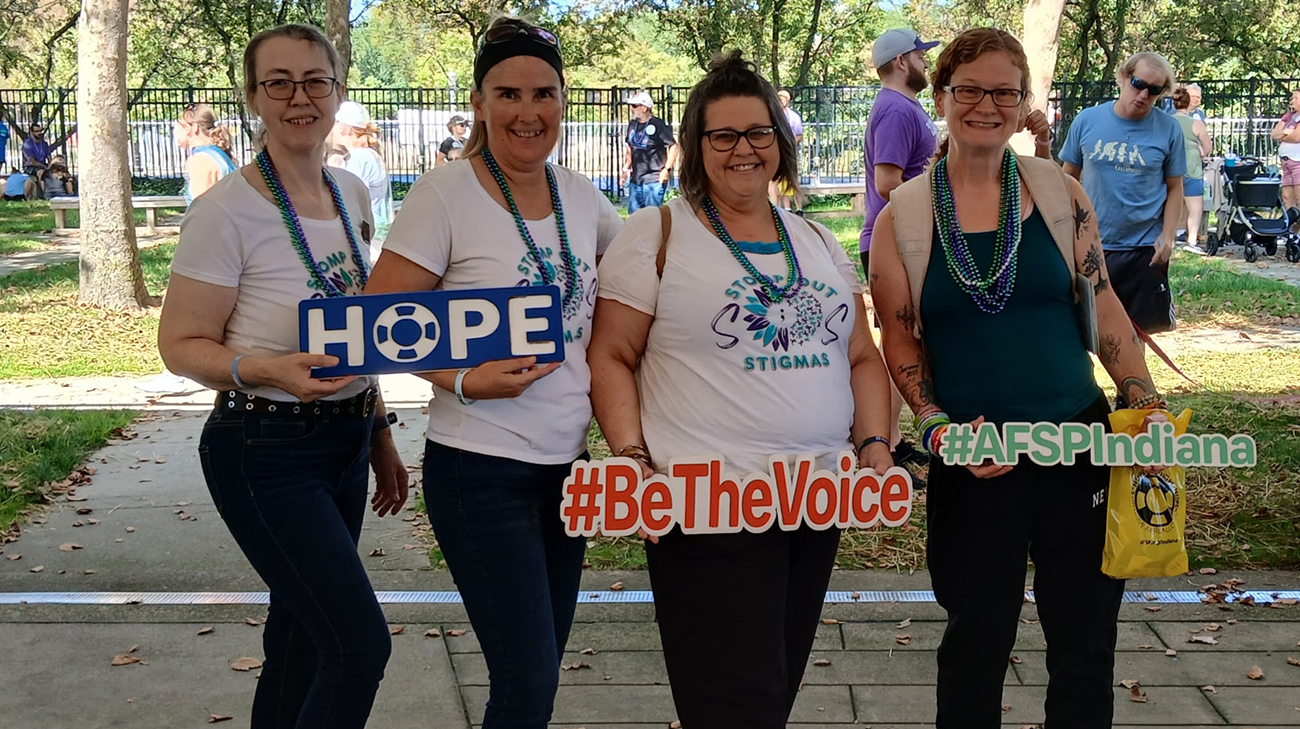
Tanya with friends at a walk to raise awareness for mental health. She hopes to become a Christian counselor and help others facing medical challenges, addiction and trauma. (Courtesy: Tanya Tucker)
Tanya was already in full remission, and she has remained in remission ever since.
“That was a very powerful moment, to say the least. I had spent the last year knowing I was slowly dying, and I even made peace with that. But I really like the idea of still being around,” Tanya says.
According to Dr. Raza, nearly all of the patients in the study had results similar to Tanya’s, opening the door to the possibility the therapy could become the standard for this form of amyloidosis.
“Like Tanya, a lot of people who were in the trial are still in remission more than a year out from treatment,” he states. “Before this approach, we had nothing else for the 40% of patients who don’t respond to immunotherapy. The responses we have seen are quite astonishing.”
Now, more than 18 months after first noticing symptoms, Tanya is living quietly in her small town and looking ahead. Trained as a fine arts photographer, she hopes to fully return to that passion once her strength comes back. She also plans to become a Christian counselor to help people dealing with medical problems, addiction, trauma and other life-disrupting challenges.
“A year ago, I didn’t think I was going to be here,” Tanya exudes. “Life has taken on a whole different view for me.”
Related Institutes: Cleveland Clinic Cancer Center, Heart, Vascular & Thoracic Institute (Miller Family)Patient Stories
Cleveland Clinic Team Helps Florida Patient Breathe Easier After Complex Lung Surgery
Oct 21, 2026

Teen Athlete Returns to Sports After Two Head Injuries Trigger Yearlong Headache
Oct 19, 2026