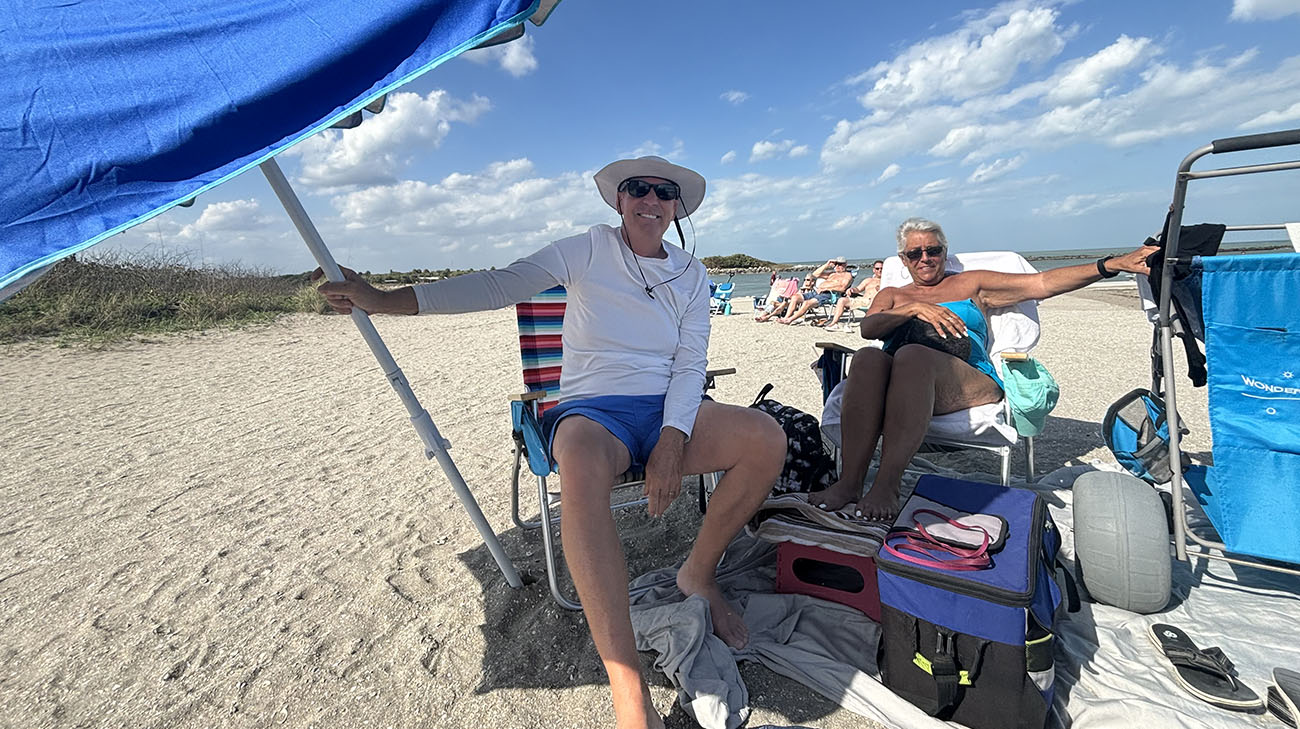
Robert MacKay is glad he decided to keep an appointment with his primary care doctor in late November of 2025. He hadn’t seen a doctor in years and was feeling good, but his health insurance provider had set the appointment up for him.
“I had been healthy for a long time, so I was not going to go,” the 66-year-old Port St. Lucie, Fla., resident says.
He ultimately changed his mind, however, which changed the course of his life.
During the exam Robert’s doctor detected an irregular heart rhythm, prescribed medication for atrial fibrillation (an irregular heart rhythm that starts in the upper chambers of the heart) and scheduled him for a more extensive heart scan the next day.
The scan the next day revealed Robert had a 6-centimeter ascending aortic aneurysm (weak bulging spot in the top part of the aorta, the main artery of the body). The doctor recommended he go to the emergency room right away because of the high risk of dissection (rupture). Robert was then referred to Cleveland Clinic Martin North Hospital and eventually to the care of cardiothoracic surgeon Michael Howard, MD.
Dr. Howard allowed Robert to return home to celebrate the holidays with his family. But due to the potentially life-threatening nature of the aneurysm, he was scheduled for surgery.

Robert & Catherine MacKay (Courtesy: Robert MacKay)
On January 8, Robert underwent open-heart surgery at Cleveland Clinic Martin North Hospital. During this complex procedure, Dr. Howard and his team repaired a dangerous bulge (aneurysm) in the main artery that carries blood from the heart (the aorta). To do this, they replaced the damaged portion of the aorta and the aortic valve with a durable tissue valve, restoring normal blood flow and reducing the risk of the artery rupturing.
At the same time, the team treated Robert’s atrial fibrillation—an irregular heart rhythm—using a specialized procedure called a “maze.” This involves creating carefully placed lines of scar tissue on the heart using heat energy to help guide electrical signals back into a normal pattern. They also closed off a small pouch in the heart called the left atrial appendage, where blood clots can form in people with atrial fibrillation, using a small clip. This step helps lower the risk of stroke.
By addressing both the aneurysm and the irregular heart rhythm in one surgery, the team was able to restore the heart’s structure, improve its function, and reduce future health risks.
“Right before I went in for surgery, there were about a dozen people standing in front of me,” Robert says. “I couldn’t believe they were all there for me. All I could do was thank them for showing up for me.”
Within a few days he was released from the hospital. Since then, his recovery has been smooth.
“I had nothing but great care at Cleveland Clinic,” Robert says. “It was just perfect all the way down the line. And Dr. Howard was phenomenal.”
Robert’s wife Catherine is a retired OB/Gyn nurse. She says Robert “couldn’t have asked for better care.”
“Every now and then Robert will look at me and say, ‘Can you believe I had open-heart surgery?’,” Catherine says. “They saved my husband’s life.”
Patient Stories
Routine Health Assessment Reveals Abnormal Heart Rhythm Hidden for Years
Sep 23, 2026
After Early Ovarian Cancer Diagnosis, Woman Finds Relief From Chemotherapy-Related Nerve Pain
Sep 18, 2026