


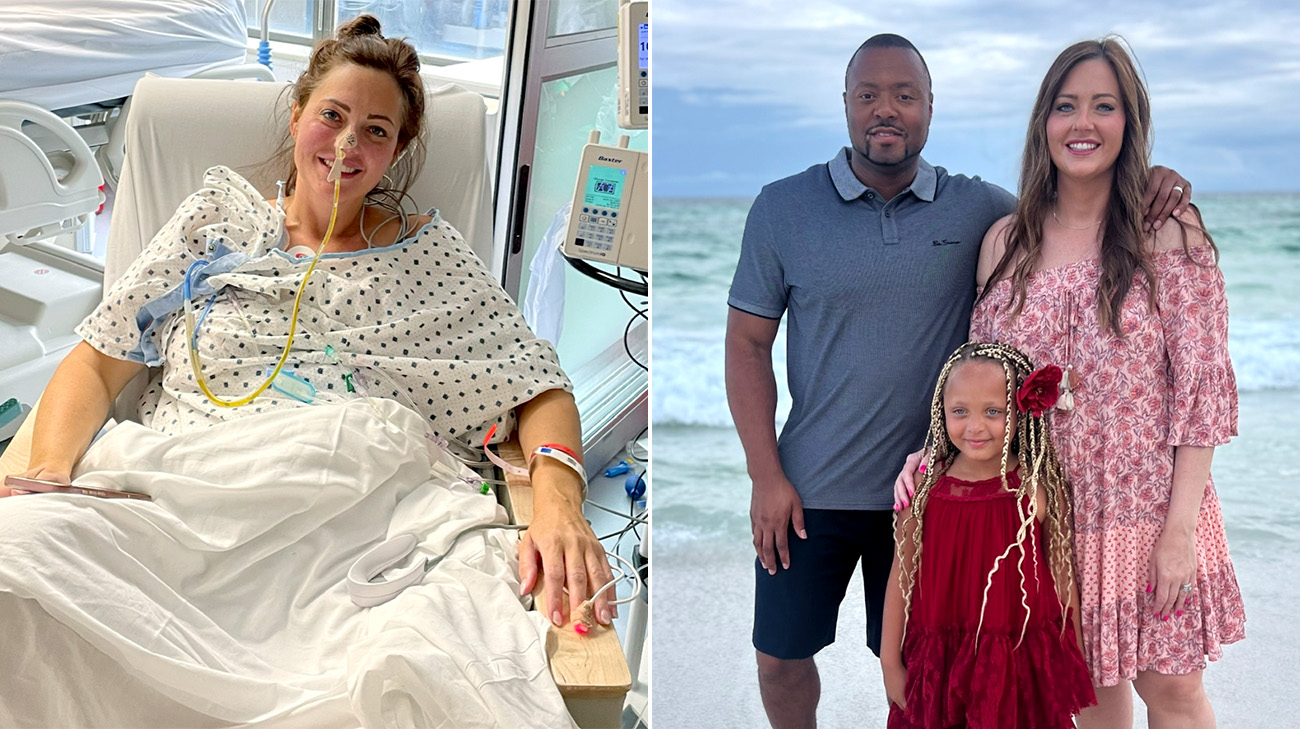
Lacy Cornelius-Boyd's life changed in an instant. She went from enjoying a road trip with her family to fighting for her life in the hospital. A car crash left the Oklahoma mother facing six back-to-back emergency surgeries. But even after 30 days in the hospital, her recovery journey was far from over.
“My intestines were crushed in the crash, and the doctors went in to save what they could. The average person has about 35 feet of intestines. I was left with about 35 inches after the surgeries they had to do,” says 41-year-old Lacy of Yukon, Oklahoma.
The crash cut off blood flow to parts of Lacy’s intestines – damaging some sections and causing others to die. Surgeons removed the affected areas to save her life, but it left her with short bowel syndrome. This is a condition where the body can’t absorb enough nutrients and fluids because part of the small intestine is missing or not functioning. Her intestines also could no longer effectively move waste to the colon. To stay nourished and allow her digestive system to heal, Lacy relied on total parenteral nutrition (TPN) to deliver the nutrients she needed through an IV and an ostomy bag to safely divert waste outside the body.
“The ostomy bag and TPN changed my life completely. Between emptying the bag and having the IV nutrition every day for 12 hours a day, I felt like I couldn’t leave the house or do anything with my 6-year-old daughter,” says Lacy, who also had to stop working.
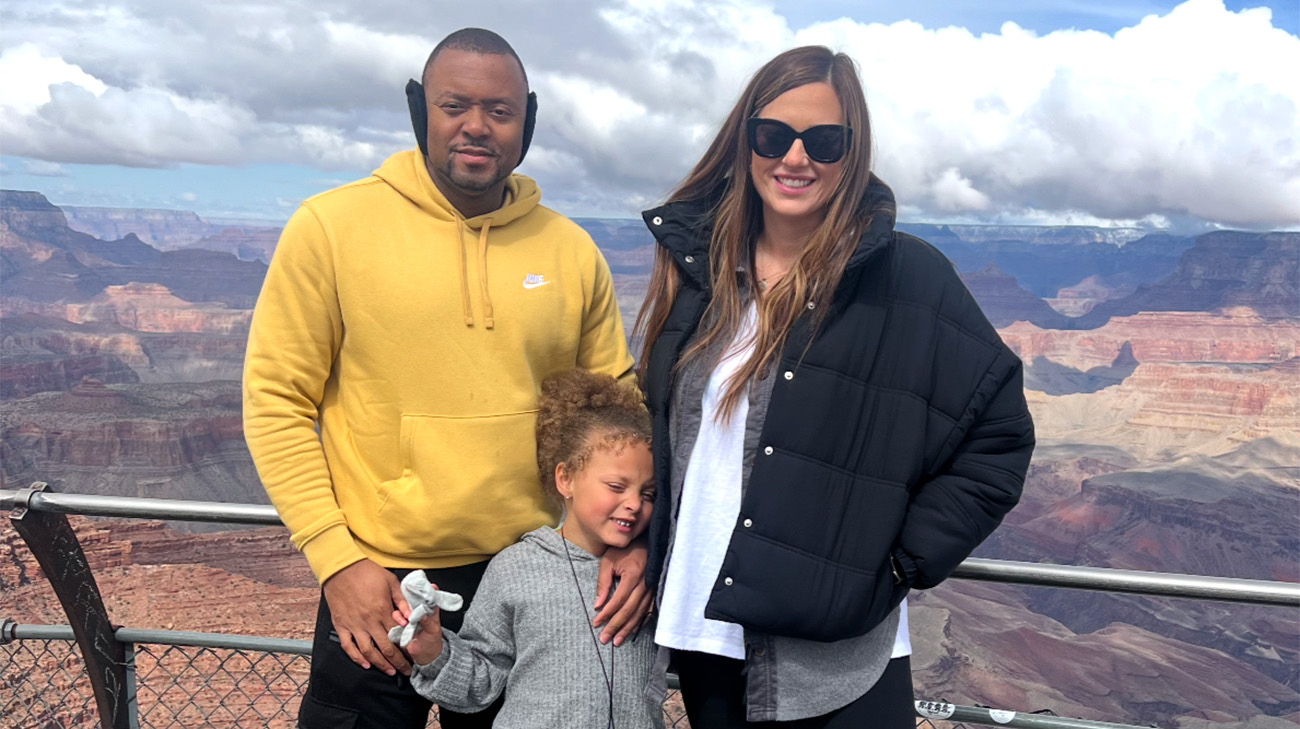
Lacy and her family were driving home from a road trip when the crash happened. (Courtesy: Lacy Cornelius-Boyd)
Wanting another treatment option, Lacy decided to come to Cleveland Clinic based on one of her surgeon’s recommendations. Here, doctors were concerned about the high output of her ostomy.
“We first tried medication to slow down the output, but we didn’t see any improvements. We needed to address this because it can result in severe dehydration and kidney damage over time,” says Masato Fujiki, MD, Cleveland Clinic’s Surgical Director of Intestinal Transplantation.
Dr. Fujiki adds that because TPN bypasses the digestive system, it can potentially cause fat buildup and inflammation in the liver for some patients. This can lead to liver damage, which was the case for Lacy. Her care team ultimately decided an intestinal transplant offered the best chance to protect her organs and restore her quality of life. Among the rarest forms of transplantation, Cleveland Clinic is one of only a few transplant centers to offer intestinal transplantation as a treatment option.
“In 2024, the U.S. saw more than 27,000 kidney transplants and over 11,000 liver transplants. In the same year, only about 97 intestinal transplants were performed. These procedures are very rare because it’s still an evolving field,” says Dr. Fujiki.
After being placed on the transplant waiting list, Lacy was able to return home to Oklahoma. But she had to keep her bags packed and be ready to leave at a moment’s notice. In July 2025, she got the call she had been waiting for.
“It didn’t seem real at first. But finding out it was finally time for the procedure was incredibly exciting and such a huge relief,” says Lacy, who’d been grappling with the IV nutrition and ostomy bag for over a year.
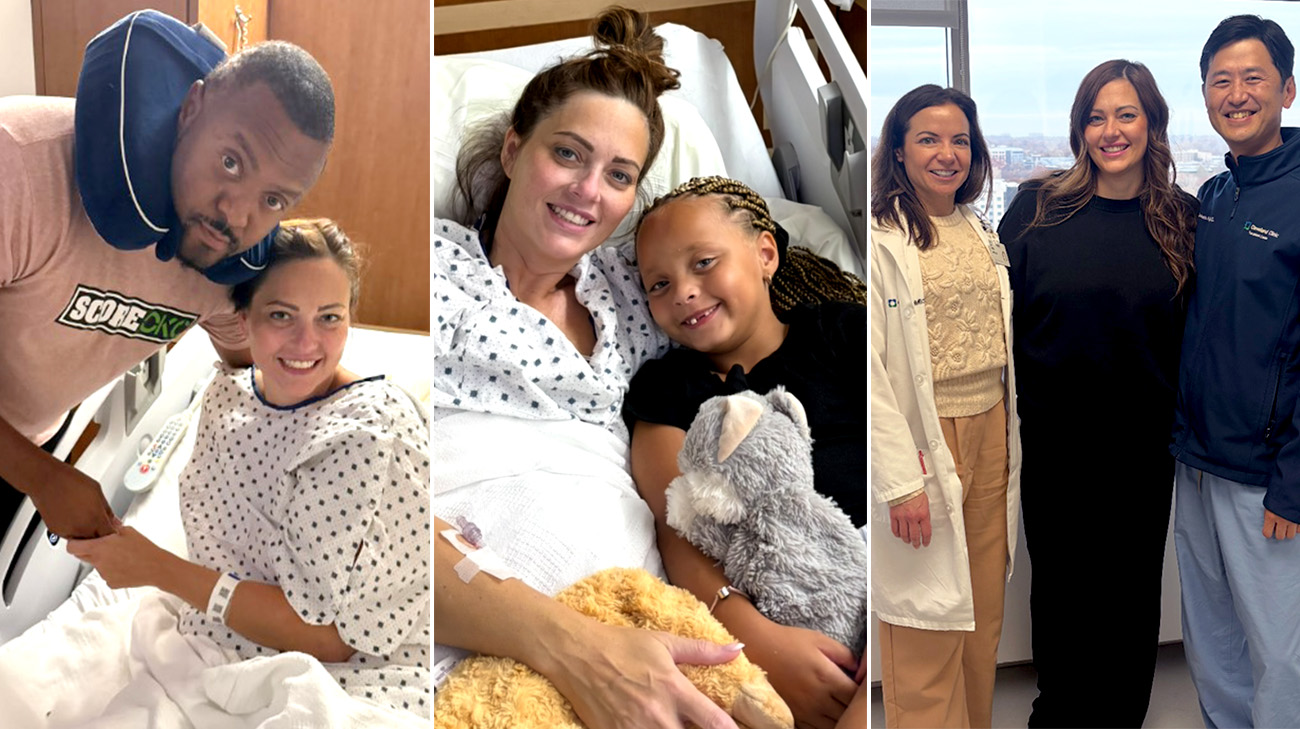
Throughout her stay in the hospital, Lacy had support from her husband, daughter and her care team, which included transplant coordinator Erika Johnson and Dr. Masato Fujiki. (Courtesy: Lacy Cornelius-Boyd)
After getting the call, things moved quickly. Lacy took a flight to Cleveland Clinic main campus in Cleveland, Ohio, and was prepped and in surgery that same day. Following the procedure, she recovered in the hospital and then stayed in Cleveland for a few months for follow-up care. With the transplant's success, her digestive system is working properly again. She no longer needs long IV nutrition sessions or an ostomy bag.
“I’m absorbing nutrition now, so I don’t have to be hooked up to an IV for 12 hours every day anymore. I also don’t have to worry about emptying the ostomy bag and having that attached to me 24/7,” says Lacy.
Lacy will continue regularly following up with her care team to make sure everything continues working as it should and to monitor any signs of transplant rejection. With a positive outlook moving forward, Lacy’s enjoying being able to have play dates with her daughter and nights out with her husband again.
“Before the transplant, I felt sick every single day. Now, I'm finally starting to feel like myself again, and I’m getting back to doing things with my friends and family. I’m able to enjoy simple things, like taking my daughter to school,” says Lacy.
Reflecting on her journey, Lacy and Dr. Fujiki hope sharing her success story raises awareness for other patients who may benefit from a lifesaving intestinal transplant.

After her transplant, Lacy says she feels like she has her life back – able to enjoy each moment with her family. (Courtesy: Lacy Cornelius-Boyd)
“After my accident, I was told at one point that this was my life now basically – ‘there’s nothing else we can do for you.’ But it turns out there was another option. A transplant that has 100% changed my life for the better,” says Lacy.
“While intestinal transplant can be lifesaving for patients like Lacy, many don’t know this is even an option. Raising awareness is crucial as outcomes in this field continue improving,” says Dr. Fujiki.
“I’m beyond grateful to my donor and their family,” says Lacy. “My transplant didn’t just restore my health, it gave me back my life and the joy of being present for family moments."
Related Institutes: Digestive Disease & Surgery InstitutePatient Stories

Teen Athlete Returns to Sports After Two Head Injuries Trigger Yearlong Headache
Oct 19, 2026
Exercise Medicine Program Helps Man Prepare for Surgery and Reclaim an Active Life
Oct 9, 2026

