Lisa Jilbert has always found comfort in quiet.
Whether she’s gardening, listening to music, or napping on the back porch of her Valley City, Ohio, home, the 59-year-old business executive and budding triathlete has long cherished peaceful, noise-free moments as a way to recharge from her busy life.
“I love quiet more than anything. It’s so basic to me,” she explains. “But I look at it differently now. Knowing I may never have total quiet again is extremely difficult, but I’m acknowledging I need to manage that reality. It’s much more empowering to say ‘manage’ instead of ‘live with it.’ I’m not there yet.”
Lisa’s perspective changed after she developed a severe case of pulsatile tinnitus—a rare condition that causes her to hear the rhythmic pulsing of blood through veins in her brain. It is loud and constant.
After a procedure performed by Cleveland Clinic interventional neuroradiologist Scott Raymond, MD, Lisa has experienced significant relief. During the procedure, Dr. Raymond inserted five platinum coils into two problematic cranial veins to redirect blood flow. The treatment resulted in a 90% reduction in the volume of Lisa’s thumping heartbeat sound.
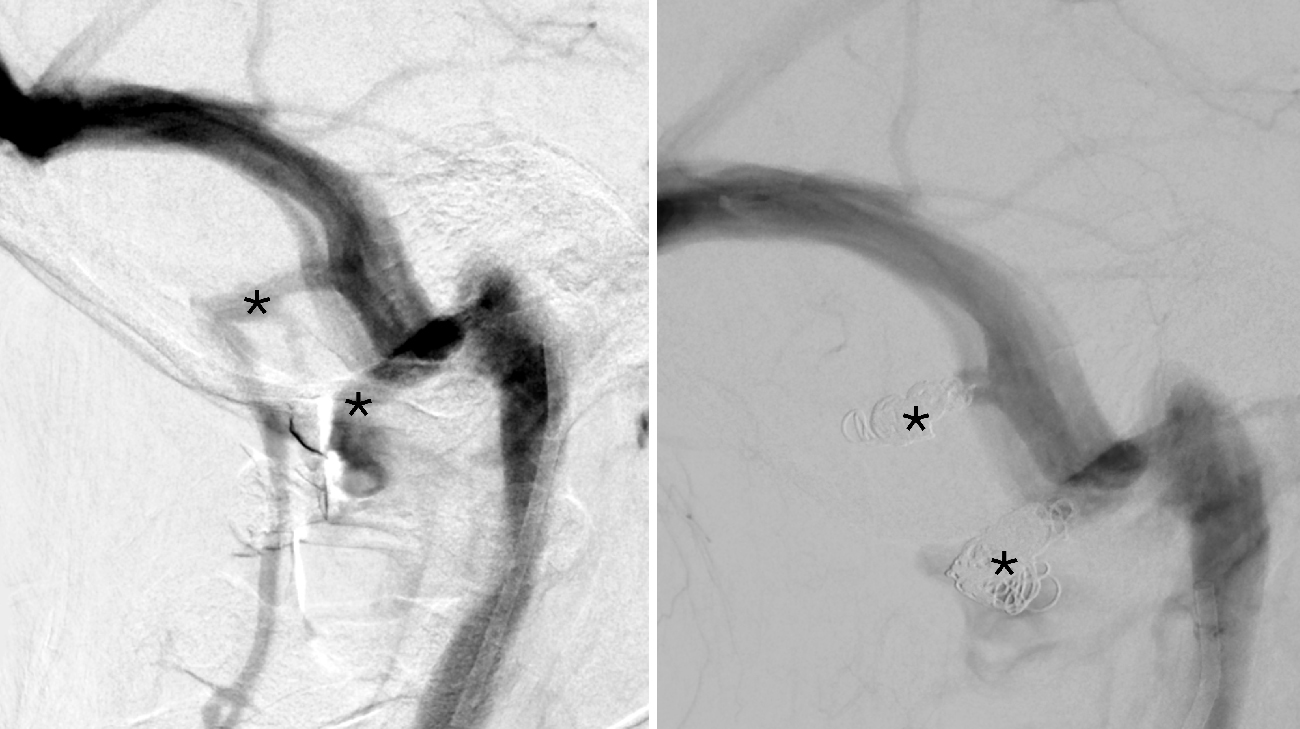
Scans of Lisa's emissary veins draining across the skull next to her right ear, before (left) and after (right) coil embolization. (Courtesy: Cleveland Clinic)
Pulsatile tinnitus affects less than 4% of the U.S. population and varies depending on its underlying cause, according to Dr. Raymond, an expert in neurovascular conditions. For individuals like Lisa, the steady, unchanging sound was life-altering.
“Because there are so many different causes for the disease, it’s often underdiagnosed and overlooked,” Dr. Raymond explains. “Since it’s not usually an urgent or dangerous medical condition, it can unfortunately get easily dismissed.”
That’s exactly what happened when Lisa first sought help from a local ear, nose and throat (ENT) specialist. “That doctor ordered a brain scan but told me I would just have to live with it,” says Lisa.
Lisa first noticed the sound in summer 2023. She was preparing for a Friday afternoon nap on her back porch when she heard what she thought was a neighbor’s lawn mower.
“I heard this loud motor and looked around to see what neighbor was running their lawn mower. It was so annoying! But I couldn’t find anyone,” she recalls.
She would also hear a motor sound in the house. “I asked my husband, and he didn’t hear anything. I didn’t realize until later the sound was inside my head.”
The low, motor-like hum persisted, sometimes fading briefly. Then, while working at her desk, Lisa suddenly heard a new, thunderous sound --a booming bass drum.
“It was so loud it startled me! I looked around and thought someone in the office was playing a joke on me,” she recounts. “The volume was about a nine out of 10. It was similar to if you took a bass drum and beat it loudly, just wailing in my head.”

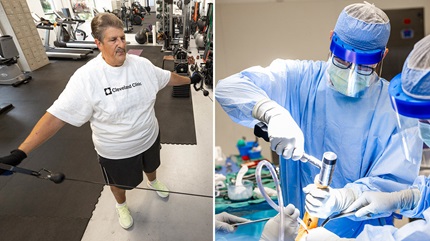
Lisa's most effective coping strategy for her condition is exercise. She enjoys staying active, participating in different physical activities. (Courtesy: Lisa Jilbert)
Lisa began withdrawing from nearly all activities except work, hoping the relentless drumbeat would stop. After seeing neurologist Andrew Russman, DO, he referred her to Cleveland Clinic Head & Neck Institute, where she was seen by otolaryngologist and neurotologist Edward Doyle, MD.
“Dr. Doyle is one of my most favorite human beings, along with Dr. Raymond. They never gave up on me,” Lisa says. “I tell people I went into that appointment with Dr. Doyle feeling alone on my journey, but I did not leave feeling alone.”
Dr. Doyle worked with Lisa to find the cause of her pulsatile tinnitus. He collaborated with Dr. Raymond to further evaluate Lisa’s condition. Testing helped the team identify abnormally large veins as the source of the problem. Dr. Raymond performed a key diagnostic procedure called venous balloon occlusion.
Using real-time X-ray imaging, Dr. Raymond guided a catheter from Lisa’s groin to the suspected vein and temporarily blocked blood flow with a balloon. Lisa, awake during the procedure, was asked if the sound had changed.
When she confirmed the noise had significantly diminished, Dr. Raymond knew they had identified the vein responsible for her symptoms. In a follow-up procedure, he permanently closed off the problematic vein—and another nearby—by inserting metal coils. Her blood now flows through adjacent veins.

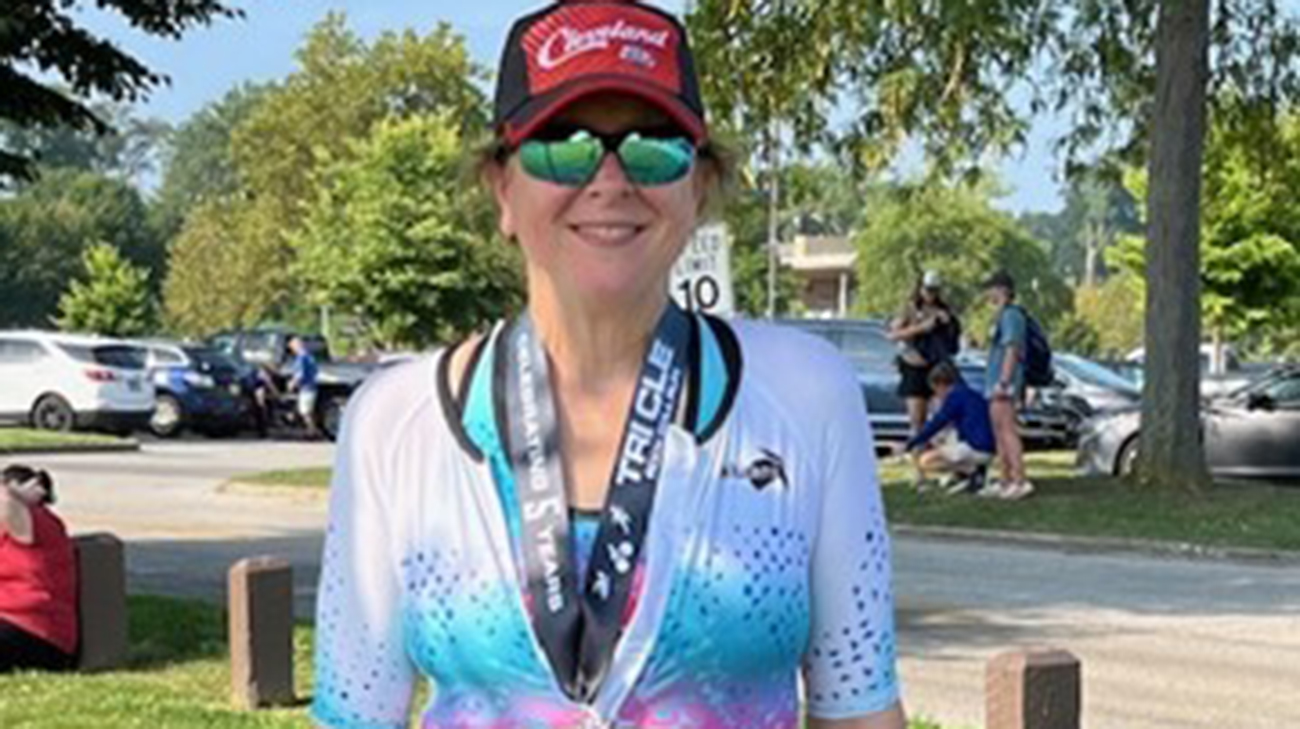
Lisa completed her first triathlon at the Tri CLE Rock Roll Run. (Courtesy: Kim Karbon Photography)
“Our main consideration was we couldn’t close off veins that are critical for brain tissue drainage,” Dr. Raymond explains. “I saw Lisa’s vein was redundant, and since there was another route for the blood to flow, we could safely close it. It didn’t completely get rid of the sound, but she’s found other activities that help her in mitigating it.”
Lisa’s most effective coping strategy is exercise, especially swimming. While certain physical activities increase the sound, swimming diminishes it for several hours. The overall effect of exercise has motivated her to become a dedicated athlete. She will also start working with a behavioral therapist this fall.
In August 2025, Lisa competed in her first super sprint triathlon at Cleveland’s Tri CLE Rock Roll Run. She was excited to finish third out of fourth in her age group. She’s now training for future races.
“Don’t give up. And don’t trust anyone who tells you that you just have to live with it,” she emphasizes. “Nobody knows your body better than you do, and I knew something was wrong in mine. I’m so lucky I kept looking until I found a team who could help me.”
Related Institutes: Neurological Institute, Head & Neck InstitutePatient Stories
Cleveland Clinic Team Helps Florida Patient Breathe Easier After Complex Lung Surgery
Oct 21, 2026

Teen Athlete Returns to Sports After Two Head Injuries Trigger Yearlong Headache
Oct 19, 2026