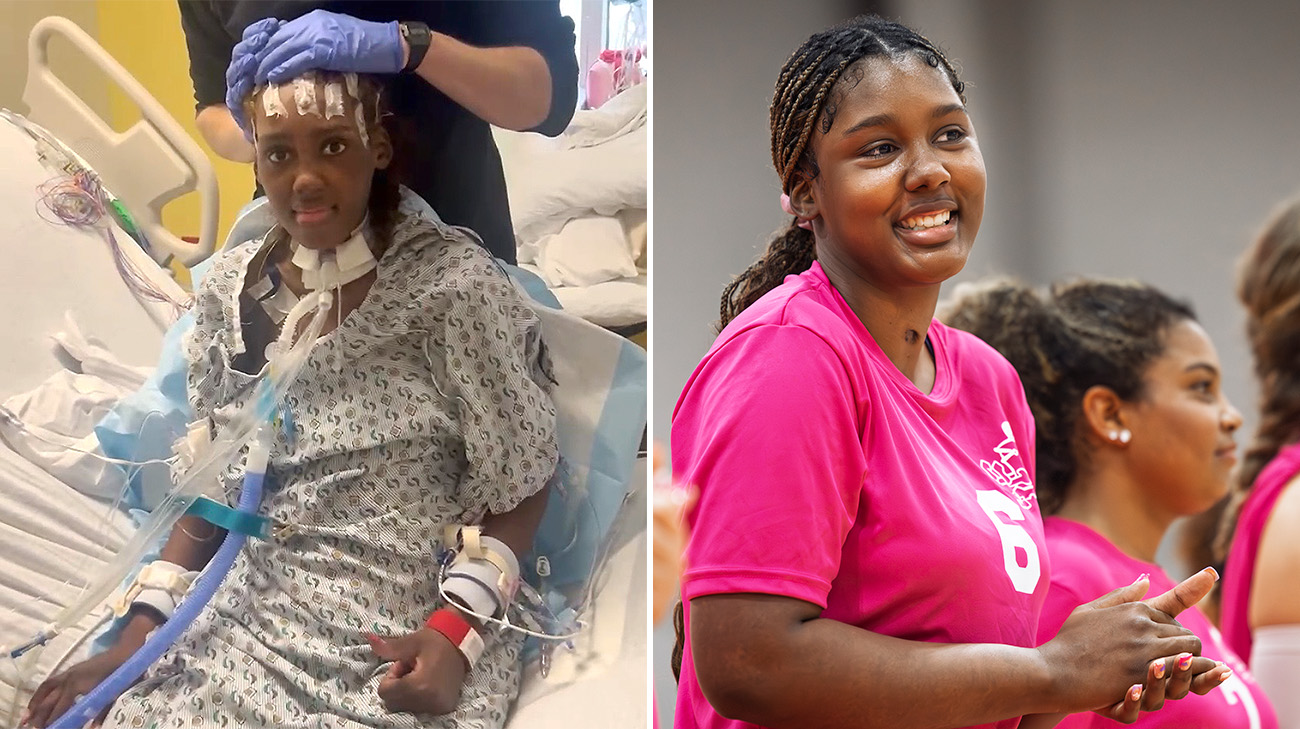
At 16 years old, Gabrielle Green, a standout student-athlete with her sights set on law school, had to relearn how to walk, talk and carry out everyday tasks.
"I felt like a toddler basically having to learn how to do everything again," says Gabby, who spent 120 days in the hospital – more than a month of which she was in a coma.
Before this, her mom, Mykia Hickman, says Gabby was a healthy teen girl who played sports all year round and had a love for school and life. But things quickly changed when she started getting severe headaches in December 2025.
"We took her to a local emergency department, and the doctors thought she was having ocular migraines," says Mykia.
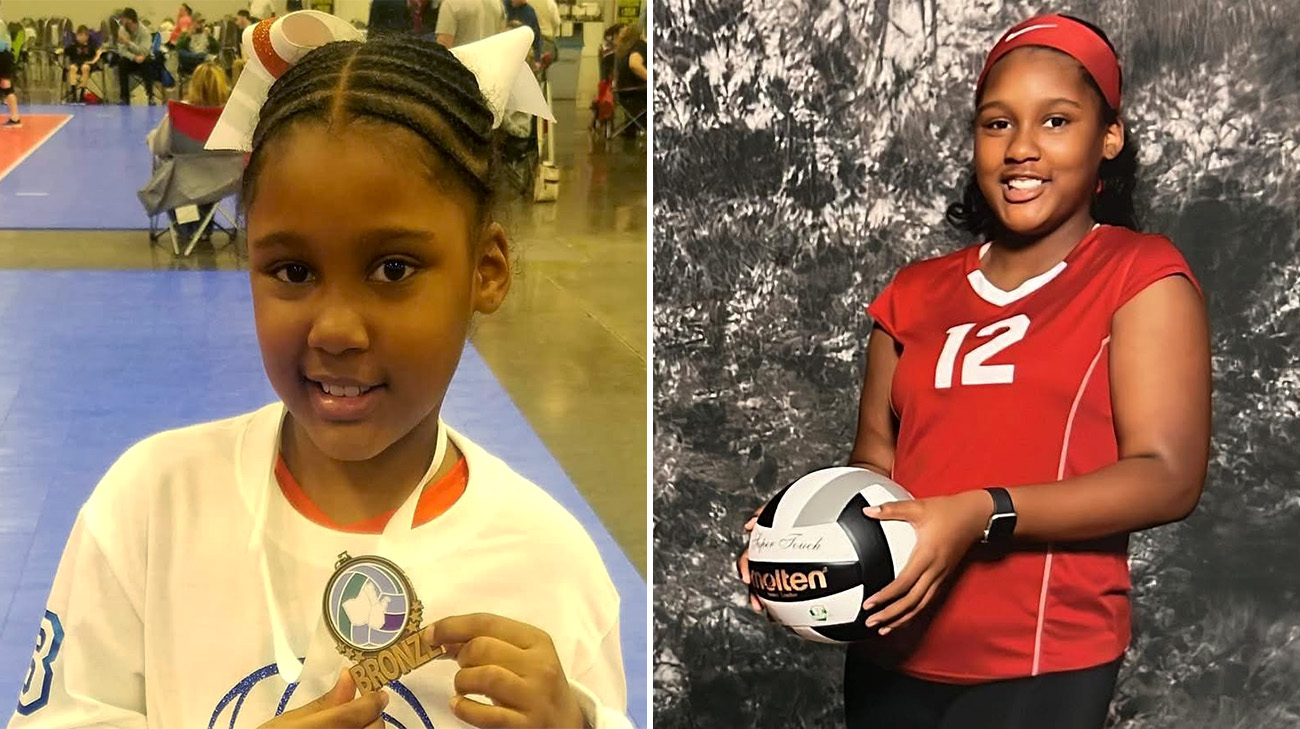
Gabby started playing volleyball at 8 years old, and she’s been playing ever since. (Courtesy: Mykia Hickman)
After coming home from the hospital that night, Gabby, of Shaker Heights, Ohio, asked her mom to sleep with her.
"In the middle of the night, I woke up to her shaking. She was having a seizure, and I immediately called 911," says Mykia.
Gabby kept having relentless seizures at the hospital, and medications couldn’t stop them. That’s when Mykia says they intubated Gabby and put her in a medically induced coma.
"They wanted to protect her brain at that point from the seizures," says Mykia.
After many tests, Gabby was diagnosed with febrile infection-related epilepsy syndrome (FIRES), a subtype of new onset refractory status epilepticus (NORSE). FIRES is a rare neurological condition that affects about one in a million children. It causes severe, repeated seizures that begin 24 hours to two weeks after a fever-related illness, such as a cold or the flu, and are often difficult to control with medication. Although the exact cause of FIRES is unknown, researchers believe it may be linked to intense brain inflammation, possibly from an abnormal immune response to the initial illness.
“It came as a shock. Gabby had never experienced seizures or had any other medical or neurological problems before,” says Mykia.
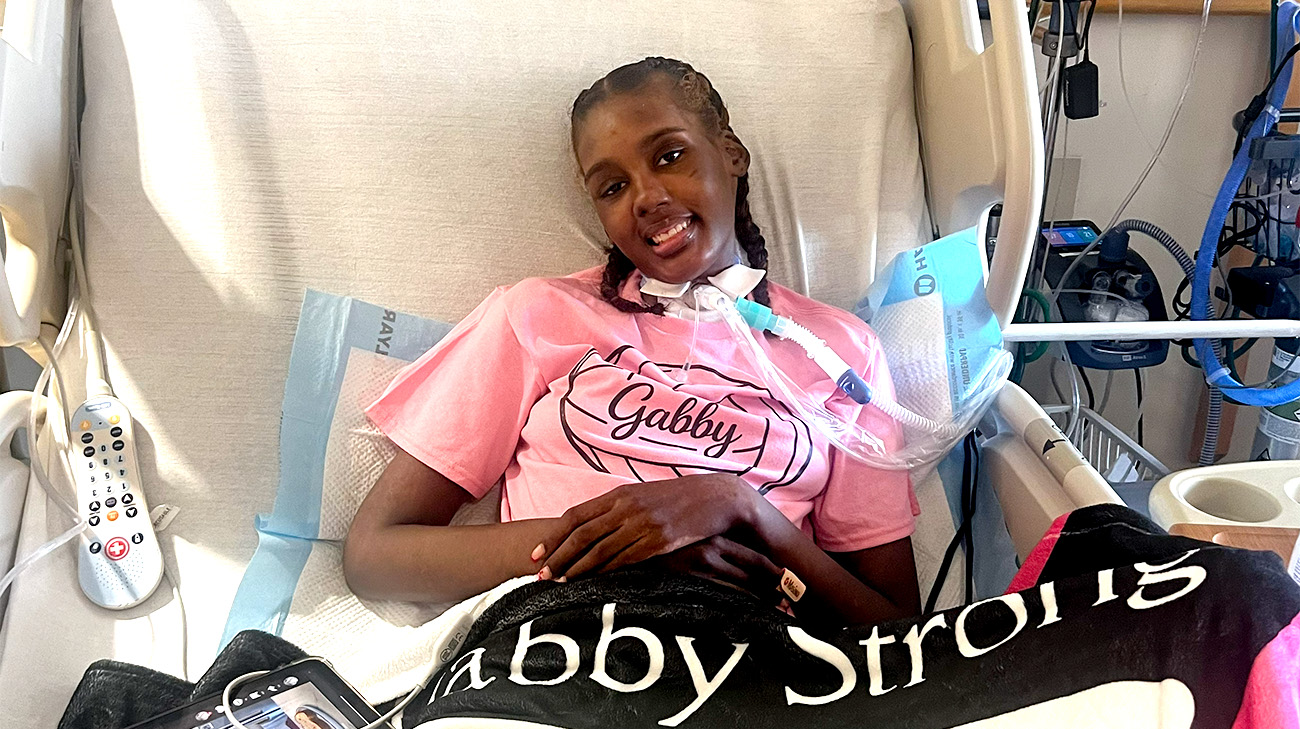
Following her seizures and diagnosis, Gabby spent more than 100 days in the hospital. (Courtesy: Mykia Hickman)
After spending over a month in a coma, Gabby woke up. She remained in the hospital for several more weeks as her care team worked to find the right medication regimen to manage her seizures. Once her seizures were under control, Gabby was able to begin rehabilitation.
"I was in the hospital from December to February, but I don't remember anything. Rehab is the first thing I can really recall," says Gabby.
When she got to rehab at Cleveland Clinic Children's Hospital for Rehabilitation, Gabby couldn’t stand on her own. Speaking was also difficult, since she had a tracheostomy tube for some time after her initial hospitalization to help her breathe.
"Being in a hospital bed for so long, you have loss of muscle mass. Gabby was also having memory issues after her diagnosis. Her core rehabilitation care consisted of physical, occupational and speech therapy," says Noel Pristas, MD, a pediatric physical medicine and rehabilitation physician at Cleveland Clinic Children's.
During inpatient rehab, Gabby worked with her therapists for several hours, six days a week. Step by step, she reached new milestones. Gabby began gaining weight and strength back. She went from using a wheelchair to standing on her own – then to walking with a walker and, finally, to walking independently.
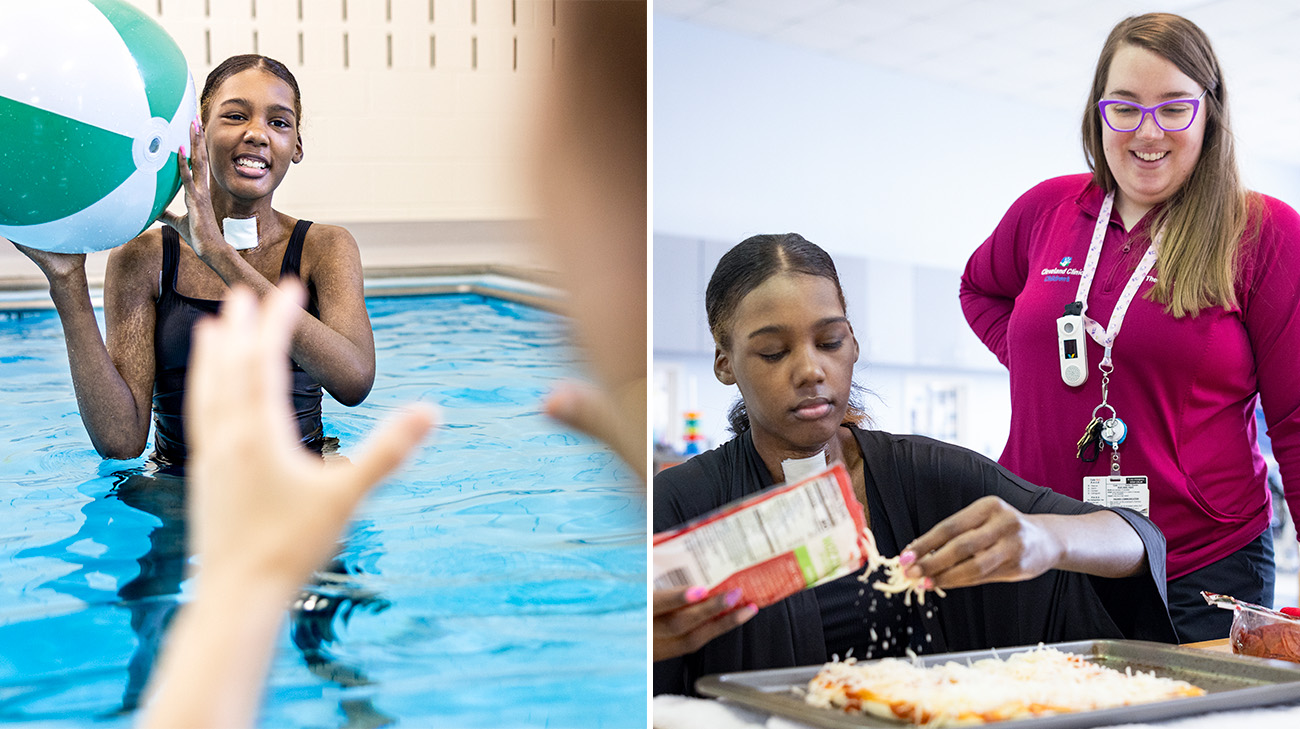
As part of her recovery, Gabby worked with physical, occupational and speech therapists, including Emily Pateras, a primary speech-language pathologist at Cleveland Clinic Children's. (Courtesy: Cleveland Clinic)
"I learned quickly because I wanted to play volleyball again one day," says Gabby.
Speech was another key focus area for Gabby to communicate clearly with her teammates once she got back on the court.
"At the beginning of our sessions, Gabby didn't have much respiratory strength and endurance to carry out a full conversation. Our number one focus was getting that strength back so she'd be able to yell out on the volleyball court," says Emily Pateras, a primary speech-language pathologist at Cleveland Clinic Children's. "We work with each patient to set individualized goals and help them achieve those."
To help Gabby regain her voice, Emily led her through speech therapy exercises focused on breathing and vocal strength. Slowly, Gabby practiced speaking for longer periods and projecting her voice.
"Gabby was determined and worked through every challenge. By the time we finished, she was able to hold conversations and express herself," says Emily.
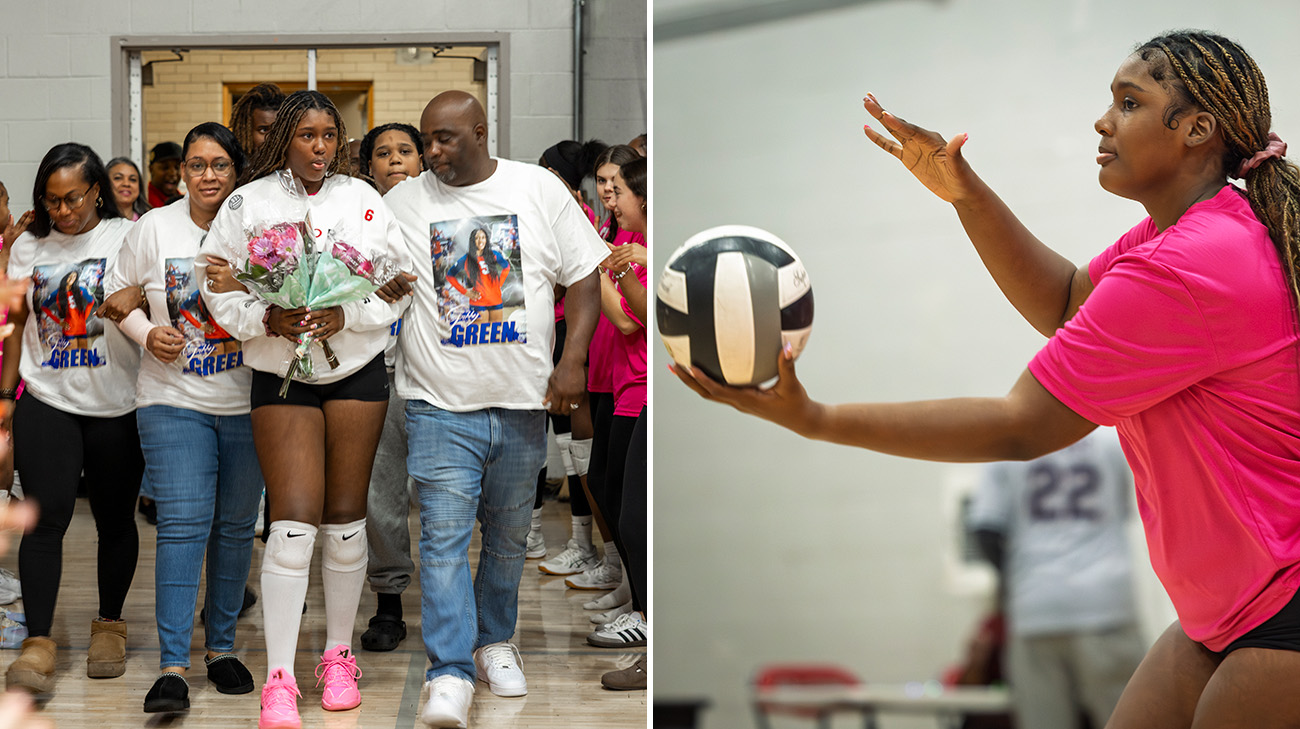
After building back up her strength, Gabby was able to return to playing volleyball. (Courtesy: Cleveland Clinic)
As part of her inpatient rehab, Gabby also worked with therapists to sharpen her memory. She took part in exercises that challenged her to recall information and tap into critical thinking skills – all preparing her to get back to her typical routine of school and volleyball.
“With so many therapists from different specialties working together, Gabby’s journey truly shows rehabilitation is a team sport. Everyone brought their own expertise and ideas together to help Gabby reclaim her independence," says Dr. Pristas.
Following more than a month of inpatient rehab, Gabby was able to come home in April 2026. And after six months of outpatient rehab, Gabby accomplished her biggest goal: returning to the volleyball court.
"I worked so hard in rehab, and it's surreal to be back on the court with my teammates. Everyone on my rehab team knew my goals and helped me achieve them," says Gabby.
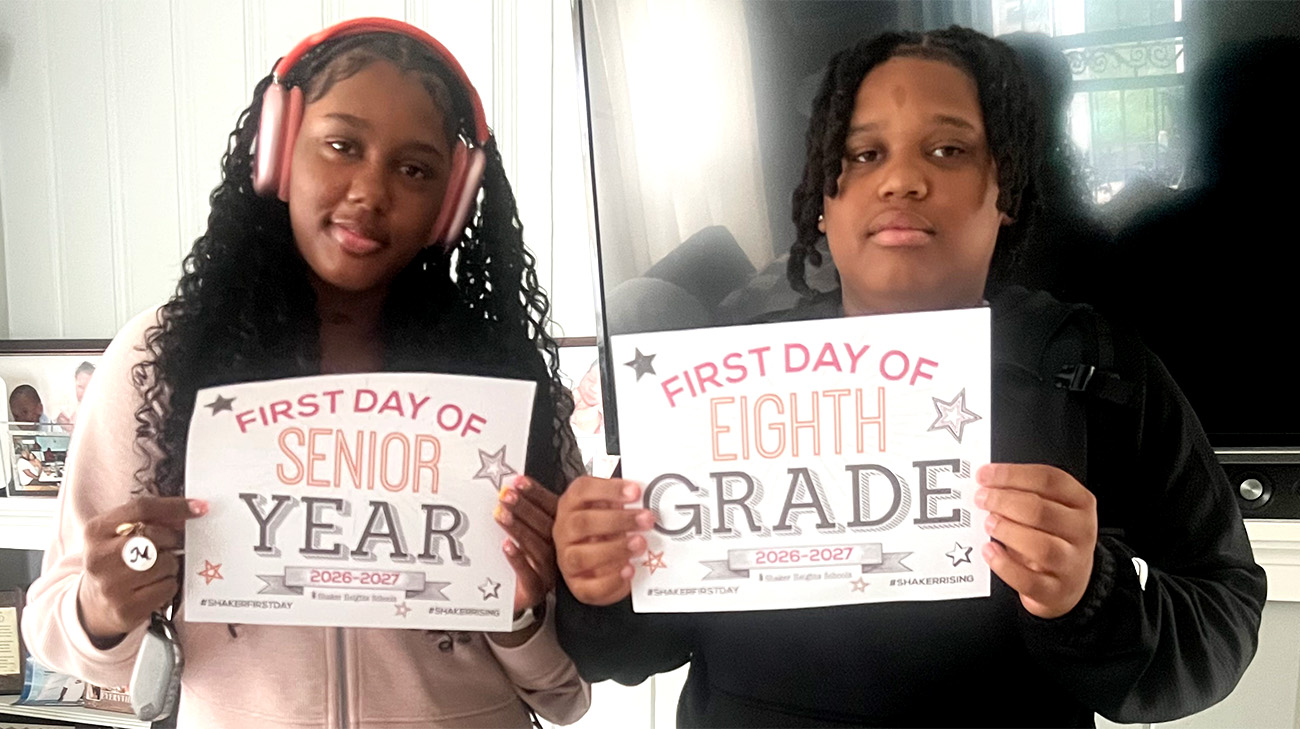
In her senior year of high school, Gabby looks forward to college and plans to study law. (Courtesy: Mykia Hickman)
"Every time I think about it, I get choked up. To see her go from spending 120 days in the hospital to getting back on the volleyball court was truly remarkable. It's a testament to her faith, determination and care team. We're forever grateful for the physical therapists, rehab specialists – just everybody who helped her along the way," says Mykia, who was always by her daughter's side.
Today, Gabby's seizures remain stable and she continues outpatient rehab to keep rebuilding her strength and confidence. As a senior in high school, she has her sights set on college and still plans to study law.
"Don't give up – there's hope ahead. And always remember the people who were there for you even when there didn't seem to be any light," says Gabby.
Related Institutes: Neurological Institute, Cleveland Clinic Children'sPatient Stories

Teen Relearns To Walk and Talk After Rare 1-In-A-Million Brain Disorder
Oct 27, 2026
Cleveland Clinic Team Helps Florida Patient Breathe Easier After Complex Lung Surgery
Oct 21, 2026