



Iontophoresis is a noninvasive treatment that uses a mild electrical current to move substances through your skin. Healthcare providers commonly use it to reduce excessive sweating (hyperhidrosis) or help medications absorb into your skin. Treatments are short and you usually get them several times a week at first.
Advertisement
Cleveland Clinic is a non-profit academic medical center. Advertising on our site helps support our mission. We do not endorse non-Cleveland Clinic products or services. Policy
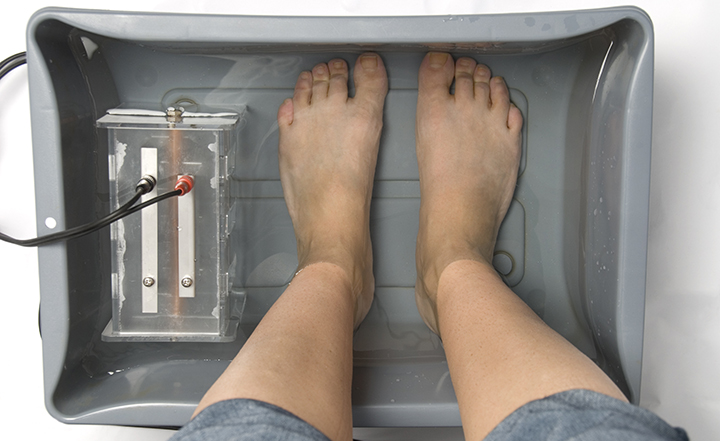
Image content: This image is available to view online.
View image online (https://my.clevelandclinic.org/-/scassets/images/org/health/articles/iontophoresis)
Iontophoresis is a safe, noninvasive treatment that uses a mild electrical current to move substances through your skin. Healthcare providers often use it to reduce excessive sweating (hyperhidrosis) or to deliver medications.
Advertisement
Cleveland Clinic is a non-profit academic medical center. Advertising on our site helps support our mission. We do not endorse non-Cleveland Clinic products or services. Policy
Treatments are short but usually need to be done several times a week at first. A provider can help determine if iontophoresis (pronounced “ahy-on-tuh-fuh-REE-sis”) is a good option for managing your symptoms.
Healthcare providers recommend this treatment for:
There are several types based on what the treatment uses:
Iontophoresis uses an electrical current to move substances through your skin or change how sweat glands work.
During treatment, your provider will place the treatment area in water or under moist pads. A device sends a small electrical current through your skin using two pads called electrodes. One is positive (anode) and one is negative (cathode).
Advertisement
The electrical current helps substances move through your skin in two main ways:
When iontophoresis treats excessive sweating, the current passes through water and your skin. This process is thought to temporarily block sweat from reaching your skin’s surface, possibly by affecting your sweat ducts, disrupting nerve transmission or changing the pH within sweat glands. As a result, it reduces sweating in the treated area. The exact way this happens isn’t fully understood, but many people have less sweating after treatment.
The exact process varies based on where on your body you’re getting treatment and what type of treatment you need.
Here’s an example of what you might expect if you’re getting tap water iontophoresis for hyperhidrosis:
You’ll need to have a treatment done several times a week to get results.
Iontophoresis has several benefits, including:
Most side effects are mild and temporary. The most common ones include:
This treatment is safe for many people, but it isn’t recommended for everyone. You shouldn’t use this treatment if you:
Talk with your healthcare provider before starting treatment to make sure this is safe for you.
It usually takes one to two weeks for symptoms to improve. You’ll then switch to maintenance treatments. This often happens about once a week.
If needed, your provider may adjust the water or add medication to improve results. Regular treatments maintain the results and keep symptoms managed.
Advertisement
If excessive sweating is something you deal with every day, you know it can affect more than just comfort. Handshakes, holding a pen or even choosing what to wear can be stressful when you’re worried about sweat. Treatments like iontophoresis offer an option that doesn’t involve surgery or injections.
Like many treatments, it can take some patience at the start. You may need several sessions before you notice improvement. And maintenance treatments keep results going. If skin irritation happens, your provider can adjust the treatment to make it more comfortable.
Advertisement



Sign up for our Health Essentials emails for expert guidance on nutrition, fitness, sleep, skin care and more.
Learn more about the Health Library and our editorial process.
Cleveland Clinic’s health articles are based on evidence-backed information and review by medical professionals to ensure accuracy, reliability and up-to-date clinical standards.
Cleveland Clinic’s health articles are based on evidence-backed information and review by medical professionals to ensure accuracy, reliability and up-to-date clinical standards.
Cleveland Clinic’s primary care providers offer lifelong medical care. From sinus infections and high blood pressure to preventive screening, we’re here for you.
