



Pitting edema is a type of swelling where pressure on the affected area leaves dimples or dents in your skin. This kind of swelling is usually a sign of a chronic — and often serious — health condition. Managing this symptom and the underlying condition can help ease this kind of swelling and related effects.
Advertisement
Cleveland Clinic is a non-profit academic medical center. Advertising on our site helps support our mission. We do not endorse non-Cleveland Clinic products or services. Policy
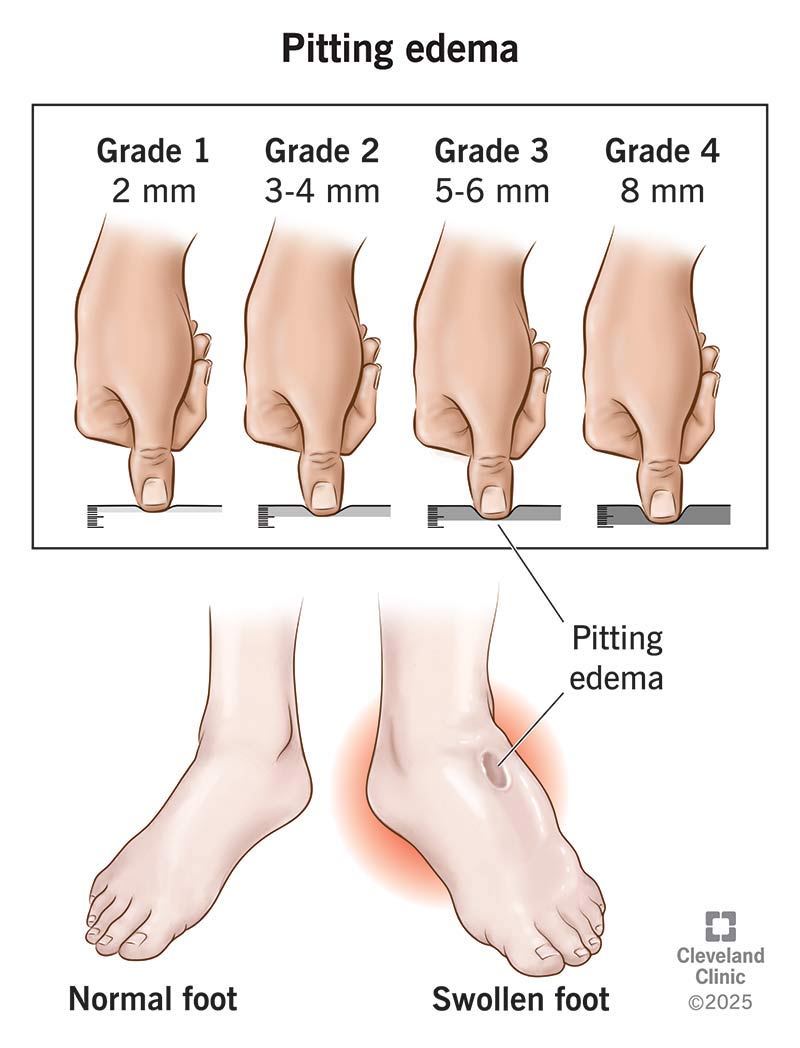
Image content: This image is available to view online.
View image online (https://my.clevelandclinic.org/-/scassets/images/org/health/articles/pitting-edema.jpg)
Pitting edema is a type of swelling where pressing on a swollen body part leaves behind a dent or “pit” that takes time to refill. The deeper the dent and the longer it takes to refill, the more severe this swelling is. It’s usually a symptom of chronic conditions that affect your circulatory system.
Advertisement
Cleveland Clinic is a non-profit academic medical center. Advertising on our site helps support our mission. We do not endorse non-Cleveland Clinic products or services. Policy
Pitting edema is most likely to affect your extremities. That usually means your legs and feet, but your arms and hands are also likely places to see it. Pitting edema can happen anywhere on your body under the right circumstances.
The main symptom of pitting edema is a left-behind dent or pit after pressing on the swollen area. That dent slowly fills back in once you stop pressing on the area. One easy way to see pitting edema is if you take off your socks and you see a deep, ring-like dent all around your leg where the top of the sock was.
There are other things you might notice with pitting edema. They include:
Pitting edema happens because of fluid overload. That means there’s too much fluid trapped with nowhere to go. Fluid overload usually happens because of a combination of factors and causes. They include:
Advertisement
Edema grading uses a scale to check how severe pitting edema is. The grading also lets providers estimate how much fluid has built up in your tissues. To find the grade, they’ll use a pitting test.
To do this test, they’ll gently press their finger on a swollen area of your skin for five to 15 seconds. If you have edema, a pit or dimple will remain on your skin when they pull their finger away. They grade edema based on how deep the pit goes and how long it takes for the pit to fill in (rebound) and return to being flat skin.
The grades are:
The pitting test only works if you have pitting edema. It’s also possible to have nonpitting edema. Whether you have pitting can help providers narrow down what’s causing your edema.
Pitting edema treatments mainly depend on the cause. For example:
Advertisement
There are several things you can do to manage your edema. Taking steps to manage it can make your edema less severe and ease the effects. Things you can do include:
Some of the potential complications of pitting edema are:
Poor circulation can also slow wound healing. That makes infections and even amputations more likely.
It’s very important to see your healthcare provider if you notice pitting edema. This is especially true if it either happens unexpectedly or without an obvious cause. Edema can stretch your skin, and if not treated, swelling could increase and cause serious health problems.
Advertisement
Call your healthcare provider immediately if you experience pitting edema and:
Even when you feel healthy, you should still see a primary care provider once a year for a checkup. These visits can often catch conditions that cause pitting edema early. That can help you manage edema when it develops or even avoid it.
Maybe your shoes feel a little tighter, a ring is harder to take off, or you see pressed-in skin that lasts a few minutes after you take your socks off. Pitting edema is swelling that can leave a mark behind. This kind of edema is a cause for concern. If you notice signs of it, call your provider for an appointment. They can check for possible causes and guide you on what to do about it.
Advertisement



Sign up for our Health Essentials emails for expert guidance on nutrition, fitness, sleep, skin care and more.
Learn more about the Health Library and our editorial process.
Cleveland Clinic’s health articles are based on evidence-backed information and review by medical professionals to ensure accuracy, reliability and up-to-date clinical standards.
Cleveland Clinic’s health articles are based on evidence-backed information and review by medical professionals to ensure accuracy, reliability and up-to-date clinical standards.
Cleveland Clinic’s primary care providers offer lifelong medical care. From sinus infections and high blood pressure to preventive screening, we’re here for you.
