



Not having physical strength is a symptom known as asthenia. You can have asthenia for plenty of reasons that aren’t serious. But it’s important to recognize when it might be a symptom of a medical condition, especially one that’s serious or dangerous.
Advertisement
Cleveland Clinic is a non-profit academic medical center. Advertising on our site helps support our mission. We do not endorse non-Cleveland Clinic products or services. Policy
Asthenia is the medical term for a lack of physical strength. It can be a harmless and normal effect from an activity, or it can be a symptom of a medical condition.
Advertisement
Cleveland Clinic is a non-profit academic medical center. Advertising on our site helps support our mission. We do not endorse non-Cleveland Clinic products or services. Policy
Determining whether you have asthenia can be tricky, even for experienced healthcare providers. That’s because asthenia is similar to symptoms like fatigue (extreme tiredness) or paresis (a partial form of paralysis).
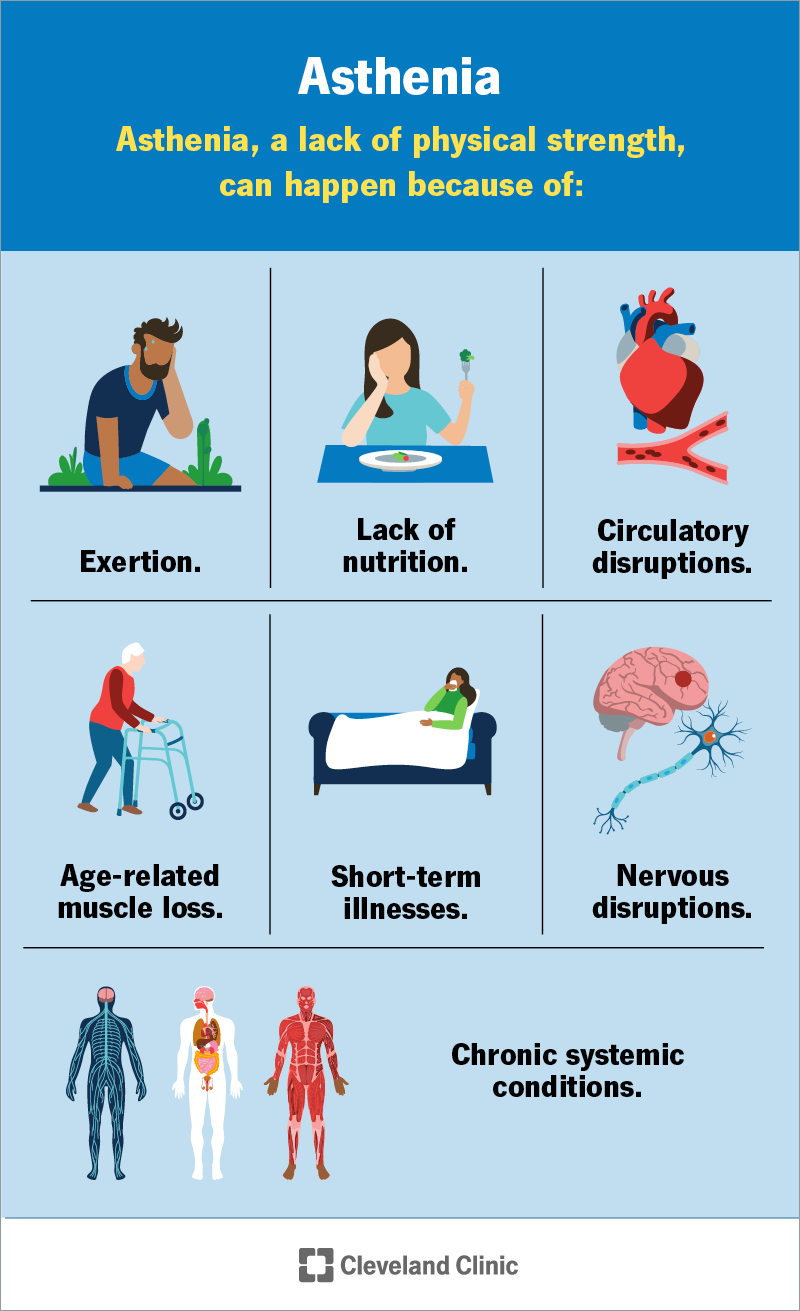
Image content: This image is available to view online.
View image online (https://my.clevelandclinic.org/-/scassets/images/org/health/articles/asthenia.jpg)
There are several ways that asthenia can happen:
Advertisement
The treatments for asthenia depend on several factors, especially the underlying cause. For some of these conditions, there are medications or treatments that may help. For others, you may benefit from physical or occupational therapy to strengthen your muscles. And in some cases, the best treatment is rest and giving your body time to recover.
Because there are many possible factors and treatments, your healthcare provider is the best person to tell you more about your case.
If you’re experiencing asthenia and it’s likely from overuse, an injury or a short-term condition, you can self-treat it with rest. Usually, giving the affected body part(s) time to recover is all you’ll need. If your asthenia happens with simpler injuries or overuse, you can treat them with things like rest, ice, compression and elevation. A healthcare provider can tell you more about how long you should take to recover.
Some causes of asthenia are preventable, but many happen unpredictably. Some things you can do to reduce your risk of having it from preventable causes include:
You should call or schedule an appointment with a healthcare provider if your asthenia doesn’t get better after more than a few days of rest. You should also call them or schedule an appointment if it happens repeatedly without an obvious cause.
Asthenia that starts and/or worsens suddenly needs emergency medical care. It also needs emergency care if it happens in connection with:
The complications of asthenia depend mainly on why it happens. In general, asthenia can make you prone to injuries because of decreased strength. But not treating asthenia from serious causes could lead to permanent or even life-threatening issues. So, when in doubt, it’s better to be proactive and seek care.
Sometimes, asthenia is just a sign that you need to slow down and rest. But in some cases, it can be a key warning sign of a bigger issue. You should talk to a healthcare provider if you keep having asthenia, especially if it happens for unknown reasons.
Not having the physical strength to do a task can be troubling, embarrassing or even frightening. But lacking physical strength for a medical reason isn’t a personal failing. Your provider can help guide and reassure you as you work to recover your strength and manage any conditions affecting you.
Advertisement



Sign up for our Health Essentials emails for expert guidance on nutrition, fitness, sleep, skin care and more.
Learn more about the Health Library and our editorial process.
Cleveland Clinic’s health articles are based on evidence-backed information and review by medical professionals to ensure accuracy, reliability and up-to-date clinical standards.
Cleveland Clinic’s health articles are based on evidence-backed information and review by medical professionals to ensure accuracy, reliability and up-to-date clinical standards.
Cleveland Clinic’s primary care providers offer lifelong medical care. From sinus infections and high blood pressure to preventive screening, we’re here for you.
