



Your tibia is your shin bone. Trauma like falls, car accidents and sports injuries can break it. Depending on what type of fracture you have (and any other injuries you experienced), you’ll probably need a few months to recover from a fractured tibia.
Advertisement
Cleveland Clinic is a non-profit academic medical center. Advertising on our site helps support our mission. We do not endorse non-Cleveland Clinic products or services. Policy
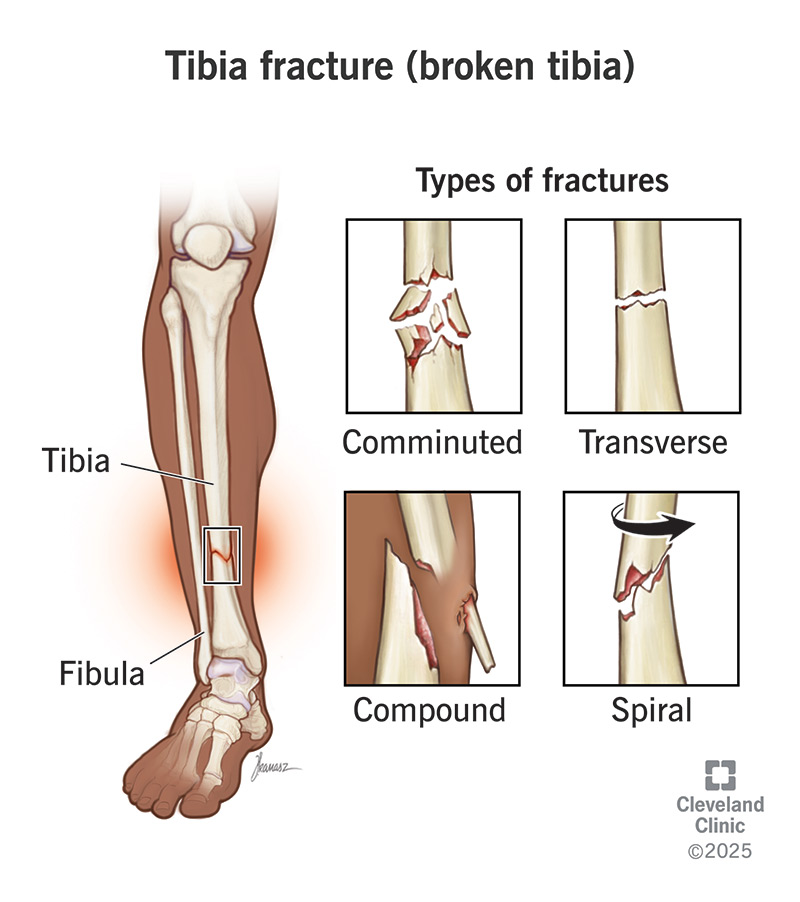
Image content: This image is available to view online.
View image online (https://my.clevelandclinic.org/-/scassets/images/org/health/articles/tibia-fracture)
A tibia fracture is the medical name for breaking your shin bone. Your tibias are some of the strongest bones in your body. It usually takes a lot of force to break one.
Advertisement
Cleveland Clinic is a non-profit academic medical center. Advertising on our site helps support our mission. We do not endorse non-Cleveland Clinic products or services. Policy
It’s common to break your tibia and calf bone (fibula) during the same injury.
Fractured shins are emergencies that need treatment right away. You probably won’t be able to stand, walk or put weight on your leg if you have a broken shin bone. Don’t force yourself to use or move your leg. Go to the emergency room if you think you have a broken tibia.
Tibia fracture symptoms can include:
Traumas almost always cause fractured tibias. Some of the most common causes include:
Health conditions like osteoporosis can increase your risk of a broken shin. Talk to your healthcare provider about your fracture risk if you have a condition that weakens your bones.
A healthcare provider will diagnose a tibia fracture with a physical exam and imaging tests. This might happen in the emergency room. If you’re taken to the ER, a team of providers stabilizes you and treats your injuries in the order of severity, especially if some are life-threatening.
Your provider will use a few tests to take pictures of your leg. They’ll confirm your tibia is broken and check for other injuries around your shin bone. You may need:
Advertisement
Healthcare providers classify broken tibias in a few ways. They name some fractures for the shape or pattern of the break line:
Providers define some fractures by how they happen:
Your provider might use some other terms to describe the fracture, including:
A healthcare provider will suggest treatments to repair your shin bone and hold the pieces together while it heals. Broken tibia treatments include:
Advertisement
Most fractured tibias take four to six months to heal completely. More severe fractures take longer to heal. There are lots of factors that can affect your recovery time. Talk to your provider or surgeon about a timeline that fits your specific situation.
See a healthcare provider right away if you think your shin is broken. Go to the emergency room if you experience any of the following:
It might take a couple weeks for symptoms to improve after treatment. Your healthcare provider or surgeon will tell you how to manage pain during your recovery.
You should be able to start moving again in a few weeks. Your provider will tell you when it’s safe to resume putting weight on your leg, walking and other physical activities.
Broken tibias usually happen during sudden accidents you can’t plan for and don’t see coming. It’s a shock to break any bone. But most people make a full recovery after a tibia fracture. Once your bone heals and you regain your strength, you should be able to resume all your usual activities. Ask your healthcare provider or surgeon any questions you have during your recovery. Your care team is there to make you feel safe, comfortable and supported while your shin bone heals.
Advertisement



Sign up for our Health Essentials emails for expert guidance on nutrition, fitness, sleep, skin care and more.
Learn more about the Health Library and our editorial process.
Cleveland Clinic’s health articles are based on evidence-backed information and review by medical professionals to ensure accuracy, reliability and up-to-date clinical standards.
Cleveland Clinic’s health articles are based on evidence-backed information and review by medical professionals to ensure accuracy, reliability and up-to-date clinical standards.
Don’t let a bone fracture keep you from the things you love. Cleveland Clinic orthopaedic experts are here to help you recover.
