



If you have nail fungus, it can be hard to relax or feel comfortable with the affected nails visible to others. You might worry that people will think your hygiene is to blame. But people with good hygiene can still get nail fungus, and for reasons they can’t control. Fortunately, this condition is usually treatable.
Advertisement
Cleveland Clinic is a non-profit academic medical center. Advertising on our site helps support our mission. We do not endorse non-Cleveland Clinic products or services. Policy
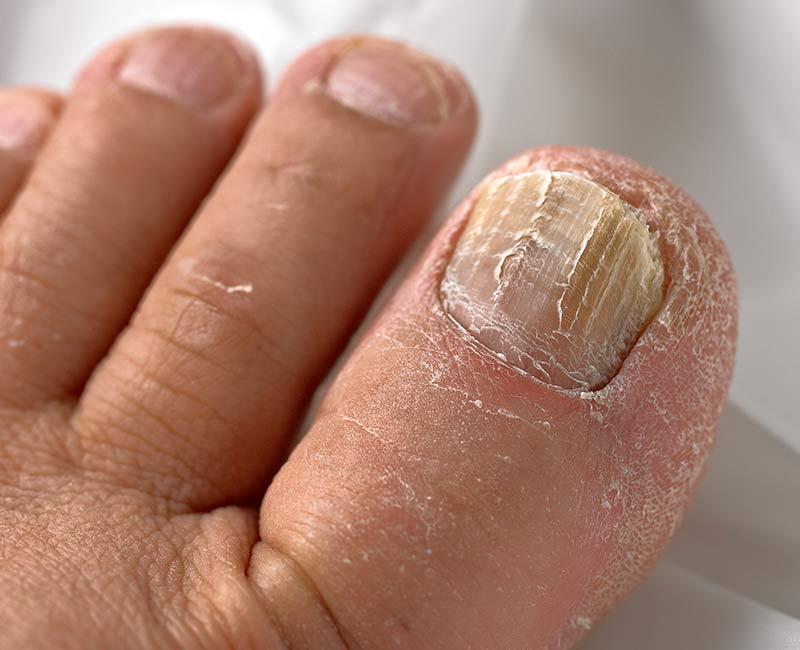
Image content: This image is available to view online.
View image online (https://my.clevelandclinic.org/-/scassets/images/org/health/articles/11303-toenail-fungus.jpg)
Nail fungus is a type of fungal infection that can affect your toenails or fingernails. It’s a common condition. It’s often treatable, though the success rates for treatments vary. For many people, having it can be a source of significant embarrassment or anxiety.
Advertisement
Cleveland Clinic is a non-profit academic medical center. Advertising on our site helps support our mission. We do not endorse non-Cleveland Clinic products or services. Policy
The medical name for nail fungus is onychomycosis (pronounced “ON-ick-oh-my-CO-sis”). Affected nails are sometimes called “mycotic.” Depending on the type and severity of the infection, it can affect the following parts of your nails:
Nail fungus is more likely to affect your toenails, but you can have it in your fingernails, too. It can affect one nail or multiple nails.
The main symptom of nail fungus is some form of nail dystrophy. That can include one or more of the following:
Pain isn’t usually one of the symptoms of nail fungus.
Many types of fungus can cause nail infections. The most common types include:
Advertisement
Several factors can increase your risk of developing nail fungus:
Nail fungus complications can include:
People with nail fungus often describe feeling anxiety, embarrassment or fear about how their nails look. They also describe how they avoid certain activities or go out of their way to keep others from seeing the affected nails.
Healthcare providers can diagnose nail fungus using a combination of methods. They’ll look at your nails and ask you questions about any nail-related changes or symptoms you’ve noticed.
Lab testing is essential for confirming the diagnosis and determining which type of fungus is responsible. Your provider may take clippings or scrapings of nail tissue to analyze. They might also run blood tests. The most likely lab tests include:
There are a few ways to treat nail fungus:
Advertisement
In many cases, a combination approach is best. It's common for treatments to last for months. Your healthcare provider can tell you more about your treatment options and which they recommend.
The recovery time depends on a few factors, including the type of treatment and the severity of the infection. In many cases, it may take several months or even a year for an infection to clear. That’s because it can take that long for healthy nail tissue to grow in and replace affected nail tissue.
It’s important to keep in mind that your nails may not fully return to how they looked before. This is true even if treatment fully cures your nail fungus. That’s because changes to your nail bed or nail matrix may cause lingering nail appearance changes. Your healthcare provider can tell you more about what you can expect in your specific case.
Nail fungus usually isn’t dangerous, but it can be unpleasant or embarrassing. And it can be a greater concern if you have diabetes or a weakened immune system. That’s because it can increase your risk of having other serious infections in nearby tissues. Peripheral artery disease or chronic venous insufficiency can also make your nail fungus case more serious.
Advertisement
It’s also common for nail fungus to come back later. Your healthcare provider can advise you on ways to reduce this risk and tell you more about what to expect.
If you have nail fungus, you should see a healthcare provider sooner rather than later. The earlier you get a diagnosis and start treatment, the better the odds of a favorable outcome. And once you have a treatment plan, it’s absolutely crucial that you follow your provider’s guidance as closely as possible to improve the odds of successful treatment.
Nail fungus isn’t 100% preventable. Many people are self-conscious about having nail fungus because they think others will see it as evidence of poor hygiene. But you can develop nail fungus even if you have excellent hygiene.
There are several things you can do to reduce your risk of developing nail fungus:
Advertisement
Nail fungus usually doesn’t go away on its own. And the longer you have it, the harder it might be to treat. That’s why seeing a healthcare provider early is so important.
Many nail accessories or enhancements can make treatments less effective. So, don’t use nail polish, false nails or other nail accessories without first talking to your healthcare provider.
Unfortunately, there's no instant cure or fix for nail fungus. You might be tempted to try a quick fix, but your best choice is to talk to a knowledgeable healthcare provider and follow their guidance.
Whether it’s one nail or multiple nails that show the effects, a fungal nail infection can weigh on your mind. You might feel like you can’t enjoy some of your favorite activities — or even just wear accessories or comfortable shoes. But nail fungus infections are very common, and they're often treatable.
If you think you have an infection, talk to a healthcare provider. They can offer treatment options. And once you have a treatment plan, following it closely can make a big difference. Your best bet is to be patient and persistent in following your treatment plan.



Sign up for our Health Essentials emails for expert guidance on nutrition, fitness, sleep, skin care and more.
Learn more about the Health Library and our editorial process.
Cleveland Clinic’s health articles are based on evidence-backed information and review by medical professionals to ensure accuracy, reliability and up-to-date clinical standards.
Cleveland Clinic’s health articles are based on evidence-backed information and review by medical professionals to ensure accuracy, reliability and up-to-date clinical standards.
Cleveland Clinic’s primary care providers offer lifelong medical care. From sinus infections and high blood pressure to preventive screening, we’re here for you.
