Nonunion is when the pieces of a broken bone don’t heal back together into one solid piece. There are a few different types. Causes include having a more severe fracture, putting too much stress on a bone before it’s healed and having a bone infection.
Advertisement
Cleveland Clinic is a non-profit academic medical center. Advertising on our site helps support our mission. We do not endorse non-Cleveland Clinic products or services. Policy
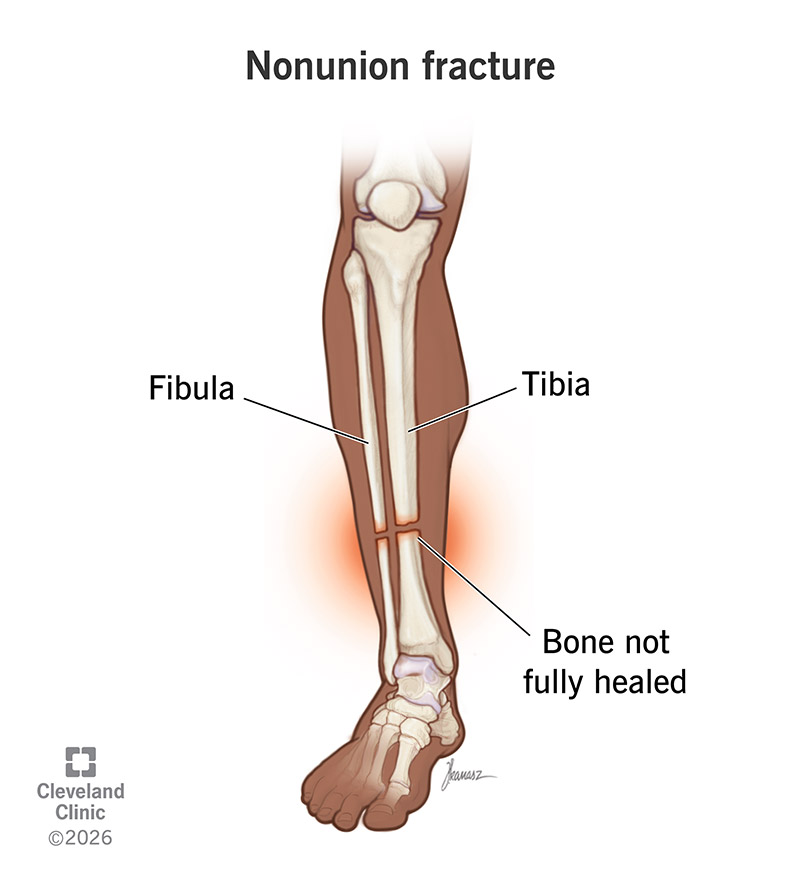
Image content: This image is available to view online.
View image online (https://my.clevelandclinic.org/-/scassets/images/org/health/articles/nonunion-fracture)
A nonunion fracture is a broken bone that doesn’t heal back together in one piece. Usually, a bone fracture will heal over time. The multiple pieces of your broken bone will grow back together. Fracture nonunion happens when the pieces stay separated, even after treatments.
Advertisement
Cleveland Clinic is a non-profit academic medical center. Advertising on our site helps support our mission. We do not endorse non-Cleveland Clinic products or services. Policy
Nonunion usually affects long bones, like the ones in your arms and legs. This happens for a few reasons:
All of these factors can increase your risk of complications like nonunion.
It might take a while for signs of nonunion to show up. Some bones need months to heal, even without complications. Contact a healthcare provider right away if you have new pain or other symptoms while you recover.
A healthcare provider may classify a nonunion fracture as one of four types. Each type refers to how or why your bone isn’t healing correctly:
Advertisement
Nonunion symptoms can include:
Several issues can cause fracture nonunion, including:
Advertisement
Having certain health conditions can increase your risk of nonunion. These include:
Other risk factors include:
An untreated nonunion fracture can cause other serious issues, including:
A healthcare provider will diagnose a nonunion fracture with a physical exam and an X-ray. Your provider will examine your broken bone. Tell them when you noticed pain or other symptoms. Let your provider know if movements make symptoms worse, or if you can’t use that part of your body like usual.
Your provider will take an X-ray of your bone. This will show how it’s healing and if you have nonunion. You may need other tests, too, like a CT scan or MRI. You may need to see an endocrinologist if an endocrine or metabolic issue is causing nonunion.
Your healthcare provider will suggest treatments to help your bone heal into one piece. Which treatments you’ll need can vary. It depends on which type of nonunion you have and which bone is affected. You might need:
Advertisement
Advertisement
Talk to your healthcare provider if you think you have any nonunion symptoms after breaking a bone. The sooner they’re able to diagnose and treat the issue, the better.
Your provider will schedule follow-up visits. They’ll check your healing and take more X-rays as needed. Your provider will give you a recovery timeline that fits your unique situation.
What you can expect depends on a few factors, including:
Nonunion treatments are usually successful. But it can be frustrating to find out you need more treatment for a broken bone that you expected to be healed. Your healthcare provider will help you understand what to expect.
You may not always be able to prevent nonunion. But giving your bone all the time it needs to heal is the best way to avoid all complications, including nonunion.
For example, wear your splint or cast for as long as needed. Don’t take it off before your provider says it’s OK. And avoid using that part of your body as much as possible. Putting pressure on a broken bone before it’s safe to do so can increase your risk of complications.
Finding out you’ll need even more treatment after you’ve waited weeks or months for a fracture to heal can be frustrating. But if you experience a complication like nonunion, try to stay focused on the good news: It’s treatable.
Advertisement
Ask your provider lots of questions about how to keep your bone safe. They’ll help you understand what caused the nonunion and what they can do to help get your bone back into one piece again.



Sign up for our Health Essentials emails for expert guidance on nutrition, fitness, sleep, skin care and more.
Learn more about the Health Library and our editorial process.
Cleveland Clinic’s health articles are based on evidence-backed information and review by medical professionals to ensure accuracy, reliability and up-to-date clinical standards.
Cleveland Clinic’s health articles are based on evidence-backed information and review by medical professionals to ensure accuracy, reliability and up-to-date clinical standards.
From sudden injuries to chronic conditions, Cleveland Clinic’s orthopaedic providers can guide you through testing, treatment and beyond.