



A cutaneous horn is a firm, discolored, cone-shaped growth on your skin. It resembles a small animal horn. It occurs when your body makes too much of the protein keratin. Treatment usually includes removing the cutaneous horn and testing it for cancer.
Advertisement
Cleveland Clinic is a non-profit academic medical center. Advertising on our site helps support our mission. We do not endorse non-Cleveland Clinic products or services. Policy
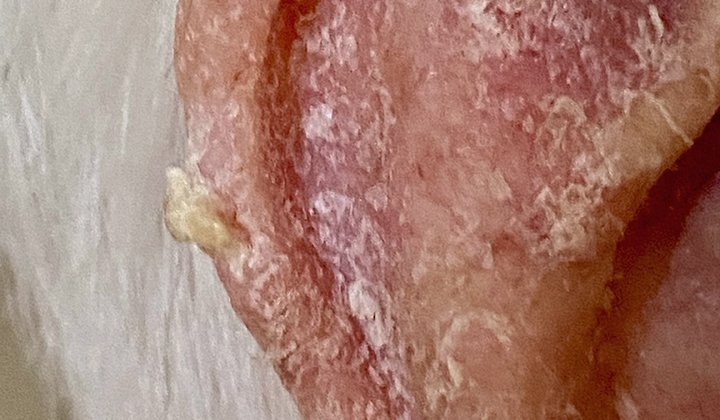
Image content: This image is available to view online.
View image online (https://my.clevelandclinic.org/-/scassets/images/org/health/articles/cutaneous-horn)
A cutaneous horn (cornu cutaneum) is a hard, cone-shaped lesion on the surface of your skin that looks like a straight or curved animal horn. It can develop when your body makes too much keratin in areas of your skin. Keratin is a protein that helps make your skin, hair and nails.
Advertisement
Cleveland Clinic is a non-profit academic medical center. Advertising on our site helps support our mission. We do not endorse non-Cleveland Clinic products or services. Policy
Cutaneous (pronounced “kyoo-TAY-nee-uhs”) horns aren’t common. But when they develop, they’re more likely to affect areas that get a lot of sun exposure. This may include your face, head, neck, arms and hands.
About 6 out of 10 cutaneous horns are benign (not cancer). But they may be cancerous or precancerous. “Precancerous” means the growths have characteristics that indicate that they’re likely to become cancer if you don’t get treatment. Treatment usually involves removing the growth and, possibly, some surrounding tissue.
A cutaneous horn may:
It usually won’t have any other symptoms. But it may hurt if you accidentally bump or pull on it.
Healthcare providers can’t confirm a cutaneous horn is precancerous or cancerous just by looking at it. But they may recommend cancer testing, particularly if it’s:
Experts don’t know exactly what causes cutaneous horns. But they think keratin overgrowth may occur because of:
Advertisement
Cutaneous horns can be associated with other conditions. Many of them aren’t cancerous, like:
But sometimes, there’s a link between cutaneous horns and precancerous or cancerous conditions. These may include:
You’re at a greater risk of getting a cutaneous horn if you:
Precancerous cutaneous horns are likely to turn into cancer if you don’t get treatment. And if they’re cancerous, there’s a chance that they can grow quickly and spread (metastasize) to other parts of your body. If they spread, they can be more challenging to treat. They can also be fatal.
Healthcare providers can usually diagnose it with a physical exam. But because cutaneous horns can sometimes be associated with skin cancers, a provider will often recommend additional tests, such as a skin biopsy. A skin biopsy helps them figure out if the lesion is benign, precancerous or cancerous. You may need more treatment depending on the results of your biopsy.
If it isn’t cancer and it doesn’t bother you, you don’t need treatment. But if it’s precancerous, cancerous or you don’t like the way it looks, your healthcare provider can remove it. They may recommend:
Even after treatment, it’s possible for a cutaneous horn to come back.
Don’t try to remove a cutaneous horn yourself. You risk permanently damaging your skin or getting an infection.
It’s a good idea to see a healthcare provider any time you notice a change in your skin. They can officially diagnose a cutaneous horn. They may also refer you to a dermatologist.
It depends on whether there’s an association with precancerous or cancerous conditions.
If it doesn’t bother you and there’s no link to precancerous or cancerous conditions, you don’t need additional treatment. If a healthcare provider removes it, you may have some scarring. It’s also possible for it to regrow.
Providers can successfully treat nearly all skin cancers before they have a chance to spread. But you have the best outlook if they find and treat them sooner. After removing a cancerous cutaneous horn, you may need regular skin cancer screenings to make sure cancer doesn’t come back. Your provider will give you a better idea of what to expect according to your unique situation.
Advertisement
Experts aren’t sure if there’s a way to prevent cutaneous horns. But you may be able to help reduce your risk by preventing some of the possible causes. This includes:
It can be a shock any time you notice unexpected changes to your body. It can be easy to jump to worst-case scenarios about a cutaneous horn. Though most cases aren’t cancer, there’s a chance it may be. But before you get too overwhelmed with your thoughts, talk to a healthcare provider. They can officially diagnose a cutaneous horn. They can also recommend the best treatment for you, guide you through the next steps and answer any questions.
Advertisement



Sign up for our Health Essentials emails for expert guidance on nutrition, fitness, sleep, skin care and more.
Learn more about the Health Library and our editorial process.
Cleveland Clinic’s health articles are based on evidence-backed information and review by medical professionals to ensure accuracy, reliability and up-to-date clinical standards.
Cleveland Clinic’s health articles are based on evidence-backed information and review by medical professionals to ensure accuracy, reliability and up-to-date clinical standards.
Every day, people see your skin, hair and nails. At Cleveland Clinic, our expert and caring dermatology team will make sure they’re healthy and strong.
