



CREST syndrome is a limited form of scleroderma that typically causes only a handful of symptoms. CREST is an acronym for those symptoms. They mainly affect your skin, and usually not your organs. CREST syndrome isn’t usually serious, but it can be a lot to manage. You’ll need separate treatments for the different symptoms it causes.
Advertisement
Cleveland Clinic is a non-profit academic medical center. Advertising on our site helps support our mission. We do not endorse non-Cleveland Clinic products or services. Policy
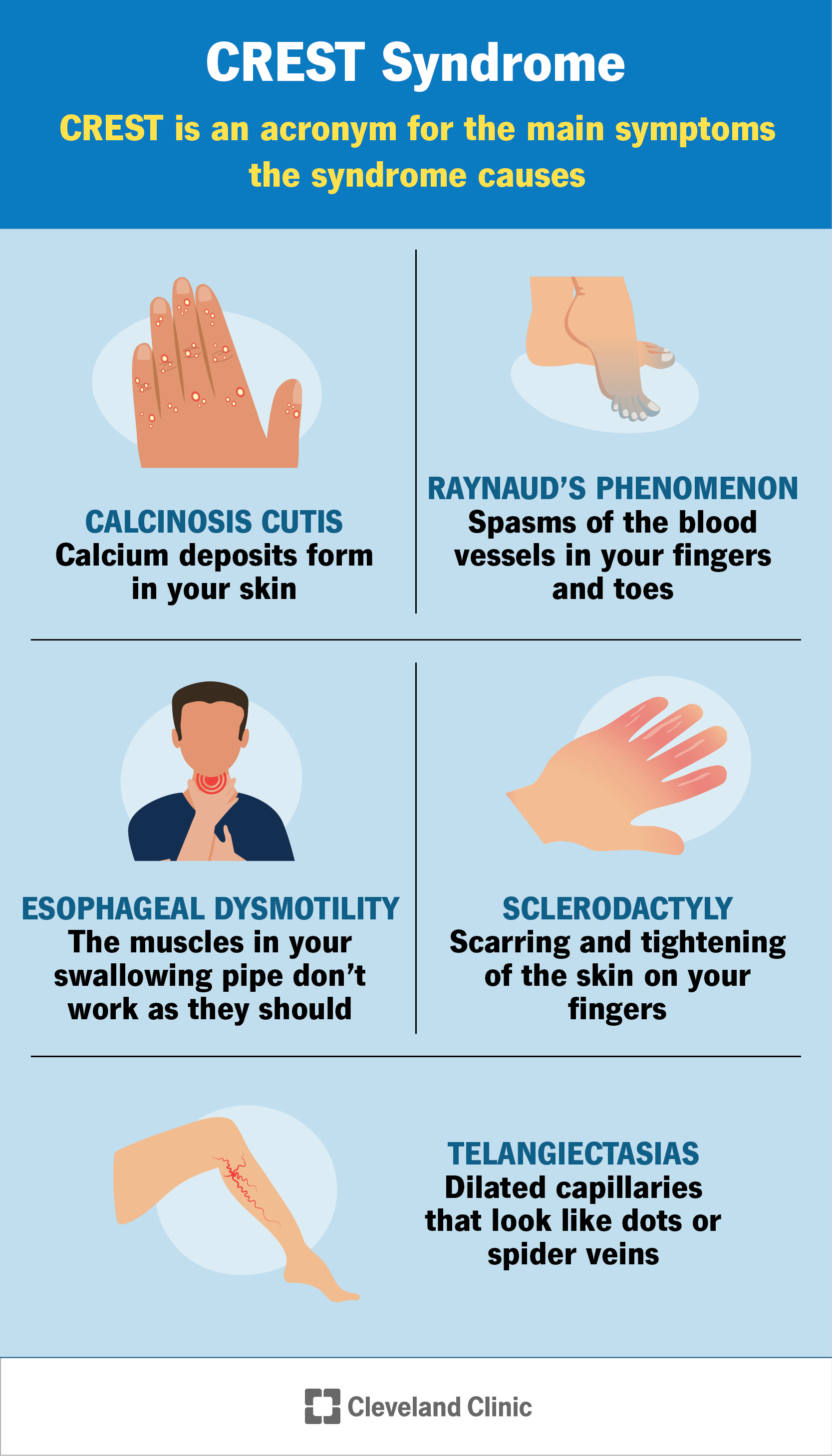
Image content: This image is available to view online.
View image online (https://my.clevelandclinic.org/-/scassets/images/org/health/articles/crest-syndrome)
CREST syndrome is a type of scleroderma that causes fewer symptoms compared to other types. It’s also known as limited scleroderma. CREST is an acronym for the common symptoms it causes.
Advertisement
Cleveland Clinic is a non-profit academic medical center. Advertising on our site helps support our mission. We do not endorse non-Cleveland Clinic products or services. Policy
Scleroderma is a chronic disease that causes your body to make too much collagen. This changes your body’s tissues, making them thick and fibrous, like scar tissue. Scleroderma means scarring or thickening of your skin. But this thickening and hardening can also affect internal tissues and organs. Another name for scleroderma is systemic sclerosis, which means scarring throughout your body.
CREST syndrome (limited systemic sclerosis) affects a variety of tissues in your body. But it doesn’t affect as many internal tissues as other types can. Experts believe this is because it progresses very slowly.
CREST is an acronym for the main symptoms the syndrome causes. CREST stands for:
Advertisement
CREST syndrome, like other forms of scleroderma, is an autoimmune disease. This means your immune system causes it by mistake. Your immune system creates antibodies that attack certain cells in your body, the way it would normally attack a germ. This attack causes inflammation in your tissues. Chronic inflammation leads to scarring (collagen production). Scarring produces excess calcium as a byproduct.
CREST syndrome (limited scleroderma) doesn’t affect as many organs or cause as many complications as diffuse systemic sclerosis can. It progresses slowly, and the symptoms are often manageable with treatment. But severe symptoms can cause complications, like contracted fingers, swallowing difficulties or painful sores in your skin. Life-threatening complications are rare, but possible. They include:
To diagnose CREST syndrome, a healthcare provider will give you a thorough exam. They’ll look for at least three of the five symptoms named in the acronym. Any of these symptoms can also occur with other forms of scleroderma. But the combination of these specific symptoms appearing together suggests CREST syndrome. Blood tests for CREST-related antibodies can also help to make the diagnosis.
Treatment for CREST syndrome primarily focuses on treating the individual symptoms. Like other autoimmune diseases, CREST syndrome has no cure. Medications that suppress your immune system (immunosuppressants) may slow the disease down and reduce its effects. But there are side effects to taking immunosuppressants, and they don’t always help enough to make taking them worthwhile.
Treating CREST syndrome means:
Advertisement
CREST syndrome can certainly affect your quality of life. But it isn’t as life-threatening as diffuse scleroderma. In general, how much of your skin is involved is a good indicator of how much the disease will affect you. If it mostly affects your fingers, which is typical of CREST syndrome, your outlook is good. The most serious risk is pulmonary hypertension, which isn’t common and usually takes decades to develop.
Living with CREST syndrome means managing a variety of symptoms in different parts of your body at once. It can feel a bit like a game of whack-a-mole. Some consistent self-care can help maintain a base level of health and comfort. For example, your healthcare provider might advise that you:
Advertisement
Call or see your provider right away if you experience:
CREST syndrome is a limited form of scleroderma, which means it likely won’t affect you as severely as other forms can. Nevertheless, it’s a lifelong condition that can impact you in many ways. Managing its various symptoms can be taxing on many levels. You might benefit from joining a support group where you can share and learn from others living with CREST syndrome day to day.
Advertisement



Sign up for our Health Essentials emails for expert guidance on nutrition, fitness, sleep, skin care and more.
Learn more about the Health Library and our editorial process.
Cleveland Clinic’s health articles are based on evidence-backed information and review by medical professionals to ensure accuracy, reliability and up-to-date clinical standards.
Cleveland Clinic’s health articles are based on evidence-backed information and review by medical professionals to ensure accuracy, reliability and up-to-date clinical standards.