



Melanoma is a type of skin cancer that is likely to spread and has the highest fatality rate. It can look different from person to person, but the first symptom is usually a skin change to either an existing mole or a new growth. Though it’s serious, it’s curable if you receive an early diagnosis and treatment.
Advertisement
Cleveland Clinic is a non-profit academic medical center. Advertising on our site helps support our mission. We do not endorse non-Cleveland Clinic products or services. Policy
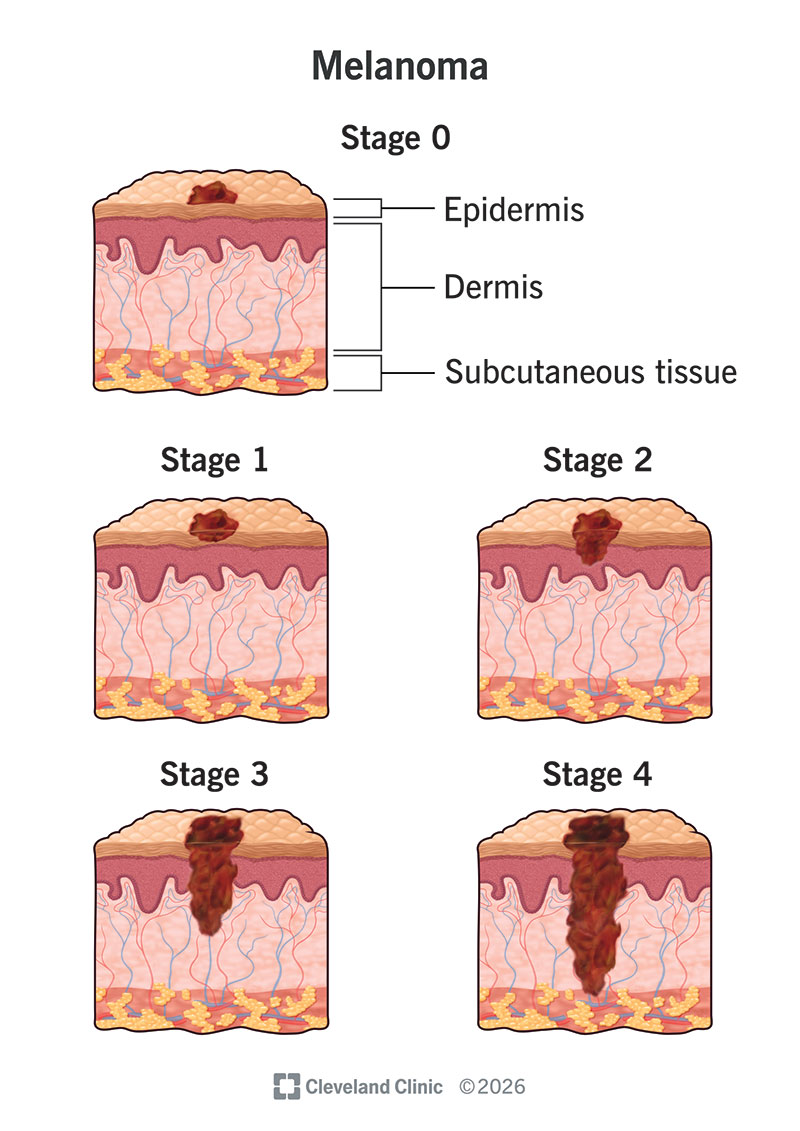
Image content: This image is available to view online.
View image online (https://my.clevelandclinic.org/-/scassets/images/org/health/articles/14391-melanoma)
Melanoma is a type of skin cancer that develops when malignant (cancerous) cells form in your melanocytes. Melanocytes are cells that make melanin, which is a dark pigment that gives skin its color. It isn’t the most common type of skin cancer. But it’s the most dangerous type because it grows quickly and can spread (metastasize) through your body without treatment.
Advertisement
Cleveland Clinic is a non-profit academic medical center. Advertising on our site helps support our mission. We do not endorse non-Cleveland Clinic products or services. Policy
Melanoma (pronounced “mel-uh-NOH-muh”) is more common in people who have lighter skin. It can start anywhere on your skin, including existing moles. But it most commonly appears on areas that get a lot of sun exposure. This includes your:
It can also occur on the bottom of your hands and feet, especially if you have darker skin.
When healthcare providers catch melanoma early, it’s very treatable with surgery or cancer therapies. Pay attention to your skin. If you notice any changes, like a new or changing mole, reach out to a healthcare provider.
Healthcare providers identify the different types of melanoma according to where they appear on your body. These include:
Advertisement
Video content: This video is available to watch online.
View video online (https://cdnapisec.kaltura.com/p/2207941/sp/220794100/playManifest/entryId/1_2pb9p71p/flavorId/1_5f3sgelj/format/url/protocol/https/a.mp4)
Learn the ABCDE rule for identifying melanoma.
The first symptoms are usually skin changes. These may include changes to an existing mole or a pigmented area, or the development of:
If you have darker skin, you may notice changes on your palms, soles and nails.
The ABCDEs of melanoma can help identify warning signs of melanoma. These include:
Getting too much ultraviolet (UV) light is the main cause of melanoma. UV light comes from the sun. But you can also get it from artificial sources, like tanning beds.
Genetic variations can also cause melanoma, especially the types that affect your eyes or mucosa.
Anyone of any age and skin type can develop melanoma. But you’re at a greater risk if you:
Your healthcare provider will first review your medical history, ask about any symptoms and conduct a physical exam. During the physical exam, if they notice moles or other spots that look suspicious, they’ll remove them (biopsy) and send them to a lab. There, a pathologist will examine them for signs of cancer.
If your biopsy results show melanoma, your provider will recommend tests to help stage it. These may include blood work and tests to check for melanoma in other parts of your body, like:
Healthcare providers group melanomas into the following stages:
Advertisement
Your treatment depends on the cancer stage and your overall health.
Surgery is usually the main treatment. Your healthcare provider will remove the melanoma and some healthy tissue around it. They can usually perform surgery in their office and only numb the treatment area. In cases where melanoma has spread, you may need a more involved surgery. Your provider may need to surgically remove your lymph nodes or parts of any affected organs.
More advanced melanoma may need treatments like:
Reach out to a healthcare provider for a physical exam if you have any skin changes. It’s also a good idea to schedule an appointment if you notice new moles.
With an early diagnosis and treatment, your outlook is good.
Healthcare providers can cure most skin cancers if they treat them before they have a chance to spread. But more advanced cases of melanoma can be fatal.
Advertisement
Your provider will give you a better idea of what to expect.
The five-year survival rates depend on whether it has spread beyond the area in which it started:
You can help reduce your risk by:
Finding out you have melanoma can bring on a wide range of emotions. Whatever you’re feeling, it’s normal. Learning as much as you can about melanoma and your treatment options can help.
It’s important to watch your skin and moles for any changes. It’s also a good idea to see a healthcare provider for regular physical exams, especially if you have lighter skin. If you have any questions, reach out to your provider.
Advertisement



Sign up for our Health Essentials emails for expert guidance on nutrition, fitness, sleep, skin care and more.
Learn more about the Health Library and our editorial process.
Cleveland Clinic’s health articles are based on evidence-backed information and review by medical professionals to ensure accuracy, reliability and up-to-date clinical standards.
Cleveland Clinic’s health articles are based on evidence-backed information and review by medical professionals to ensure accuracy, reliability and up-to-date clinical standards.
Melanoma is serious but treatable when caught early. Cleveland Clinic is here to diagnose and treat skin cancer at any stage.
