



NAD (nicotinamide adenine dinucleotide) is a small but powerful molecule found in every cell in your body. It helps keep your muscles, brain and heart healthy. Without NAD, you wouldn’t be able to turn food into energy, move your muscles or stay alive. While NAD levels drop as you age, making healthy daily choices may help support it.
Advertisement
Cleveland Clinic is a non-profit academic medical center. Advertising on our site helps support our mission. We do not endorse non-Cleveland Clinic products or services. Policy
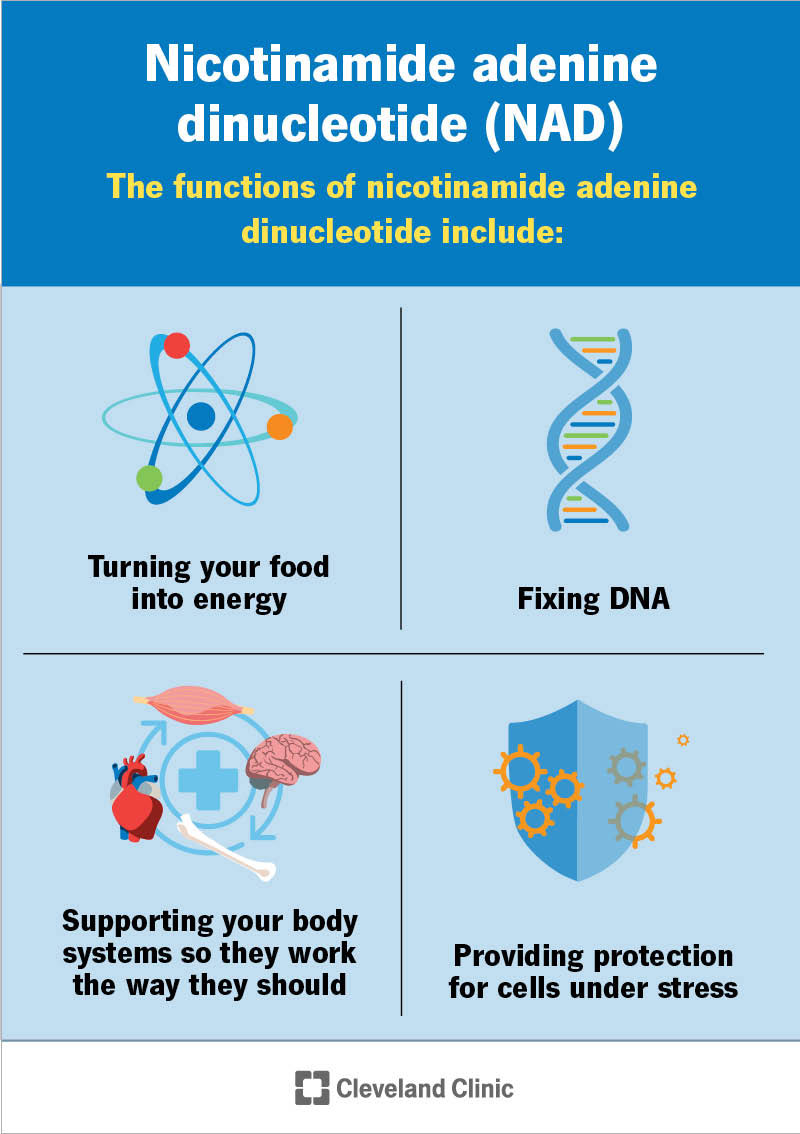
Image content: This image is available to view online.
View image online (https://my.clevelandclinic.org/-/scassets/images/org/health/articles/nad-nicotinamide-adenine-dinucleotide.jpg)
NAD stands for nicotinamide adenine dinucleotide. It’s a tiny molecule found in every cell in your body. NAD helps your cells make energy by carrying electrons from one chemical reaction to another. This process powers nearly everything your body does, and it keeps your cells working properly as you get older.
Advertisement
Cleveland Clinic is a non-profit academic medical center. Advertising on our site helps support our mission. We do not endorse non-Cleveland Clinic products or services. Policy
NAD exists in two main forms:
Together, NAD+ and NADH act like a shuttle. They move electrons back and forth so your body can turn food into energy. This constant cycling helps keep energy flowing inside your cells.
Your body makes NAD using building blocks called precursors. These include forms of vitamin B3 (like niacin) and the amino acid tryptophan. Your cells can create NAD from scratch or recycle it from smaller molecules. Enzymes — proteins that drive chemical reactions — help keep this process running. If these enzymes don’t work properly, NAD levels can drop. This can affect energy production and overall cell health.
One of NAD’s most important roles is helping to convert the food you eat into usable energy. This process happens largely in the mitochondria, often called the “powerhouse” of the cell.
NAD also supports several other key functions, including:
Advertisement
NAD is made up of three main parts:
NAD helps your cells work and stay healthy. As you age, NAD levels naturally decline. Some cells begin using NAD more quickly than your body can replace it, lowering overall levels.
With less NAD available, cells may have a harder time making energy and repairing damage. Lower NAD levels have been linked to age-related changes, including:
Researchers continue to study how NAD levels may affect aging. Supporting NAD production may help maintain cell function over time.
Food doesn’t contain meaningful amounts of NAD directly. Instead, your body makes NAD from certain nutrients found in food. These include vitamin B3 (niacin) and the amino acid tryptophan.
Foods that contain vitamin B3 include:
Foods that contain tryptophan include:
Eating foods rich in these nutrients helps support your body’s natural ability to make NAD.
In addition to eating foods high in vitamin B and tryptophan, you may be able to support balanced NAD levels by:
Research is ongoing on the effectiveness of NAD+ supplements. They may help restore energy and cell repair as you age, but more studies are needed.
NAD is always at work in the background, helping your cells turn food into energy and respond to everyday stress. Moving your body, eating foods with the right nutrients and getting enough rest may help give your cells what they need to keep going strong. By helping NAD out, you may be able to support yourself, now and in the years ahead.
Advertisement



Sign up for our Health Essentials emails for expert guidance on nutrition, fitness, sleep, skin care and more.
Learn more about the Health Library and our editorial process.
Cleveland Clinic’s health articles are based on evidence-backed information and review by medical professionals to ensure accuracy, reliability and up-to-date clinical standards.
Cleveland Clinic’s health articles are based on evidence-backed information and review by medical professionals to ensure accuracy, reliability and up-to-date clinical standards.
Cleveland Clinic’s primary care providers offer lifelong medical care. From sinus infections and high blood pressure to preventive screening, we’re here for you.
