



The Rhesus factor, or Rh factor, is a certain type of protein found on the outside of red blood cells. People are either Rh-positive (they have the protein) or Rh-negative (they don’t have the protein). This is important when you’re Rh-negative and pregnant with a fetus that’s Rh-positive.
Advertisement
Cleveland Clinic is a non-profit academic medical center. Advertising on our site helps support our mission. We do not endorse non-Cleveland Clinic products or services. Policy
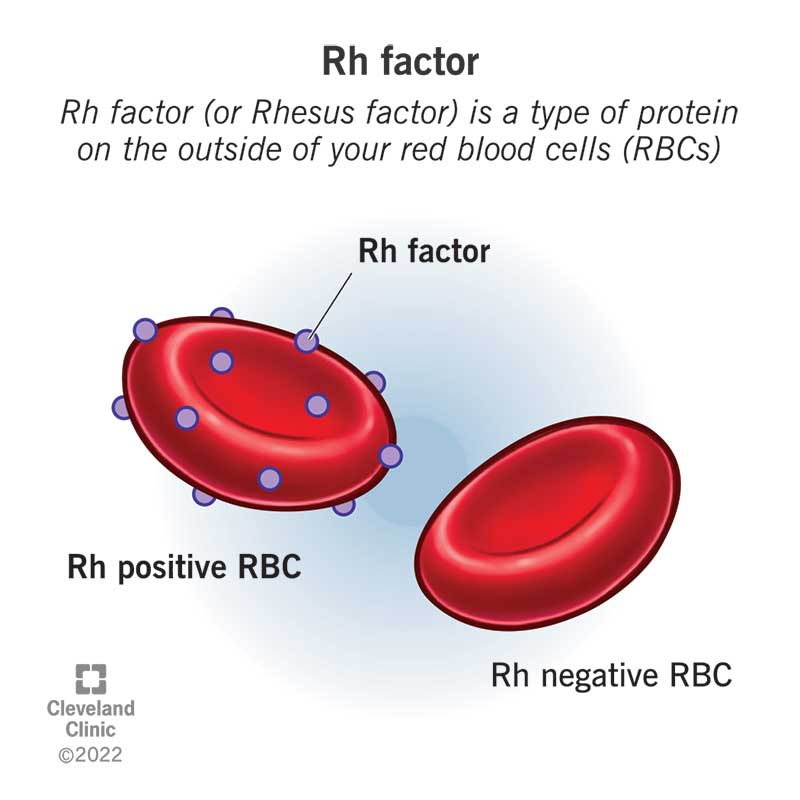
Image content: This image is available to view online.
View image online (https://my.clevelandclinic.org/-/scassets/images/org/health/articles/21053-rh-factor)
Rh factor (or Rhesus factor) is a type of protein on the surface of red blood cells. You inherit the protein from your biological parents. If you have the protein, you’re Rh-positive. If you don’t have the protein, you’re Rh-negative. About 85 in 100 people are Rh-positive.
Advertisement
Cleveland Clinic is a non-profit academic medical center. Advertising on our site helps support our mission. We do not endorse non-Cleveland Clinic products or services. Policy
Your Rh factor doesn’t affect your overall health in any way. But it’s good to know your Rh status if you’re pregnant.
During pregnancy, complications may occur if you’re Rh-negative and the fetus is Rh-positive. This is called Rh incompatibility, and treatments can prevent complications from it. Knowing your Rh status is the best way to prevent it from causing complications.
Your blood type includes an ABO group — A, B, AB or O — and an Rh factor. Your Rh factor is positive if your red blood cells have the Rh protein. Your Rh factor is negative if they don’t. For example, A positive means you have type A blood and a positive Rh factor. O negative means you have type O blood and a negative Rh factor.
Your Rh factor doesn’t cause problems or hurt your health. It only matters when blood types are mixed, like during pregnancy and childbirth.
Rh incompatibility can happen when you have Rh-negative blood and the fetus has Rh-positive blood. If fetal blood enters your bloodstream, your immune system may make antibodies against the Rh-positive blood cells.
During pregnancy, you don’t share blood with the fetus. But a small amount of fetal blood can mix with your blood during:
Advertisement
Blood can also mix after external cephalic version (ECV), a maneuver to turn a breech baby.
Complications from Rh incompatibility don’t usually happen during your first pregnancy. This is because it’s unlikely that your blood will mix with the fetus’s blood until delivery. This means antibodies won’t form until after your baby is born. But even if it’s your first pregnancy, your provider will test your Rh factor. It’s very important to get tested and treated during the first pregnancy to avoid future concerns.
Rh incompatibility becomes a problem if you get pregnant again and have an Rh-positive fetus. In this case, your body will produce antibodies. These antibodies put the fetus at risk for complications. Once your body realizes the fetus is Rh-positive, antibodies can pass into the fetus’s blood and attack its red blood cells. This is called Rh disease, and it can be life-threatening to the fetus.
Anyone who’s Rh-negative is at risk for Rh incompatibility if they become pregnant with an Rh-positive fetus. This chart helps show the fetus’s risk for Rh incompatibility:
| Pregnant Biological Parent | Other Biological Parent | Fetus’s Rh factor | Risk Level |
|---|---|---|---|
| Rh-positive | Rh-positive | Rh-positive | None |
| Rh-negative | Rh-negative | Rh-negative | None |
| Rh-positive | Rh-negative | Could be either | None |
| Rh-negative | Rh-positive | Could be either | High. Rh immune globulin (RhoGAM®) is necessary. |
| Pregnant Biological Parent | |||
| Rh-positive | |||
| Other Biological Parent | |||
| Rh-positive | |||
| Fetus’s Rh factor | |||
| Rh-positive | |||
| Risk Level | |||
| None | |||
| Rh-negative | |||
| Other Biological Parent | |||
| Rh-negative | |||
| Fetus’s Rh factor | |||
| Rh-negative | |||
| Risk Level | |||
| None | |||
| Rh-positive | |||
| Other Biological Parent | |||
| Rh-negative | |||
| Fetus’s Rh factor | |||
| Could be either | |||
| Risk Level | |||
| None | |||
| Rh-negative | |||
| Other Biological Parent | |||
| Rh-positive | |||
| Fetus’s Rh factor | |||
| Could be either | |||
| Risk Level | |||
| High. Rh immune globulin (RhoGAM®) is necessary. |
The Rh factor test is a simple blood test that you get in the first trimester of pregnancy. If you’re Rh-negative and the fetus is Rh-positive, you have Rh factor incompatibility.
A blood test diagnoses Rh status. If you’re Rh-positive, nothing else happens.
If you’re Rh-negative and your antibody screen is negative, your provider will give you Rh immune globulin to stop your body from making antibodies. You’ll typically get this around 28 weeks of pregnancy. You may have it again within 72 hours of delivery if the fetus is Rh-positive. You may also get a dose in early pregnancy if your provider believes your blood has mixed with the fetus’s blood.
Rh immune globulin (RhIG or RhoGAM®) is a medication that stops your body from making Rh antibodies. It’s only helpful if your body hasn’t already made Rh antibodies. You receive it as an injection. This is usually very successful in preventing Rh incompatibility during pregnancy. Detecting Rh status early in pregnancy is the best way to prevent complications.
If your body already has Rh antibodies, the fetus is at risk for Rh disease. Since Rh immune globulin won’t be helpful, the best treatment is frequent checkups with your Ob/Gyn provider. Your team of providers will determine your management plan and the timing of delivery.
Rh incompatibility doesn’t affect you, but the complications for a fetus can range from mild to severe. For example, it can cause hemolytic anemia. This condition destroys the fetus’s red blood cells faster than they can be replaced.
Advertisement
Other complications may include:
Fetuses with a mild case of Rh disease may not need any treatment, and most recover fully.
In severe cases, the fetus may receive a blood transfusion before birth to replace red blood cells. Providers may also recommend an early delivery to prevent serious complications from anemia. After birth, the newborn may need specific treatments.
Since the development of Rh immune globulin injections, Rh disease doesn’t occur often.
Having Rh-negative blood doesn’t affect your health or mean that something is wrong. During pregnancy, your provider will give you RhIG injections at certain times to prevent your body from making antibodies against Rh-positive blood. You may need an injection during pregnancy and after delivery.
You can usually prevent Rh disease with prenatal testing and RhIG injections.
Knowing your Rh status is important during pregnancy, or even sooner, because it can prevent potential complications. That’s why your pregnancy care provider will test your blood early in pregnancy to find out if you’re Rh-positive or Rh-negative.
Rh incompatibility only becomes an issue when you’re Rh-negative and the fetus is Rh-positive. Your provider will treat Rh incompatibility with injections of Rh immune globulin (RhIG).
Advertisement
Try not to worry — your provider will keep a close eye on the situation and recommend the treatment you need to prevent any complications.
Advertisement



Sign up for our Health Essentials emails for expert guidance on nutrition, fitness, sleep, skin care and more.
Learn more about the Health Library and our editorial process.
Cleveland Clinic’s health articles are based on evidence-backed information and review by medical professionals to ensure accuracy, reliability and up-to-date clinical standards.
Cleveland Clinic’s health articles are based on evidence-backed information and review by medical professionals to ensure accuracy, reliability and up-to-date clinical standards.
Prenatal tests can give your providers information about your pregnancy and fetal development. Cleveland Clinic’s experts can guide you through prenatal testing.
