Salmonella, or salmonellosis, is an infection with Salmonella bacteria that causes diarrhea, fever and stomach pains. You can get it from contaminated food and, sometimes, from animals. Salmonella usually goes away on its own in a few days. Drink plenty of fluids to prevent dehydration. Prevention includes safe food preparation and animal handling.
Advertisement
Cleveland Clinic is a non-profit academic medical center. Advertising on our site helps support our mission. We do not endorse non-Cleveland Clinic products or services. Policy
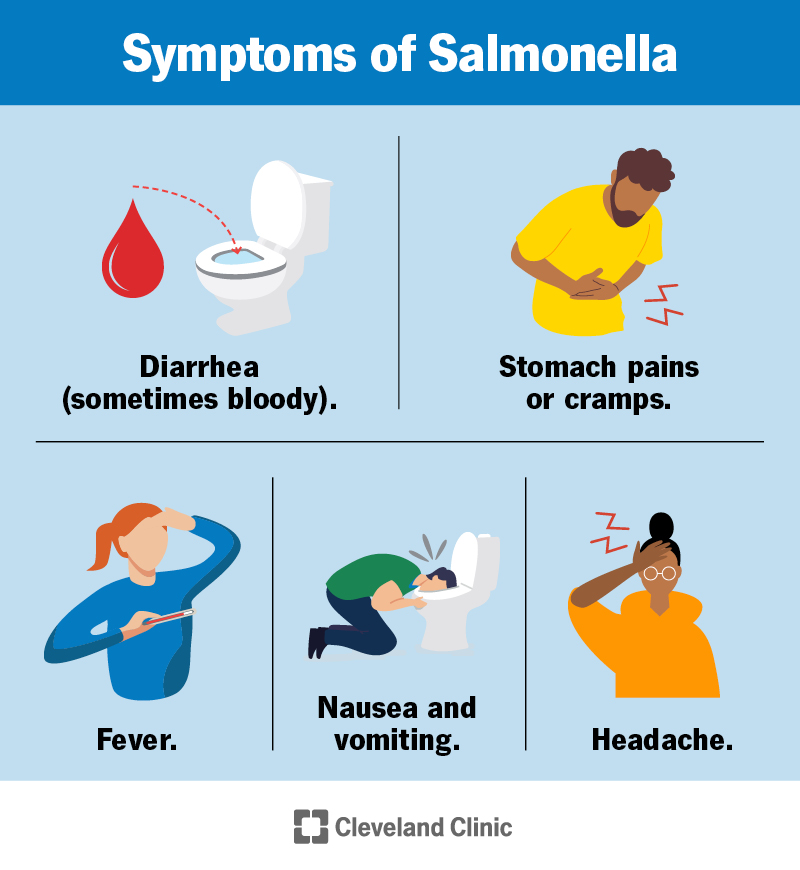
Image content: This image is available to view online.
View image online (https://my.clevelandclinic.org/-/scassets/images/org/health/articles/15697-salmonella)
“Salmonella” is what people commonly call it when you get sick with diarrhea and stomach pains from Salmonella bacteria. It’s the most common form of bacterial food poisoning in the U.S., with over a million people getting sick with it every year.
Advertisement
Cleveland Clinic is a non-profit academic medical center. Advertising on our site helps support our mission. We do not endorse non-Cleveland Clinic products or services. Policy
Almost any uncooked foods can be contaminated with Salmonella bacteria. But most people get sick from raw or undercooked poultry (like chicken) or eggs.
This article focuses on non-typhoidal Salmonella poisoning, or salmonellosis. Typhoidal Salmonella bacteria cause typhoid and paratyphoid fever, which can be serious if left untreated.
Salmonella symptoms include:
Symptoms appear anywhere from a few hours to a few days after exposure to Salmonella bacteria. You may have some or all of these symptoms.
Salmonella bacteria cause salmonella poisoning. The bacteria live in the guts of some people and animals, and in contaminated food and water. You can get sick from:
The most common way to get salmonella is from undercooked food or improper food prep. Examples include:
Advertisement
You can also get salmonella from animals and people infected with the bacteria. Almost any animal can have a Salmonella infection or carry the bacteria on its fur, feathers, scales or skin. This includes:
Many kinds of food have caused salmonella outbreaks. These include eggs, produce, packaged meats, dietary supplements and frozen food. Salmonella outbreaks from animals include pet turtles, lizards, chickens, hedgehogs and guinea pigs.
Yes. You can get it from another person or even your pet. If you don’t wash your hands after going to the bathroom or while you’re sick, you can contaminate surfaces and food. This can spread the infection to other people.
Anyone can get salmonella, but you might be at a higher risk for infection or serious illness depending on your age, certain illnesses and medications.
You’re at an increased risk of getting salmonella if you:
You’re at a higher risk for serious illness from a Salmonella infection if you:
Salmonella complications are rare for most people. They could include:
It’s extremely rare to die from salmonella. But it’s possible if it spreads to other parts of your body and causes organ failure.
Your healthcare provider will examine you and ask you about your symptoms and health history. Providers diagnose salmonella by testing your poop (stool) or blood. In some cases, they might test your pee (urine) or a sample taken from a wound.
You usually don’t treat salmonella with medication. A healthcare provider may treat you with antibiotics if you:
Advertisement
If you have severe diarrhea or vomiting, you may need to stay in the hospital to receive IV fluids.
You can manage the symptoms and prevent dehydration at home by drinking plenty of fluids. Drink both water and fluids that can help you stay hydrated, like broth or oral rehydration solutions (like Pedialyte® or Liquid IV®).
Contact your healthcare provider if your symptoms don’t get better after a few days or if you have a condition that puts you at a higher risk for severe illness. Go to the ER if you have signs of serious illness or dehydration, including:
Salmonella is usually self-limiting, meaning it goes away on its own. Symptoms usually last around three to seven days. Most of the time, you can manage at home until you feel better. Make sure to drink plenty of fluids so you don’t get dehydrated.
A provider may treat you with antibiotics if you’re at high risk for complications.
You can reduce your risk of salmonella by following safe food preparation practices and being careful when handling animals. Guidelines include:
Advertisement
Salmonella poisoning is common. It’s unpleasant, but it’s usually not severe. Drink plenty of fluids and get emergency medical help right away if you have signs of dehydration. Contact your healthcare provider if you’re not getting better within a few days. If you have a compromised immune system or are at high risk of complications from salmonella, ask your provider if you should be on antibiotics to treat the infection.
Advertisement



Sign up for our Health Essentials emails for expert guidance on nutrition, fitness, sleep, skin care and more.
Learn more about the Health Library and our editorial process.
Cleveland Clinic’s health articles are based on evidence-backed information and review by medical professionals to ensure accuracy, reliability and up-to-date clinical standards.
Cleveland Clinic’s health articles are based on evidence-backed information and review by medical professionals to ensure accuracy, reliability and up-to-date clinical standards.
Need care fast? Cleveland Clinic’s Express Care and Urgent Care locations treat everything from sprains to sinus infections — no appointment needed.