



Amino acids are the building blocks of protein. Your body needs 20 amino acids to combine and form the proteins you need to function. Your body can make nine amino acids on its own. These are called nonessential amino acids. The other 11 must come from the foods you eat. These are called essential amino acids.
Advertisement
Cleveland Clinic is a non-profit academic medical center. Advertising on our site helps support our mission. We do not endorse non-Cleveland Clinic products or services. Policy
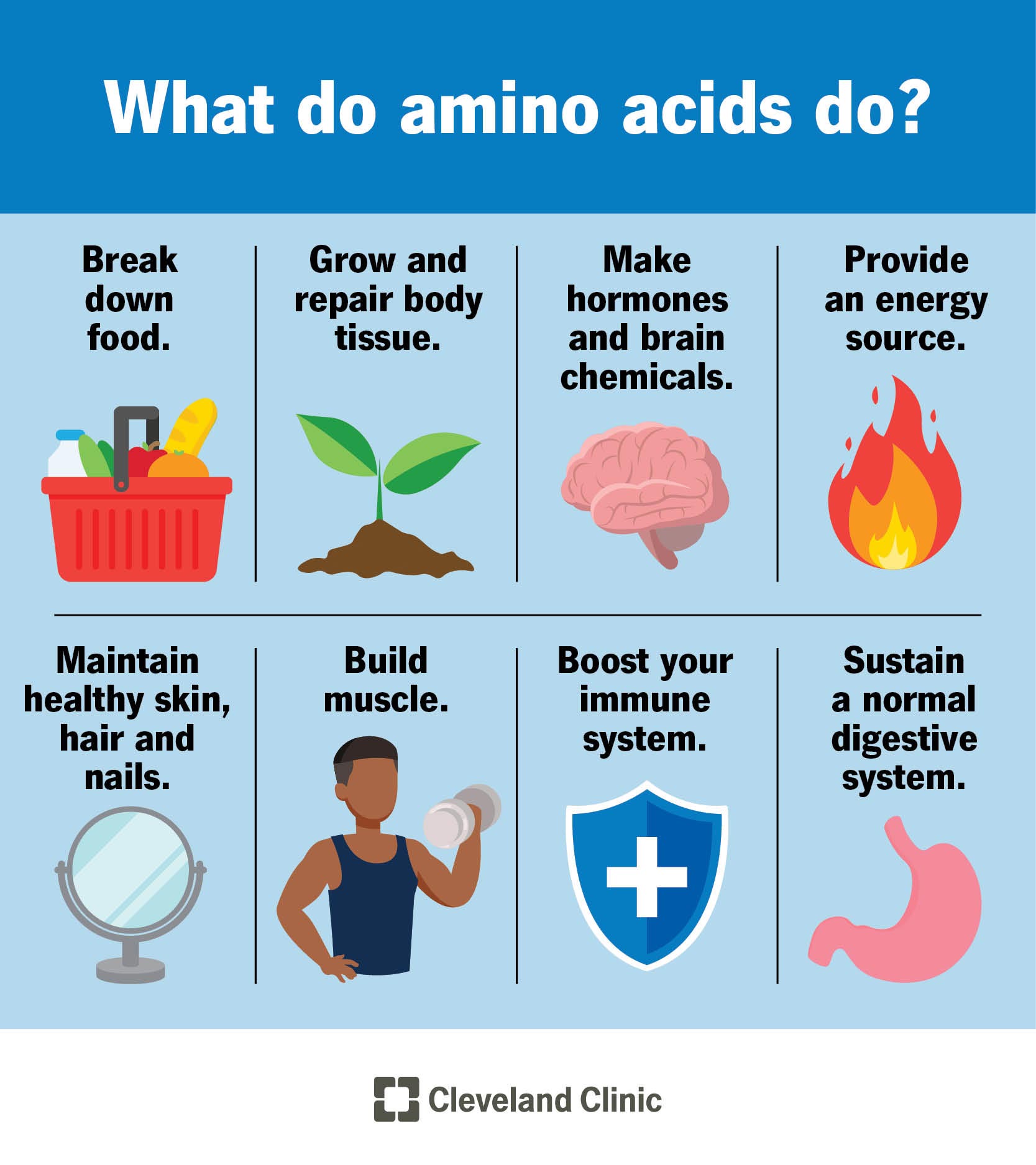
Image content: This image is available to view online.
View image online (https://my.clevelandclinic.org/-/scassets/images/org/health/articles/22243-amino-acids)
Amino acids are small molecules that combine to form proteins. This is why amino acids are called the building blocks of protein. Your body needs proteins to grow, repair tissue and do many other important jobs.
Advertisement
Cleveland Clinic is a non-profit academic medical center. Advertising on our site helps support our mission. We do not endorse non-Cleveland Clinic products or services. Policy
There are 20 amino acids that your body uses to make proteins. Your genes help determine which way they link together. Different combinations create different proteins. Each has its own job.
Your body can make some amino acids on its own. Others must come from the foods you eat.
There are three types of amino acids: essential, nonessential and conditional. The names describe whether your body can make enough of these amino acids on its own. “Nonessential” doesn’t mean they aren’t important. It means you don’t have to get them from food. Your body can make them.
The following amino acid chart breaks down the three types:
| Type | What It Means | Examples |
|---|---|---|
| Essential amino acids | Your body can’t make these. So, you need to get them from food. | Histidine, isoleucine, leucine, lysine, methionine, phenylalanine, threonine, tryptophan and valine. |
| Nonessential amino acids | Your body can make these on its own. | Alanine, arginine, asparagine, aspartic acid, cysteine, glutamic acid, glutamine, glycine, proline, serine and tyrosine. |
| Conditional amino acids | Your body can usually make these nonessential amino acids. But you may need more during illness or other physical stress. | Arginine, cysteine, glutamine, glycine, proline, serine and tyrosine. |
| Type | ||
| Essential amino acids | ||
| What It Means | ||
| Your body can’t make these. So, you need to get them from food. | ||
| Examples | ||
| Histidine, isoleucine, leucine, lysine, methionine, phenylalanine, threonine, tryptophan and valine. | ||
| Nonessential amino acids | ||
| What It Means | ||
| Your body can make these on its own. | ||
| Examples | ||
| Alanine, arginine, asparagine, aspartic acid, cysteine, glutamic acid, glutamine, glycine, proline, serine and tyrosine. | ||
| Conditional amino acids | ||
| What It Means | ||
| Your body can usually make these nonessential amino acids. But you may need more during illness or other physical stress. | ||
| Examples | ||
| Arginine, cysteine, glutamine, glycine, proline, serine and tyrosine. |
The main function of amino acids is to make proteins. Proteins are part of every cell in your body. They help keep your body working as it should.
Your body uses amino acids to help:
Your body is always building and breaking down proteins. When you eat protein, your digestive system breaks it down into amino acids. Your body can then reuse those amino acids. It uses them to make the proteins and other substances it needs.
Advertisement
All amino acids have the same basic structure. Each has a central carbon atom connected to several smaller parts. One of these parts is called a side chain. It’s different for each amino acid.
These differences give each amino acid its own properties. They also affect how amino acids interact when they join together.
Amino acids connect in long chains to form proteins. The order of amino acids in a chain helps determine the protein’s shape and what it does in your body.
Foods that contain protein also contain amino acids. You can get amino acids from both animal and plant foods.
Sources include:
Some foods contain all nine essential amino acids in amounts your body can use. These are called complete proteins. Many animal proteins are complete proteins. Some plant foods, including soy, also provide all nine essential amino acids.
Other plant foods may have lower amounts of one or more essential amino acids. But you don’t need to combine specific foods at every meal to get all the amino acids you need. Eating a variety of protein-rich foods throughout the day can help you get enough.
Most people can get the amino acids they need by consuming enough protein as part of a balanced eating plan.
Amino acid supplements are available on their own or in combinations. Some supplements contain branched-chain amino acids (BCAAs) — leucine, isoleucine and valine. These are often marketed for exercise, muscle growth or recovery.
But supplements aren’t necessary for most people who get enough protein from food. And taking more amino acids doesn’t always provide more benefits.
Talk to your healthcare provider before taking an amino acid supplement. They can help you decide whether it’s safe and useful for you.
Amino acids may sound like something you only need to think about in science class. But your body relies on them every day. You need them to build proteins and keep your cells and tissues working. For most people, getting enough protein through food provides the amino acids they need.
If you’re concerned about your protein intake or considering a supplement, talk with your healthcare provider or a registered dietitian.
Advertisement



Sign up for our Health Essentials emails for expert guidance on nutrition, fitness, sleep, skin care and more.
Learn more about the Health Library and our editorial process.
Cleveland Clinic’s health articles are based on evidence-backed information and review by medical professionals to ensure accuracy, reliability and up-to-date clinical standards.
Cleveland Clinic’s health articles are based on evidence-backed information and review by medical professionals to ensure accuracy, reliability and up-to-date clinical standards.
Cleveland Clinic’s primary care providers offer lifelong medical care. From sinus infections and high blood pressure to preventive screening, we’re here for you.
