



Personality disorders are mental health conditions that involve long-term patterns of thinking, feeling and behaving that differ from cultural expectations. These patterns can affect how you manage emotions, interact with others and handle everyday situations. With support and treatment, you may learn skills to manage symptoms and improve relationships and daily functioning.
Advertisement
Cleveland Clinic is a non-profit academic medical center. Advertising on our site helps support our mission. We do not endorse non-Cleveland Clinic products or services. Policy
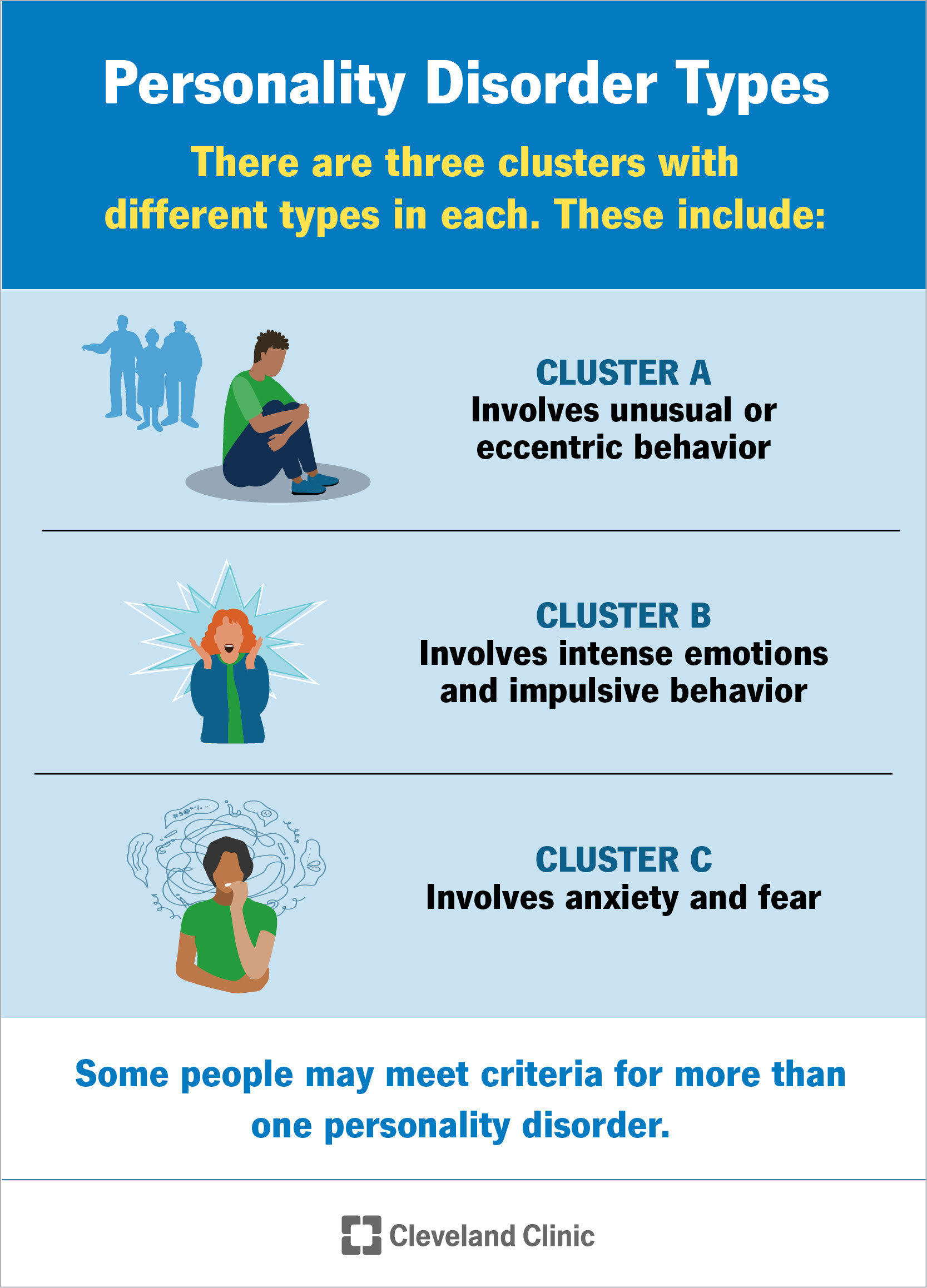
Image content: This image is available to view online.
View image online (https://my.clevelandclinic.org/-/scassets/images/org/health/articles/personality-disorder)
Personality disorders are long-term patterns of thinking, feeling and behaving that differ from what’s expected. These patterns can make it hard for you to manage emotions, control impulses or maintain healthy relationships. They often cause problems in daily life, including at work, school or home.
Advertisement
Cleveland Clinic is a non-profit academic medical center. Advertising on our site helps support our mission. We do not endorse non-Cleveland Clinic products or services. Policy
“Personality” refers to the unique traits that shape how you respond to people and situations. Everyone has their own mix of characteristics that influence how they see the world, relate to others and handle experiences.
Healthcare providers diagnose personality disorders by looking at your behavior patterns over time. There are 10 types of personality disorders, each with different characteristics and symptoms. Borderline and antisocial personality disorders are among the most frequently diagnosed in clinical settings.
There are different treatments available to help manage symptoms. A healthcare provider can help you find the best options.
Experts group personality disorders into three clusters based on shared traits and behaviors. It’s possible to meet the criteria of more than one personality disorder. You may also have traits of different personalities, but not meet the criteria for being diagnosed with that disorder.
These involve different ways of thinking and behaving.
Advertisement
These involve intense emotions, impulsive behavior and unpredictable actions.
These involve anxiety, fear and strong feelings of insecurity.
Each of the 10 types has its own specific signs and symptoms. Common symptoms may include:
You may not realize how your behavior affects others. Because of this, a friend or loved one may notice the signs first.
Experts don’t know the exact cause of personality disorders. Most develop from a combination of factors, including:
Because the cause isn’t well understood, there’s no known way to prevent it.
These disorders can affect anyone. Several factors might increase the risk, including:
Antisocial personality disorders are more likely to affect males. Borderline, histrionic and dependent personality disorders are more likely to affect females.
As people with personality disorders may not always seek treatment right away, the condition can sometimes affect different areas of life. Without support or treatment, you may experience:
Advertisement
These may also increase your risk of developing other mental health conditions, like substance use disorder, depression or anxiety. Your risk of suicidal thoughts or self-harm may also be higher.
If you have thoughts of harming yourself, you can call or text the Suicide and Crisis Lifeline at 988 (U.S.). Someone is available 24/7.
To make a diagnosis, your provider will offer a mental health evaluation. A psychiatrist, psychologist or other mental health professional will talk with you about your thoughts, behaviors and emotions over time. They’ll also ask about your medical history, family history, relationships and life experiences.
Your provider will compare these patterns to the diagnostic criteria in the Diagnostic and Statistical Manual of Mental Disorders (DSM-5-TR) to determine whether they meet criteria for a personality disorder. They’ll also rule out other possible causes, like another mental health condition, substance use or a medical problem that affects your brain. In some cases, they may use other tests to help support the diagnosis.
Providers usually diagnose personality disorders in adults, as traits are still developing during childhood and adolescence.
Advertisement
It’s important to remember that personality disorders can be hard to diagnose. This is because you may not think there’s a problem with your behavior or way of thinking. Sometimes, a family member, friend or social service agency encourages someone to see a mental health professional when their behavior begins to affect others.
If you do seek help, it may be for related concerns, like anxiety, depression, substance use or life challenges, like relationship problems or job difficulties, rather than the personality disorder itself.
Treatment usually focuses on therapy and support. The goal is to help you better understand your thoughts and behaviors and learn healthier ways to cope. Your provider might suggest:
You should see a healthcare provider if long-lasting patterns in how you think, feel or behave begin to affect your daily life. This includes problems with relationships, work, school or managing your emotions.
Advertisement
You should also seek help if you have depression, anxiety or impulsive behavior, or if you have thoughts of self-harm or suicide. Sometimes, your loved ones will be the first to notice these changes. They might recommend that you talk with a mental health professional.
Living with a personality disorder might feel challenging at times. You may or may not notice patterns in how you think, feel or relate to others that affect your relationships, work or daily life. These patterns often develop over many years, so changing them can take time and effort.
The prognosis varies by type. Some symptoms may improve as you get older, especially with support and treatment. Therapy can help you better understand your behavior, manage emotions and build healthier relationships.
But these disorders are usually long term. Some traits continue over time, and progress may happen slowly. Many people find that learning coping skills, building support systems and staying engaged in treatment helps them manage symptoms.
Everyone has their own unique personality. It shapes how you see the world, handle stress and connect with others. But when certain patterns of thinking, feeling or behaving start interfering with your day and relationships, it can create real challenges.
Making a change when you have a personality disorder can take time and patience. With support, you may learn to better understand your thoughts, emotions and behaviors and practice healthier ways to respond to difficult situations.
If patterns in your life cause stress or affect your relationships, reaching out to a mental health professional can be an important first step.



Sign up for our Health Essentials emails for expert guidance on nutrition, fitness, sleep, skin care and more.
Learn more about the Health Library and our editorial process.
Cleveland Clinic’s health articles are based on evidence-backed information and review by medical professionals to ensure accuracy, reliability and up-to-date clinical standards.
Cleveland Clinic’s health articles are based on evidence-backed information and review by medical professionals to ensure accuracy, reliability and up-to-date clinical standards.
Your mental well-being is just as important as your physical well-being. Cleveland Clinic’s mental health experts can help you live life to the fullest.
