Neurorehabilitation is a program you’ll complete after an illness or injury to your nervous system. Common conditions include traumatic brain injury, stroke, Alzheimer’s disease and multiple sclerosis. The goals are to improve brain function and decrease the impact of symptoms. Treatment could be temporary or long-term depending on your needs.
Advertisement
Cleveland Clinic is a non-profit academic medical center. Advertising on our site helps support our mission. We do not endorse non-Cleveland Clinic products or services. Policy
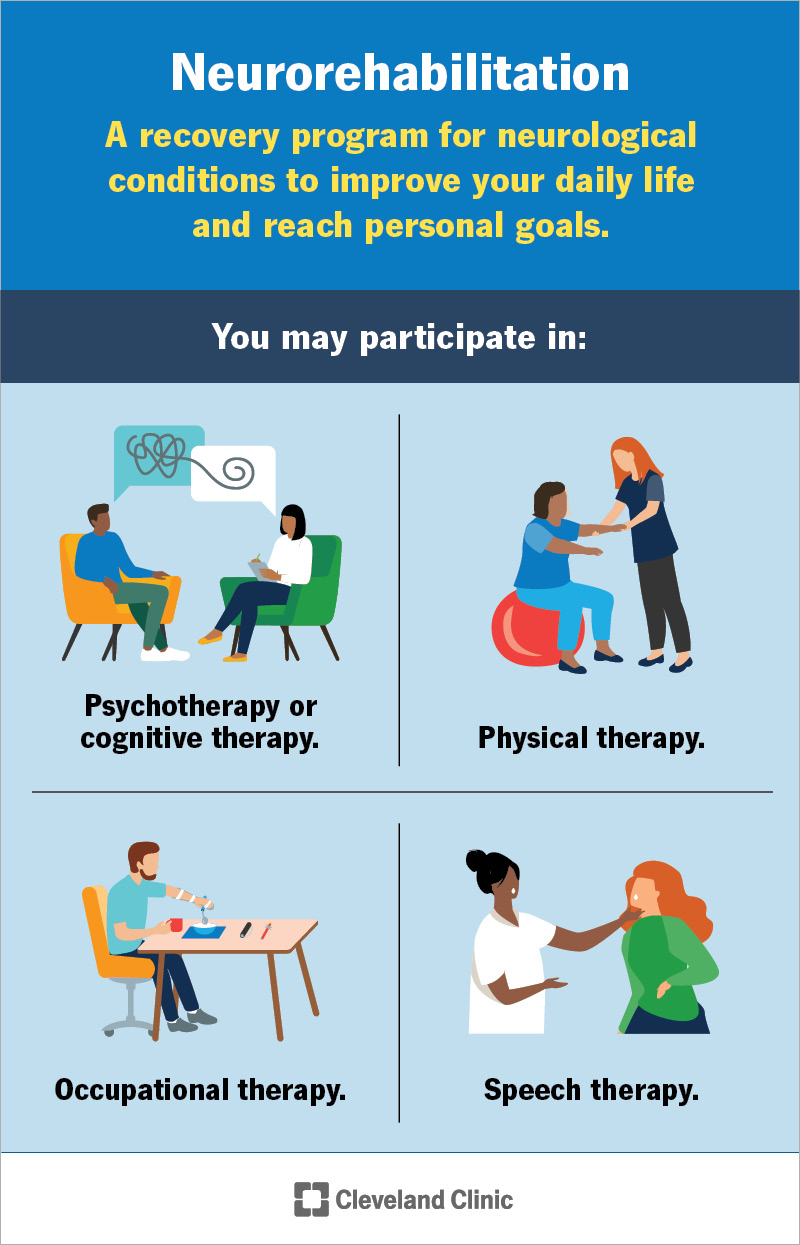
Image content: This image is available to view online.
View image online (https://my.clevelandclinic.org/-/scassets/images/org/health/articles/neurorehabilitation)
Neurological rehabilitation, or neurorehabilitation, is a program to help you recover after an injury or diagnosis that affects your nervous system. Your nervous system contains your brain, spinal cord and nerves.
Advertisement
Cleveland Clinic is a non-profit academic medical center. Advertising on our site helps support our mission. We do not endorse non-Cleveland Clinic products or services. Policy
The goals of this treatment are to:
A healthcare provider might recommend this treatment if you experience one of the following neurological conditions:
There are several different types. Some of the most common include:
During treatment, you’ll meet with expert healthcare providers to assess how an illness or injury affects your nervous system. For example, does it affect how you speak or remember information, how well you can hold a pencil or your ability to walk? These are things that treatment can help you with.
Advertisement
Your providers will create a treatment plan to meet your personal goals. These will focus on your physical, mental and emotional needs. Your treatment plan can help you:
To reach these goals, you may participate in:
In addition, your care team can help educate you and your loved ones about the illness or injury that affects you, and how others can help you stay safe.
With advanced technology in healthcare, your providers may use one or several of the following techniques to help you reach your goals during treatment. Some of the most common techniques include:
While it isn’t a cure, this type of treatment is a collaborative effort to help you manage your symptoms and feel well enough to go about your daily routine safely. It may help you:
Many studies show the success of this treatment. The success may vary based on how active and involved you are in your treatment program.
You’ll learn and develop skills during each session. After learning them, you’ll need to practice incorporating these skills into your daily life and routine. This isn’t an easy process, but with the help and support of your caregivers, you’ll work together to reach your goals.
Advertisement
Complications are uncommon. You’ll be in the care of highly trained healthcare providers who’ll make sure you’re safe. Possible risks could include:
The amount of time you’ll need to participate in this treatment varies. Every person’s body heals differently, and it depends on your diagnosis and the severity. Some people participate in programs for several weeks, while others need long-term care that could last for months to years. Your healthcare provider will be able to give you the best time estimate that meets your goals.
Treatment takes hard work and effort. Like an athlete, you’ll need to train to regain your mental and physical strength after an illness or injury that took it from you. Your care team will encourage you to practice the skills you learn outside of treatment. It takes time and energy to master these skills. If you don’t feel safe practicing on your own, especially if you’re at risk of falls or injury, let your healthcare team know. They may have advice to improve your safety.
Contact a healthcare provider if you notice new or worsening symptoms after starting treatment. If you experience a fall or injure yourself, contact 911 or your local emergency services number.
Advertisement
An excellent program provides an expert team approach. Each program is different and offers a variety of solutions.
Quality programs create personalized care plans that may include medications, physical activity, daily living skills, nutrition, cognitive rehabilitation, mental health care and clinical trials (if appropriate).
Physical, occupational and speech therapists with specialized neurology training can make a big difference. These professionals use the latest technology, custom exercises and skill-building techniques to help people with neurological conditions improve their quality of life.
Neurorehabilitation helps you recover after an injury or illness that affects your mind-body coordination. But progress takes time and effort. It’s normal to feel stuck or frustrated, as everyone learns at their own pace. Even if you don’t see it, each day brings you closer to your goals. Stay in touch with your healthcare team — they can track your progress and keep you motivated.
Advertisement



Sign up for our Health Essentials emails for expert guidance on nutrition, fitness, sleep, skin care and more.
Learn more about the Health Library and our editorial process.
Cleveland Clinic’s health articles are based on evidence-backed information and review by medical professionals to ensure accuracy, reliability and up-to-date clinical standards.
Cleveland Clinic’s health articles are based on evidence-backed information and review by medical professionals to ensure accuracy, reliability and up-to-date clinical standards.
If you have a neurological condition, you want expert advice. At Cleveland Clinic, we’ll work to create a treatment plan that’s right for you.