



As the body’s largest organ, skin protects against germs, regulates body temperature and enables touch (tactile) sensations. The skin’s main layers include the epidermis, dermis and hypodermis and is prone to many problems, including skin cancer, acne, wrinkles and rashes.
Advertisement
Cleveland Clinic is a non-profit academic medical center. Advertising on our site helps support our mission. We do not endorse non-Cleveland Clinic products or services. Policy
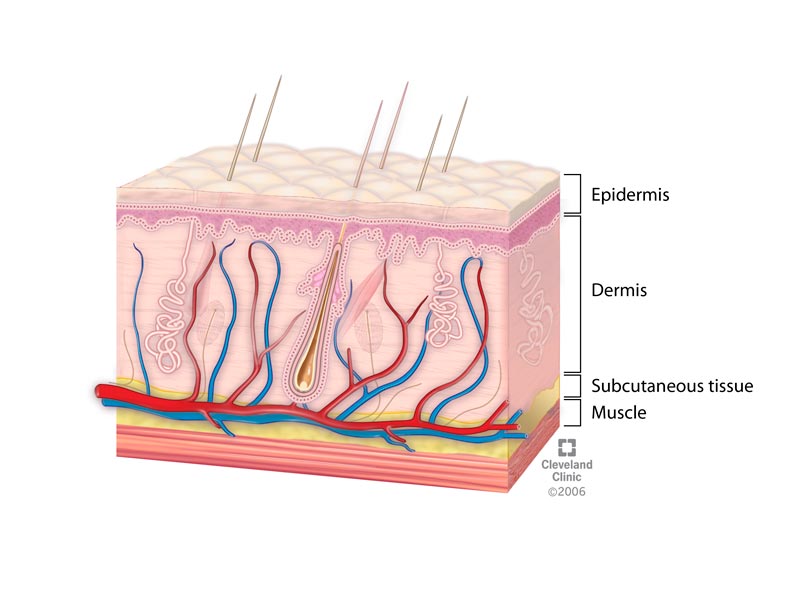
Image content: This image is available to view online.
View image online (https://my.clevelandclinic.org/-/scassets/images/org/health/articles/10978-skin)
The skin is the body’s largest organ, made of water, protein, fats and minerals. Your skin protects your body from germs and regulates body temperature. Nerves in the skin help you feel sensations like hot and cold.
Advertisement
Cleveland Clinic is a non-profit academic medical center. Advertising on our site helps support our mission. We do not endorse non-Cleveland Clinic products or services. Policy
Your skin, along with your hair, nails, oil glands and sweat glands, is part of the integumentary (in-TEG-you-MEINT-a-ree) system. “Integumentary” means a body’s outer covering.
Three layers of tissue make up the skin:
Your epidermis is the top layer of the skin that you can see and touch. Keratin, a protein inside skin cells, makes up the skin cells and, along with other proteins, sticks together to form this layer. The epidermis:
Advertisement
The dermis makes up 90% of skin’s thickness. This middle layer of skin:
The bottom layer of skin, or hypodermis, is the fatty layer. The hypodermis:
One inch of your skin has approximately 19 million skin cells and 60,000 melanocytes (cells that make melanin or skin pigment). It also contains 1,000 nerve endings and 20 blood vessels.
As the body’s external protection system, your skin is at risk for various problems. These include:
You lose collagen and elastin as you age. This causes the skin’s middle layer (dermis) to get thinner. As a result, the skin may sag and develop wrinkles.
While you can’t stop the aging process, these actions can help maintain healthier skin:
Advertisement
You should call your healthcare provider if you experience:
As the body’s largest organ, your skin plays a vital role in protecting your body from germs and the elements. It keeps your body at a comfortable temperature, and nerves beneath the skin provide the sense of touch. This external body covering can have serious problems like skin cancer, as well as more common issues like acne and skin rashes. Your healthcare provider can offer tips to help keep skin healthy.
Advertisement



Sign up for our Health Essentials emails for expert guidance on nutrition, fitness, sleep, skin care and more.
Learn more about the Health Library and our editorial process.
Cleveland Clinic’s health articles are based on evidence-backed information and review by medical professionals to ensure accuracy, reliability and up-to-date clinical standards.
Cleveland Clinic’s health articles are based on evidence-backed information and review by medical professionals to ensure accuracy, reliability and up-to-date clinical standards.
Every day, people see your skin, hair and nails. At Cleveland Clinic, our expert and caring dermatology team will make sure they’re healthy and strong.
